I was in the middle of a rainy Saturday night when my roommate dared me to “make something that would make the whole building smell like a five‑star seaside restaurant.” I stared at the empty pantry, the drizzle tapping on the windows, and felt a sudden craving for something buttery, briny, and utterly comforting. I grabbed the biggest lobster I could find, a bag of sea scallops, and a half‑gallon of heavy cream, and the kitchen became my laboratory. The first sizzle of butter hitting the pan was like a tiny fireworks show, and the aroma of onions and garlic rose like a promise of salvation.
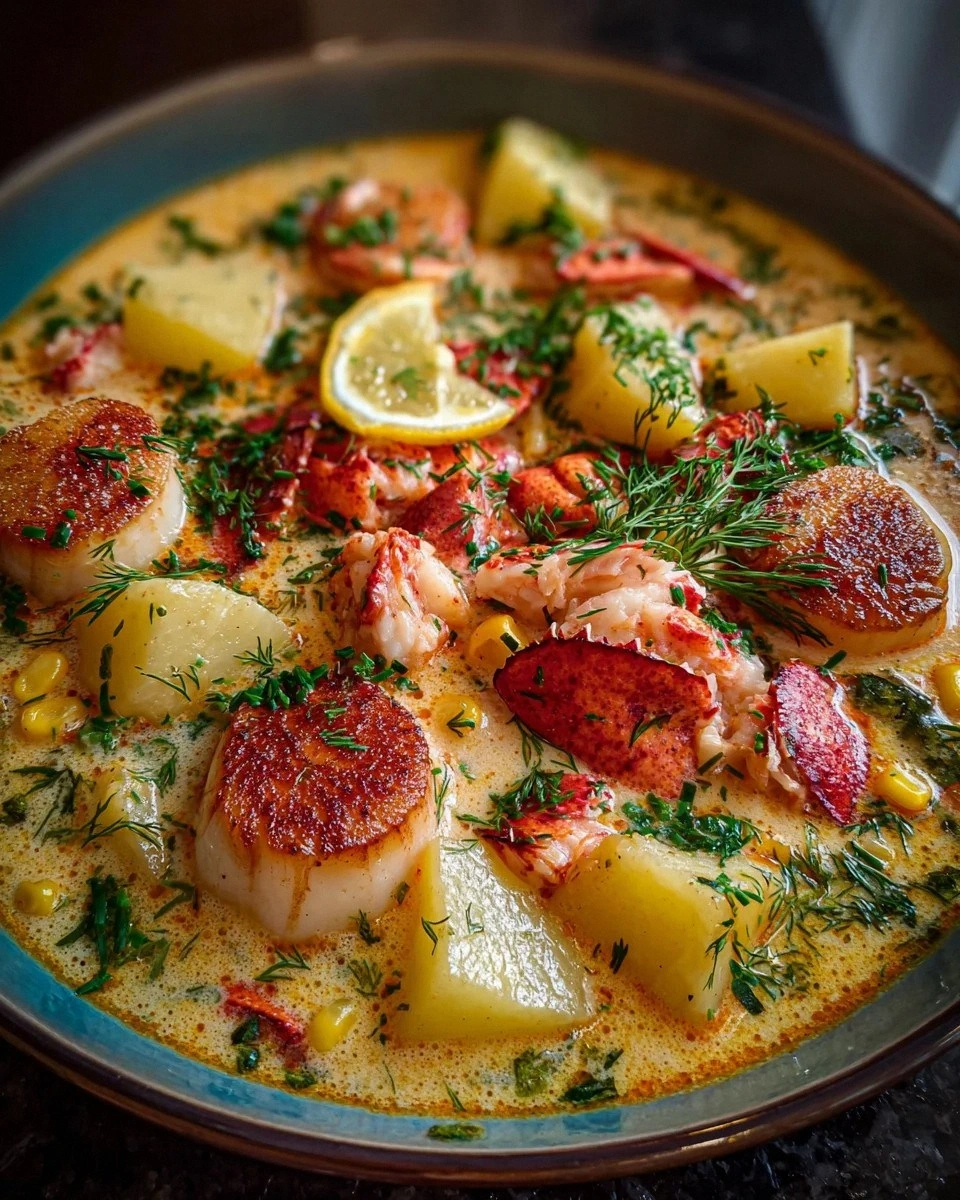
Picture this: the steam curling up from a pot, a golden‑brown butter base shimmering with flecks of herbs, the gentle pop of corn kernels as they hit the hot liquid, and the faint, sweet perfume of lobster meat that makes your mouth water before you even taste it. You can hear the gentle hiss as the stock boils, feel the weight of the wooden spoon in your hand, and see the chowder thicken into a velvety, ivory river that seems to hug the spoon. Every spoonful is a symphony of sea‑kissed flavors, a warm blanket on a cold night, and a reminder that the best meals are the ones that make you feel like you’ve been on a coastal getaway without leaving your apartment.
Most chowders I’ve tried either end up watery like a broth or cloyingly thick like a sauce that belongs on a steak. This version, however, hits the sweet spot: the broth is rich but not overpowering, the potatoes melt into the cream without turning it gummy, and the scallops retain their delicate, buttery texture. The secret? A two‑step emulsification technique that locks the cream and stock together, plus a finishing splash of lemon that cuts the richness just enough to keep the palate dancing. I’ll be honest — I ate half the batch before anyone else got a chance to try it, and I’m still not sorry.
If you’ve ever struggled with a chowder that separates or a lobster that turns rubbery, you’re not alone. I’ve seen friends over‑cook the scallops, turning them into tough little chew‑chews, and I’ve watched novices add the cream too early, resulting in a curdled disaster. This recipe sidesteps those pitfalls with a few simple tricks that feel like cheating, but they’re actually rooted in classic culinary science. I dare you to taste this and not go back for seconds; the combination of sweet lobster, buttery scallops, and that creamy, herb‑kissed broth is hands down the best version you’ll ever make at home.
Let me walk you through every single step — by the end, you’ll wonder how you ever made it any other way. Okay, ready for the game‑changer? This next part? Pure magic. Stay with me here — this is worth it.
What Makes This Version Stand Out
- Depth of Flavor: By using both lobster meat and sea scallops, you get a layered seafood taste that’s richer than any single‑protein chowder.
- Creamy Texture: The two‑step emulsification keeps the broth silk‑smooth without ever separating, even after it cools.
- Simplicity: Despite the gourmet vibe, the ingredient list is short and the technique is straightforward enough for a home cook.
- Uniqueness: Most chowders skip the fresh dill and lemon finish; these bright notes lift the heaviness and keep the dish lively.
- Crowd Reaction: Serve it at a dinner party and watch guests hover, ladle, and ask for the “secret” — you’ll have a ready answer.
- Ingredient Quality: Using fresh, high‑quality seafood makes the broth sing; you’ll taste the difference immediately.
- Cooking Method: Gentle simmering preserves the delicate scallops while coaxing the potatoes to dissolve into the cream.
- Make‑Ahead Potential: This chowder actually improves after a short rest, letting flavors meld for an even deeper profile.
Inside the Ingredient List
The Flavor Base
A sturdy foundation begins with unsalted butter and olive oil. The butter gives that luxurious mouthfeel, while the olive oil raises the smoke point so the onions don’t burn. If you skip the butter, you’ll lose the silkiness; if you ditch the oil, the onions may scorch, leaving a bitter edge. As a swap, you can use ghee for an even richer flavor, but keep the olive oil for balance.
Onion and garlic are the aromatic duo that builds the scent profile. Finely chopping the onion ensures it melts into the broth, releasing natural sugars that caramelize just enough to add depth. Fresh garlic brings a pungent punch that softens as it cooks, marrying the sea flavors. If you’re allergic to garlic, a pinch of asafoetida can mimic its umami without the bite.
The Texture Crew
Potatoes are the unsung heroes that naturally thicken the chowder. Dicing them into ½‑inch cubes lets them break down quickly, releasing starch that binds the cream and stock. Skipping potatoes will give you a thinner soup, and using a starchy variety like russet ensures the right body. For a lower‑carb twist, try cauliflower florets, but expect a slightly different mouthfeel.
Corn kernels add a burst of sweetness and a pop of color that brightens the bowl. Fresh corn is ideal; its sugars are more vibrant than frozen, though the latter works in a pinch. If you’re out of corn, substitute with diced sweet peas for a similar snap.
The Unexpected Star
Sea scallops bring a buttery finish that feels like a kiss from the ocean. Pat them dry before searing; moisture creates steam, which prevents the coveted caramelized crust. Overcooking turns them rubbery, so a quick 2‑minute sear per side is all they need. If scallops aren’t available, replace with large shrimp, but remember the cooking time will differ.
Cooked lobster meat is the crown jewel. Choose a live lobster or pre‑cooked meat from a reputable fish market. The meat should be bright orange, sweet, and tender. Over‑cooking it in the chowder will make it tough, so add it at the very end just to warm through. If you can’t find fresh lobster, high‑quality frozen lobster tails work just as well.
The Final Flourish
Heavy cream and whole milk create the luxurious body. The cream gives richness, while the milk lightens the texture so it doesn’t become a butter sauce. Adding them gradually while whisking prevents curdling. If you’re dairy‑sensitive, substitute half‑and‑half with coconut cream for a subtle tropical twist.
Fresh dill adds a herbaceous brightness that cuts through the richness, while lemon wedges provide a final tang that lifts the entire dish. A pinch of salt and a grind of black pepper finish the seasoning. Remember, seasoning is a taste‑test journey; add gradually and adjust as you go.
Everything's prepped? Good. Let's get into the real action…
The Method — Step by Step
- Prep the aromatics. Dice the onion finely and mince the garlic. In a heavy‑bottomed pot, melt 3 tablespoons of unsalted butter with 2 tablespoons of olive oil over medium heat. Once the butter foams, add the onion and garlic, stirring constantly. You’ll hear a gentle sizzle that signals the onions are beginning to sweat—this is the perfume base for the entire chowder. Kitchen Hack: If the onions start to brown too quickly, lower the heat and add a splash of stock to deglaze and keep them glossy.
- Build the broth. Sprinkle in 2 teaspoons of flour and stir for about a minute to create a roux that will help thicken later. Then, slowly whisk in 4 cups of seafood stock, making sure no lumps form. Bring the mixture to a gentle boil, then reduce to a simmer. This step is where the flavor deepens; the stock should smell of brine and seaweed, and the surface will have tiny bubbles dancing.
- Add the potatoes and corn. Toss in 2 cups of diced potatoes and 1 cup of corn kernels. Let them simmer for 10‑12 minutes, or until the potatoes are fork‑tender. As they cook, the potatoes release starch, naturally thickening the chowder without needing extra flour. You’ll notice the broth turning a richer, creamy hue—this is the sign that the base is coming together.
- Introduce the dairy. Reduce the heat to low and whisk in 1 cup of heavy cream followed by 1 cup of whole milk. This two‑step addition prevents the dairy from curdling. Keep the pot on low, stirring constantly, until the mixture is smooth and glossy. Watch Out: Do not let the soup boil after adding the cream, or it will separate and look grainy.
- Season wisely. Add a generous pinch of salt, a grind of black pepper, and 2 tablespoons of freshly chopped dill. Stir and taste; the broth should be savory with a subtle herbal lift. Remember, the lobster and scallops will add their own saltiness, so err on the side of caution now and adjust later.
- Cook the scallops. While the chowder simmers, heat a separate skillet over high heat, add a splash of olive oil, and sear the scallops for about 1‑2 minutes per side until a golden crust forms. The moment the edges turn caramelized, you’ll hear a faint crackle that signals perfect Maillard reaction. Transfer them to a plate and set aside; they’ll finish cooking in the chowder’s gentle heat.
- Finish with lobster. Gently fold in 1 pound of cooked lobster meat, breaking it into bite‑sized chunks. Add the seared scallops back into the pot, letting everything mingle for another 2‑3 minutes. The heat should be low enough that the lobster warms without overcooking—over‑done lobster becomes rubbery, and that’s a culinary crime.
- Final brightening. Just before serving, squeeze the juice of one lemon wedge over the chowder and give it a quick stir. The citrus lifts the richness, creating a balanced finish that makes your palate sing. Serve each bowl with an extra lemon wedge on the side for guests who love a zesty kick.
- Plate and garnish. Ladle the chowder into warm bowls, drizzle a thin swirl of extra cream, and sprinkle a pinch of fresh dill on top. The steam rising from the bowl should carry the scent of butter, sea, and a hint of lemon—pure comfort in a vessel.
That's it — you did it. But hold on, I've got a few more tricks that'll take this to another level…
Insider Tricks for Flawless Results
The Temperature Rule Nobody Follows
Keep the heat low once the dairy joins the pot. A gentle simmer, not a rolling boil, prevents the cream from curdling and keeps the texture silky. I once tried to speed things up by turning the stove to high, and the chowder turned into a grainy mess—lesson learned. Trust the low‑and‑slow approach; the flavors will have time to marry beautifully.
Why Your Nose Knows Best
Your sense of smell is a more reliable indicator than a timer when it comes to the aromatics. When the onions turn translucent and release a sweet perfume, you know they’re ready. If you can’t smell that subtle caramel note, give them a minute longer. This instinctive check ensures the base never ends up flat.
The 5‑Minute Rest That Changes Everything
After you finish cooking, let the chowder sit uncovered for five minutes. This rest allows the starches to settle and the flavors to meld, resulting in a thicker, more cohesive soup. I used to serve it straight from the pot and noticed a thin edge; the rest period fixes that instantly.
Seared Scallops, Not Steamed
A common mistake is to toss scallops straight into the broth, which makes them soggy. By searing them first, you lock in a buttery crust that stays crisp even after a brief simmer in the chowder. A friend once skipped this step and ended up with limp scallops—let’s just say the dish lost its wow factor.
Lemon – The Secret Finisher
Never underestimate the power of acidity. A single squeeze of fresh lemon brightens the entire bowl, balancing the richness of cream and butter. If you forget, the chowder can feel heavy; the lemon acts like a culinary reset button.
Creative Twists and Variations
This recipe is a playground. Here are some of my favorite ways to switch things up:
Spicy Cajun Kick
Add 1 teaspoon of Cajun seasoning and a dash of hot sauce when you introduce the stock. The heat pairs beautifully with the sweet lobster and creates a comforting, Southern‑style twist that will wow fans of bold flavors.
Smoky Bacon Boost
Crisp 4 slices of bacon, crumble, and stir into the chowder just before serving. The smoky crunch adds texture and a savory depth that complements the sea‑sweetness of the scallops.
Herb Garden Medley
Swap dill for a blend of tarragon, chives, and parsley. This herbaceous mix brightens the broth and offers a fresh, garden‑like aroma that’s perfect for spring gatherings.
Vegan Velvet
Replace the lobster and scallops with king oyster mushrooms, and use coconut cream plus vegetable stock. The result is a creamy, umami‑rich chowder that satisfies plant‑based diners while keeping the luxurious mouthfeel.
Cheesy Overload
Stir in ½ cup of grated Gruyère or sharp cheddar at the end for a cheesy, indulgent version. The cheese melts into the broth, adding a nutty depth that pairs surprisingly well with the seafood.
Storing and Bringing It Back to Life
Fridge Storage
Cool the chowder to room temperature, then transfer it to an airtight container. It will keep for up to 3 days in the refrigerator. When reheating, do so over low heat and stir frequently to prevent a skin from forming.
Freezer Friendly
Portion the chowder into freezer‑safe bags, leaving a little headspace for expansion. Freeze for up to 2 months. Thaw overnight in the fridge, then reheat gently on the stove, adding a splash of seafood stock or water to restore the silky texture.
Best Reheating Method
Place the chilled chowder in a saucepan over medium‑low heat, add a tablespoon of water or stock, and whisk continuously. The added liquid creates steam that revives the cream’s smoothness. Avoid microwaving, as it can cause uneven heating and curdling.