I was standing in my kitchen, staring at a half‑eaten mango that had slipped off the counter and rolled onto the floor, when my roommate shouted, “You’ve got to try the new smoothie bowl thing everyone’s raving about!” I laughed, scooped up the rogue fruit, and thought, why not turn a kitchen disaster into a tropical masterpiece? The scent of fresh mango and pineapple drifted through the apartment, mingling with the faint hum of the refrigerator and the distant chatter from the street below. It was the kind of moment that makes you realize you’ve been missing out on something truly vibrant, something that could turn a bland Tuesday into a mini‑vacation for your taste buds.
I grabbed the juiciest mango I could find, a pineapple that smelled like sunshine, and a ripe banana that practically begged to be mashed. As I chopped, the knife sang a soft, rhythmic thud that felt like a drumbeat to a tropical parade. The air filled with a sweet‑tart perfume that made my stomach do a little happy dance, and the creamy coconut milk swirled in the blender like a lazy wave on a calm beach. I could almost hear the distant crash of waves and feel a gentle sea breeze on my skin, even though I was stuck in a modest city apartment.
Most smoothie bowl recipes I’ve tried either end up as watery messes or overly sweet, cloying puddles that make you question your life choices. This version is hands down the best version you’ll ever make at home because it balances natural sweetness, tangy zing, and a silky texture without any artificial boosters. The secret? A precise ratio of fruit to coconut milk, a dash of banana for body, and a quick chill that locks in that fresh‑fruit flavor like a vault. I dare you to taste this and not go back for seconds – it’s that good.
But here’s the kicker: I’m about to reveal a little trick involving the ice cubes that most recipes completely overlook. It’s a game‑changer that turns a regular bowl into a frosty, creamy delight that feels like you’re sipping a slushy on a sun‑kissed beach. Okay, ready for the game‑changer? Let me walk you through every single step — by the end, you’ll wonder how you ever made it any other way.
What Makes This Version Stand Out
- Flavor Harmony: The mango provides a buttery sweetness while the pineapple adds a bright, acidic snap that cuts through the richness, creating a perfect balance that sings on the palate.
- Creamy Texture: Banana and coconut milk team up to give the bowl a velvety mouthfeel, so smooth it feels like liquid gold sliding over your tongue.
- Simple Ingredient List: No exotic powders or hard‑to‑find superfoods – just fresh fruit, coconut milk, and a few pantry staples you already have.
- Customizable Toppings: From crunchy granola to nutrient‑dense chia seeds, you can tailor each bowl to your mood, making it a versatile canvas for creativity.
- Instant Energy Boost: Natural sugars from mango and pineapple combined with the potassium in banana give you a quick, sustained lift without the crash.
- Visual Appeal: The vibrant orange‑yellow base topped with colorful berries and coconut flakes looks Instagram‑ready, turning breakfast into a feast for the eyes.
- Make‑Ahead Friendly: You can prep the fruit blend in advance and store it in the fridge; just add ice and toppings when you’re ready to serve.
- Seasonal Flexibility: While it shines with summer fruit, you can swap mango for frozen peach or pineapple for mango if it’s off‑season, keeping the tropical vibe alive year‑round.
Inside the Ingredient List
The Flavor Base
Fresh mango is the star of the show, offering a buttery, honey‑like sweetness that forms the backbone of the bowl. If you skip the mango, you’ll lose that natural creaminess and the bowl will feel thin, like a watered‑down juice. Look for mangoes that yield slightly to gentle pressure and have a fragrant, tropical aroma – that’s the sweet spot. If mangoes are out of season, frozen mango chunks work just as well, but let them thaw for a few minutes before blending to avoid a grainy texture.
The Texture Crew
Banana adds body and a subtle earthiness that rounds out the bright fruit flavors. A perfectly ripe banana should have brown spots on the peel and feel soft when squeezed. Using an underripe banana will leave the bowl thin and a bit starchy, while an overripe one can become overly sweet and mushy. Coconut milk, especially the full‑fat canned variety, gives the bowl a silky, rich mouthfeel; the lighter carton version works if you prefer a less decadent texture but may need a splash more to achieve the same creaminess.
The Unexpected Star
A modest handful of ice cubes (about ½ cup) is the secret weapon that turns this bowl into a chilled, refreshing treat. The ice not only cools the mixture but also aerates it, creating a light, almost mousse‑like consistency. If you forget the ice, the bowl will still taste great but lack that frosty bite that makes it feel like a tropical escape on a hot day. For a dairy‑free twist, substitute the ice with frozen pineapple chunks for an extra punch of flavor.
The Final Flourish
Toppings are where the magic truly happens. Chia seeds add a subtle crunch and a boost of omega‑3s, while granola contributes a satisfying crunch that contrasts the smooth base. Fresh berries or sliced kiwi not only brighten the bowl with vivid colors but also introduce a burst of acidity that lifts the overall flavor. Toasted coconut flakes bring a nutty aroma that ties the whole tropical theme together. Feel free to experiment – a drizzle of almond butter or a sprinkle of cacao nibs can take this to a whole new level.
Everything's prepped? Good. Let’s get into the real action…
The Method — Step by Step
Start by gathering all your fruit. Peel the mango, slice it into chunks, and set aside. Do the same with the pineapple – remove the tough core and chop into bite‑size pieces. Place both fruit piles into a large mixing bowl and give them a quick toss. The aroma at this point should already be making your kitchen feel like a tropical market.
Now, take your ripe banana, peel it, and slice it into thick rounds. Pop those banana slices straight into the blender. If you’ve frozen them earlier (see Kitchen Hack above), you’ll notice the blender humming louder as it crushes the icy pieces into a smooth, frosty base.
Add the mango and pineapple chunks to the blender, followed by the ½ cup of full‑fat coconut milk. This is where the magic starts to happen – the blender should begin to swirl the bright orange‑yellow fruit into a thick, creamy liquid. This next part? Pure magic.
If you’re using fresh ice cubes, toss them in now. Blend on high for about 30‑45 seconds, or until the mixture is smooth, thick, and has the consistency of a thick milkshake. Pause occasionally to scrape down the sides; you’ll notice the texture becoming more uniform each time.
Taste the blend. If you crave a little extra sweetness, drizzle in 1‑2 teaspoons of honey or maple syrup. Remember, the mango already brings plenty of natural sugar, so a modest amount is enough to elevate without overpowering. Blend for another 5‑10 seconds to incorporate the sweetener.
Pour the smoothie into four generous bowls. The base should spread easily, holding its shape without running off the edges. If it looks too runny, add a few more ice cubes and give it another quick whirl – this is the moment to fine‑tune the texture.
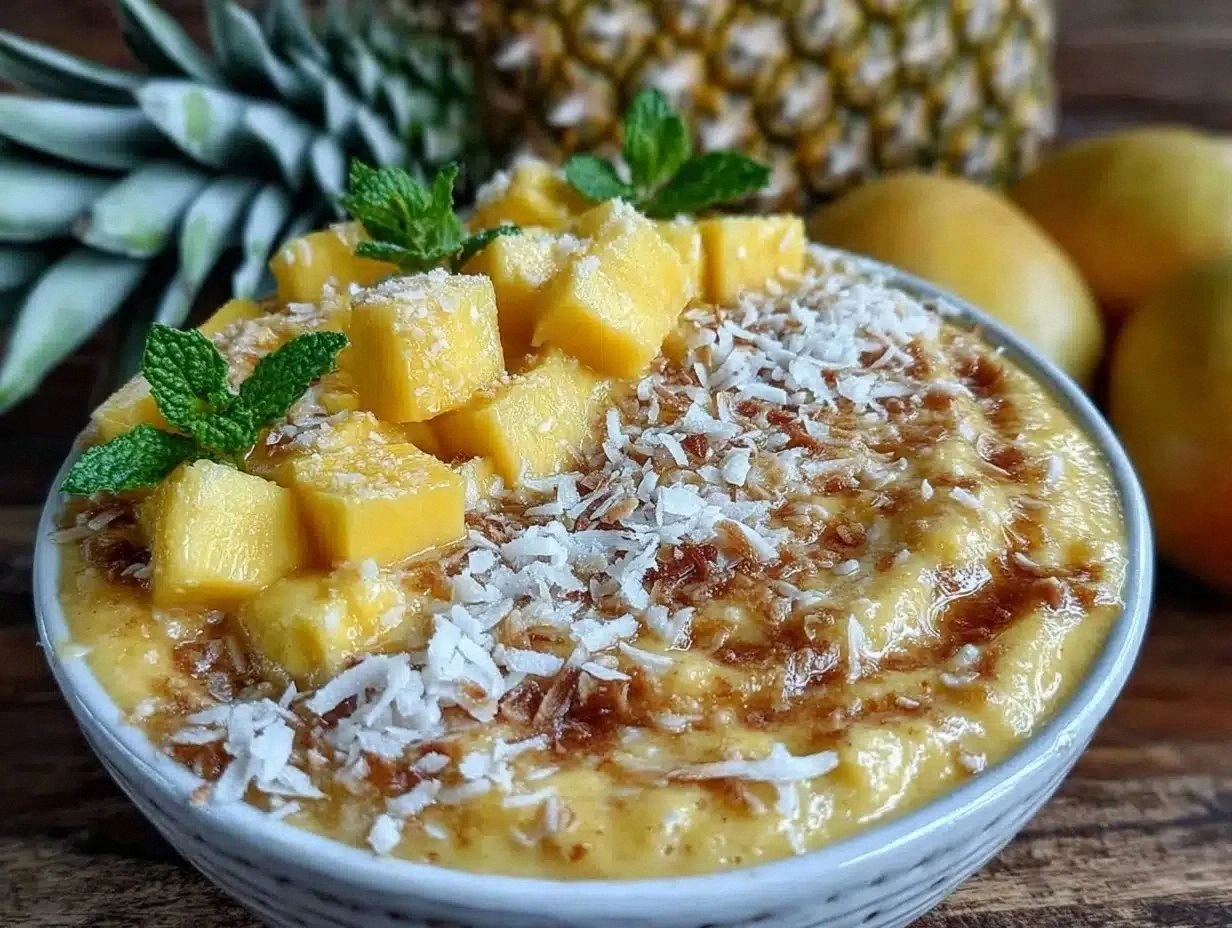
Time to get creative with toppings. Sprinkle a tablespoon of chia seeds across each bowl, then add a handful of granola for crunch. Arrange fresh berries or kiwi slices in a decorative pattern; think of it as painting a tropical sunrise on a canvas.
Finish with a generous dusting of toasted coconut flakes. The aroma of toasted coconut should hit you the moment you lift the spoon – it’s that warm, nutty scent that says “vacation”. Serve immediately, and watch as your guests dive in with delight.
That's it — you did it. But hold on, I've got a few more tricks that'll take this to another level…
Insider Tricks for Flawless Results
The Temperature Rule Nobody Follows
Your fruit should be chilled, but not frozen solid, before blending. Warm fruit releases too much water, making the bowl soupy. I keep a small tray in the freezer and pop the mango and pineapple chunks in for about 10 minutes. The result? A bowl that stays thick and cool, even on a hot summer morning. A friend once tried skipping this step and ended up with a soggy mess that could barely hold a spoon.
Why Your Nose Knows Best
Before you add any sweetener, give the blend a whiff. If you can smell the natural mango perfume, you probably don’t need extra honey. Trusting your nose saves you from over‑sweetening, which can mask the bright pineapple tang. I’ve learned that a quick sniff is a faster sanity check than a taste test that leaves you with a sticky spoon.
The 5‑Minute Rest That Changes Everything
After blending, let the bowl sit for five minutes. This short rest allows the chia seeds (if you’ve added them as a topping) to hydrate slightly, creating a pleasant gel that adds body without extra calories. It also lets the flavors meld, turning a good bowl into a great one. I used to serve immediately and missed out on that subtle depth – now I never skip the pause.
Layering Textures Like a Pro
Instead of dumping all toppings on top, create layers: a base of granola, a middle of fruit, then a crown of coconut flakes. This not only looks stunning but also ensures every bite offers a different texture – crunch, cream, and chew. A reader once told me they felt “bored” after the first spoonful because the toppings were all mixed; layering solved that problem instantly.
The Secret of the “Cold Spoon”
Pop your serving spoons in the freezer for a minute before serving. The cold metal keeps the smoothie bowl from warming too quickly, preserving that frosty mouthfeel longer. It’s a tiny detail that makes the experience feel upscale, like you’re at a five‑star brunch instead of your kitchen counter.
Creative Twists and Variations
This recipe is a playground. Here are some of my favorite ways to switch things up:
Berry‑Burst Bliss
Swap half the mango for frozen mixed berries. The berries add a tangy depth and a gorgeous violet hue, making the bowl look like a sunrise over a berry field. Perfect for those who love a bit more acidity.
Green Goddess Glow
Add a handful of fresh spinach or kale to the blender. The green won’t affect the sweet flavor much but will boost the nutrient profile dramatically. Top with sliced kiwi and a drizzle of almond butter for a balanced, earthy finish.
Coconut‑Caramel Dream
Replace the honey with a swirl of coconut caramel sauce and sprinkle toasted macadamia nuts on top. The caramel adds a buttery richness that pairs beautifully with the tropical fruit, turning the bowl into a dessert‑style indulgence.
Spicy Sunrise
Add a pinch of cayenne pepper or a dash of fresh ginger to the blender. The subtle heat cuts through the sweetness and awakens the palate, making the bowl feel like a sunrise with a little kick. Serve to guests who love a surprise flavor punch.
Protein Power Punch
Blend in a scoop of vanilla whey or plant‑based protein powder. This turns the bowl into a post‑workout refuel, keeping the tropical vibe while adding muscle‑building benefits. Top with pumpkin seeds for extra crunch.
Tropical Tofu Twist
Add silken tofu to the blender for a dairy‑free protein boost. The tofu blends seamlessly, adding creaminess without altering the flavor. Garnish with toasted sesame seeds for an Asian‑inspired finish.
Storing and Bringing It Back to Life
Fridge Storage
Transfer any leftover smoothie base to an airtight container and store it in the refrigerator for up to 24 hours. The texture may thicken slightly as the fruit releases more liquid; simply stir in a splash of coconut milk before serving to restore its silky consistency.
Freezer Friendly
If you anticipate a larger batch, pour the blended base into a freezer‑safe zip‑lock bag, flatten it, and freeze for up to 2 months. When you’re ready, thaw overnight in the fridge, then blend briefly with a few ice cubes to revive the original texture.
Best Reheating Method
Smoothie bowls are best served cold, but if you find the mixture too thick after storage, add a tiny splash (about 1‑2 tbsp) of water or extra coconut milk and give it a quick whirl in a blender or immersion blender. This steam‑like revival brings back that fresh‑fruit brightness without cooking the bowl.