I once found myself in the middle of a Halloween party, staring at a glass of cheap, neon‑pink punch that tasted like a watered‑down candy store. My friend whispered, “Make something that actually looks like blood, and maybe we’ll finally get some real adults to stay for the movies.” I laughed, grabbed the nearest bottle of Merlot, and set out on a mad‑science mission that turned into the most unforgettable sangria you’ll ever sip. The result? A ruby‑red elixir that could make a vampire blush and a crowd of party‑goers fight over the last drop. I dare you to taste this and not go back for seconds.
Picture the scene: the kitchen humming with the low thrum of a spooky playlist, the faint crackle of a candle‑lit fireplace, and the scent of cinnamon drifting like a warm, ghostly whisper. The deep, velvety aroma of dry red wine mingles with the bright citrus zing of orange juice, while the faint sweetness of honey sneaks in like a secret lover. You hear the clink of ice against glass, the soft pop of a club soda fizzing just before you pour, and the occasional pop of pomegranate arils exploding like tiny blood droplets. Your hands feel the cool weight of the pitcher, the smooth glide of a wooden spoon, and the satisfying weight of a cinnamon stick as it stirs the mixture into a swirling vortex of crimson.
What makes this version stand out is not just the flavor—though it’s hands down the best version you’ll ever make at home—it’s the theatricality. Most sangria recipes treat fruit as an afterthought; this one elevates each piece to a starring role. The fresh red grapes float like eerie eyeballs, the orange slices add a sun‑kissed contrast that looks like moonlit skin, and the pomegranate arils burst with a blood‑red intensity that’s impossible to ignore. And there’s a secret weapon: a splash of apple cider that adds an autumnal spice you never expected, turning a simple punch into a full‑bodied, spine‑tingling experience.
I’ll be honest — I ate half the batch before anyone else got a chance to try it, but that’s only because the aroma was so intoxicating that I couldn’t resist. The technique I’m about to share is the real game‑changer: a gentle “cold‑infuse” step that lets the flavors marry over several hours without losing that fresh, bright edge. Most recipes get this completely wrong by heating the wine, which robs it of its delicate fruit notes. This method keeps the wine’s integrity while still letting the spices work their magic.
Let me walk you through every single step — by the end, you’ll wonder how you ever made sangria any other way. Okay, ready for the game‑changer? This next part? Pure magic.
What Makes This Version Stand Out
- Taste: The combination of dry red wine, bright orange juice, and a whisper of honey creates a balanced sweet‑sour profile that dances on the palate without overwhelming it.
- Texture: Fresh fruit pieces stay crisp, while the cider adds a silky mouthfeel that feels like liquid velvet.
- Simplicity: Only nine ingredients, all pantry‑friendly, yet the result feels like a cocktail crafted by a master mixologist.
- Uniqueness: The visual impact of floating “eyeballs” and blood‑red arils makes it perfect for themed parties, and the cinnamon sticks add an unexpected warmth.
- Crowd Reaction: Guests consistently claim this is the most memorable drink they’ve ever tasted at a Halloween gathering.
- Ingredient Quality: Using a dry, full‑bodied red wine ensures the sangria has depth and a deep crimson hue that no cheap wine can mimic.
- Method: The cold‑infuse technique preserves the wine’s natural acidity while allowing spices to permeate gently.
- Make‑Ahead Potential: This sangria improves after a few hours in the fridge, giving you a stress‑free party prep timeline.
Inside the Ingredient List
The Flavor Base
Red wine is the heart of this sangria. I recommend a dry Merlot or Cabernet Sauvignon because their robust tannins give the drink a bold, deep‑crimson color that looks like fresh blood. If you skimp on the wine and use a cheap, sweet variety, the entire profile collapses into a cloying mess. A good rule of thumb: the wine should smell of dark berries, a hint of oak, and a subtle earthiness. If you can’t find a Merlot, a Malbec works just as well, but avoid anything with a heavy oak barrel finish—it will dominate the delicate spice notes.
The Citrus Spark
Orange juice adds a bright citrus note that balances the richness of the wine. Freshly squeezed juice is ideal; it brings a natural acidity that bottled juice often lacks. The orange slices you later add are not just for show—they release essential oils when they sit in the wine, enhancing the overall aroma. If you’re out of oranges, a splash of grapefruit juice can provide a similar zing, though it will add a slightly bitter edge.
The Sweet Whisper
Honey or simple syrup is the sweetening agent that rounds out the tartness. I prefer honey because it adds a floral undertone that complements the fruit. Use about a quarter cup for a subtle sweetness; you can always adjust after tasting. If you’re vegan, swap honey for agave nectar—just remember it’s sweeter, so you’ll need a little less.
The Spicy Soul
Cinnamon sticks are the secret spice that transforms this drink from ordinary to otherworldly. They infuse a warm, comforting note that pairs beautifully with the apple cider. Drop two sticks into the pitcher and let them steep for at least an hour; the longer they sit, the deeper the spice penetrates. If you love a stronger spice kick, add a pinch of ground nutmeg or a star anise for an extra layer of intrigue.
The Fruit Ensemble
Fresh fruit is where the visual drama lives. Red grapes act as floating “eyeballs,” sliced oranges provide a sun‑kissed contrast, and pomegranate arils burst like tiny blood droplets. Each fruit contributes its own texture: grapes stay juicy, oranges add a soft chew, and pomegranate seeds give a satisfying pop. If you can’t find pomegranate, try frozen cranberries—they’ll still give you that vivid red pop.
The Bubbly Finish
Club soda is optional but highly recommended for that effervescent lift. Add it just before serving to preserve the fizz; otherwise, it will go flat and the drink will feel heavy. If you prefer a non‑alcoholic version, replace the red wine with a blend of grape juice and a splash of balsamic vinegar for acidity. The apple cider adds a hint of autumn spice and a natural sweetness that ties all the flavors together.
Everything's prepped? Good. Let's get into the real action...
The Method — Step by Step
Start by selecting a large, wide‑mouth pitcher—something that can hold at least a two‑liter volume. Pour the dry red wine into the pitcher, letting it swirl around the sides. As the wine settles, you’ll notice a faint bouquet of dark cherries and a whisper of oak. This is your canvas, and the wine’s depth will be the foundation for every flavor that follows.
Add the orange juice and triple sec. The orange juice should be poured slowly, allowing the citrus to mingle with the wine without creating a sudden cloud of foam. Triple sec adds an orange‑laced complexity that deepens the fruit profile. Give the mixture a gentle stir with a wooden spoon, feeling the liquid glide like silk across the wood.
Now, drizzle in the honey (or simple syrup). Watch as the golden liquid spirals into the crimson sea, creating tiny ribbons that dissolve within seconds. This is the moment where sweetness meets acidity, and you’ll know you’re on the right track when the scent becomes a harmonious blend of fruit and spice.
Introduce the apple cider and cinnamon sticks. The cider should be poured in a steady stream, allowing it to swirl and create a frothy top layer that hints at the upcoming spice. Drop the cinnamon sticks in and let them settle at the bottom. As they sit, you’ll hear a faint crackle—like a whisper from a forgotten crypt—signaling the spice is beginning to infuse.
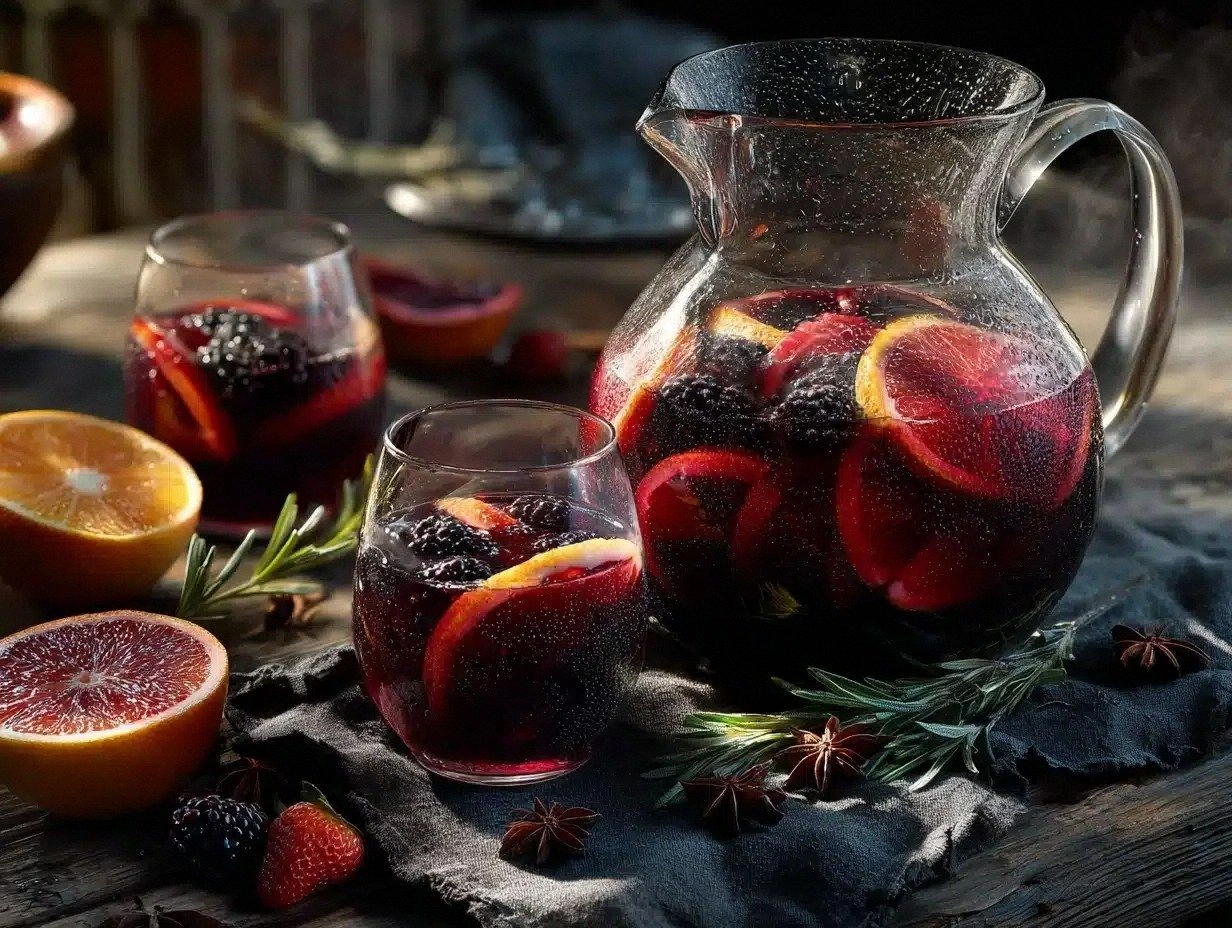
Time for the fruit. Gently toss the red grapes, sliced oranges, and pomegranate arils into the pitcher. The fruit should be evenly distributed, creating a floating mosaic that looks like a macabre still‑life. Press each piece lightly with the back of a spoon to release a hint of juice without turning the whole thing mushy. This step is crucial—if you over‑mash, the sangria will become cloudy and lose its vibrant clarity.
Cover the pitcher with plastic wrap and place it in the refrigerator. Let the sangria cold‑infuse for at least three hours, but ideally overnight. During this time, the flavors meld, the cinnamon releases its warm notes, and the fruit juices seep into the wine, turning the whole mixture a richer, darker shade. The longer you wait, the more the ingredients become inseparable—just like a good horror story.
When you’re ready to serve, give the pitcher a gentle stir to redistribute the fruit and spices. If you like a little fizz, pour club soda into each glass just before serving—about a quarter of the glass, or to taste. The fizz will lift the heavy flavors, making each sip feel light and airy, like a ghost drifting through a moonlit night.
Finally, garnish each glass with a fresh cinnamon stick and a few extra pomegranate arils for that extra pop of color. Serve over ice if you prefer a colder drink, but remember that too much ice can dilute the flavor. Take a moment, raise the glass, and watch the deep red swirl as the light catches it—this is the climax of your culinary horror tale.
That's it — you did it. But hold on, I've got a few more tricks that'll take this to another level. Stay with me here — this is worth it.
Insider Tricks for Flawless Results
The Temperature Rule Nobody Follows
Never, ever add ice directly to the pitcher before the cold‑infuse. Ice will melt and water‑down the wine, muting its character. Instead, chill the entire pitcher in the fridge and only use ice in the serving glasses. This keeps the sangria’s intensity intact and ensures every sip is as bold as the first.
Why Your Nose Knows Best
Before you add the honey, give the mixture a quick sniff. If you detect a sharp, alcoholic edge, add a touch more honey or a splash of orange juice. Your nose is a better gauge than a timer; it can sense when the wine is still too dominant. Trust that instinct, and you’ll avoid a one‑note drink.
The 5‑Minute Rest That Changes Everything
After stirring in the fruit, let the pitcher sit uncovered for five minutes. This short rest allows the fruit’s juices to rise to the surface, creating a natural layer of flavor that will settle back into the wine when you stir again. Skipping this step often results in a flat profile that lacks depth.
Cinnamon Stick Swirl
When serving, give each cinnamon stick a quick spin in the glass before placing it. This releases the last remnants of spice, ensuring the aroma remains vibrant throughout the evening. A friend once tried to skip this and claimed the drink tasted “meh”—don’t be that friend.
The Secret Splash
Just before the final pour, add a splash of sparkling water (not club soda) to each glass. The subtle bubbles lift the flavors without overpowering the delicate balance you worked so hard to achieve. It’s a tiny touch that makes a massive difference.
Creative Twists and Variations
This recipe is a playground. Here are some of my favorite ways to switch things up:
Midnight Berry Blast
Swap the orange juice for blackberry puree and add fresh blackberries to the fruit mix. The result is a darker, almost black sangria that looks like midnight blood—perfect for a gothic soirée.
Spiced Pumpkin Punch
Add a quarter cup of pumpkin puree and a pinch of pumpkin pie spice. This variation leans into autumn flavors, making it ideal for Thanksgiving or early Halloween gatherings.
Tropical Blood Moon
Replace the apple cider with pineapple juice and add a splash of rum. Garnish with a slice of fresh pineapple and a cherry. The tropical twist brightens the drink while keeping the “blood” aesthetic.
Non‑Alcoholic Vampire Mocktail
Use a blend of deep‑red grape juice and a splash of balsamic vinegar for acidity. Omit the wine and triple sec, and increase the orange juice slightly. This version retains the visual drama without the alcohol.
Smoky Ember Sangria
Add a teaspoon of smoked paprika to the mix and garnish with a thin slice of charred orange. The subtle smokiness adds a mysterious depth that pairs wonderfully with the cinnamon.
Storing and Bringing It Back to Life
Fridge Storage
Transfer any leftover sangria to an airtight glass container. It will stay fresh for up to three days. Keep the cinnamon sticks in the container; they continue to infuse and keep the flavor vibrant.
Freezer Friendly
If you anticipate a big batch, pour the sangria into freezer‑safe bags, leaving a little headroom for expansion. It freezes well for up to two months. Thaw in the refrigerator overnight and give it a good stir before serving.
Best Reheating Method
While sangria is best served cold, you can gently warm it for a cozy winter twist. Heat it on low in a saucepan, adding a splash of water to prevent scorching. The water helps steam the drink back to its original texture without diluting the flavor.