I was halfway through a midnight snack, scrolling through Instagram for a quick bite, when the kitchen lights flickered and my phone buzzed with a text from my roommate: “You’re still cooking that soggy pasta from last night?” My face turned a shade of guilty green, the smell of overcooked linguine still hanging in the air like a bad memory. I laughed, grabbed my phone, and typed back, “Just a minute, I’m about to make something that will make you forget about that disaster.” That moment sparked the creation of the dish that would become my go-to comfort food, a recipe that I swear could turn any kitchen mishap into a triumph.
Picture this: a pot of boiling water, the hiss of steam curling into the kitchen, and the faint scent of fresh spinach mingling with the sharp tang of sun‑dried tomatoes. The sound of garlic sizzling in olive oil creates a rhythmic drumbeat, while the gentle clink of a wooden spoon against the pan signals that everything is in its right place. My eyes catch the glossy sheen of the sauce as it coats the pasta, and I can almost taste the buttery richness that promises to melt on the tongue. The heat radiates from the stove, warming the room, and the anticipation builds until the very last bite feels like a warm hug.
What makes this version of spinach and sun‑dried tomato linguine stand out is not just the ingredients, but the way they interact. I’ve taken the classic comfort dish and amplified the depth of flavor, introduced a velvety texture that lingers on the palate, and added subtle bright notes that keep the dish from feeling heavy. Every component is chosen for its ability to enhance the others: the sun‑dried tomatoes bring a sweet umami punch, the spinach offers a fresh, earthy balance, and the creamy sauce ties everything together like a silk ribbon. The result is a dish that feels both indulgent and wholesome, a culinary win that makes me proud to share it with friends and family.
The secret sauce of this recipe—no pun intended—lies in a few unexpected twists. I’ll reveal a technique that transforms ordinary sun‑dried tomatoes into a silky, aromatic spread, and a method for turning fresh spinach into a silky bed that won’t wilt away in the sauce. These small but mighty adjustments elevate the dish from ordinary to unforgettable. Trust me, I dare you to taste this and not go back for seconds. If you’re skeptical, I’ll confess: I ate half the batch before anyone else even saw the plate.
Let me walk you through every single step—by the end, you’ll wonder how you ever made it any other way. This is hands down the best version you’ll ever make at home, and I’m about to share the exact process that turns a simple pasta into a show‑stopper.
What Makes This Version Stand Out
- Flavor: The combination of sun‑dried tomatoes, fresh spinach, and a creamy garlic sauce creates a layered taste that dances on the tongue. The sun‑dried tomatoes bring a concentrated sweetness that cuts through the richness, while the spinach adds a subtle earthiness. The result is a dish that feels both comforting and adventurous.
- Texture: The sauce coats the linguine like velvet, thanks to the careful emulsification of cream and cheese. The spinach turns into silky ribbons that mingle with the pasta, while the sun‑dried tomatoes provide a pleasant burst of chew. This contrast keeps each bite interesting and satisfying.
- Simplicity: With just a handful of ingredients and a straightforward cooking method, you can whip up a gourmet meal in under an hour. The recipe is designed for busy weeknights, yet it never feels rushed or undercooked.
- Uniqueness: Most pasta recipes rely on tomato sauce or pesto; this dish brings a fresh, green twist that’s rarely seen in the comfort‑food realm. The combination of creamy sauce and sun‑dried tomatoes sets it apart from the usual crowd.
- Ingredient Quality: Using high‑quality sun‑dried tomatoes packed in olive oil, fresh spinach, and a good Parmesan elevates the dish to restaurant‑level flavor. The choice of ingredients is key to achieving the depth and richness we’re after.
- Make‑ahead Potential: The sauce can be prepared a day ahead and refrigerated, and the pasta can be cooked just before serving. This makes it an excellent option for meal prep or entertaining guests.
Alright, let's break down exactly what goes into this masterpiece...
Inside the Ingredient List
The Flavor Base
Olive Oil: The foundation of any great sauce, olive oil adds a fruity depth that carries the garlic and sun‑dried tomatoes. It also helps the cream emulsify smoothly. If you prefer a lighter version, use a neutral oil like grapeseed, but the olive oil’s character is essential for authenticity.
Garlic: Fresh garlic provides a sharp, aromatic kick that balances the sweetness of the tomatoes. Mince it finely so it releases its full flavor without overpowering the dish. If you’re sensitive to garlic, reduce the amount to one clove and you’ll still get a noticeable lift.
The Texture Crew
Fresh Spinach: Spinach is the green hero that adds both nutrition and a subtle earthiness. When cooked, it reduces dramatically, so start with a generous amount to ensure a vibrant green finish. If you can’t find fresh spinach, frozen works too—just be sure to thaw and squeeze out excess water.
Linguine: A long, flat noodle that holds sauce beautifully. The shape allows the creamy sauce to cling to every curve, delivering a consistent flavor bite after bite. Choose a high‑quality wheat pasta for the best chew.
The Unexpected Star
Sun‑Dried Tomatoes: These are the secret weapon that brings a concentrated, sweet‑tart flavor. Their chewy texture adds a pleasant bite that contrasts with the silky sauce. If you’re using sun‑dried tomatoes packed in oil, reserve a tablespoon of that oil to incorporate into the sauce for extra richness.
Heavy Cream: Cream gives the sauce its luxurious mouthfeel and balances the acidity of the tomatoes. Use a full‑fat cream for the richest texture; a lighter half‑and‑half can be used if you’re watching calories, but it will yield a thinner sauce.
The Final Flourish
Parmesan Cheese: Grated Parmesan adds a nutty, savory depth that rounds out the dish. It also helps thicken the sauce slightly as it melts. For a sharper flavor, try a mix of Parmesan and Pecorino Romano.
Lemon Zest: A splash of lemon zest brightens the sauce, cutting through the richness and adding a subtle citrus lift. Zest a fresh lemon to keep the flavor vibrant and avoid any bitterness.
Red Pepper Flakes: A pinch of heat that adds a gentle kick without overpowering the dish. If you prefer a milder version, simply omit or reduce the flakes.
Basil: Fresh basil leaves tossed at the end add a fragrant, herbaceous note that complements the spinach. Roughly tear the leaves to release their oils.
Salt & Pepper: Season to taste. Salt enhances all the flavors, while pepper adds a subtle warmth. Remember to taste the sauce before adding more to avoid over‑salting.
Everything's prepped? Good. Let's get into the real action...
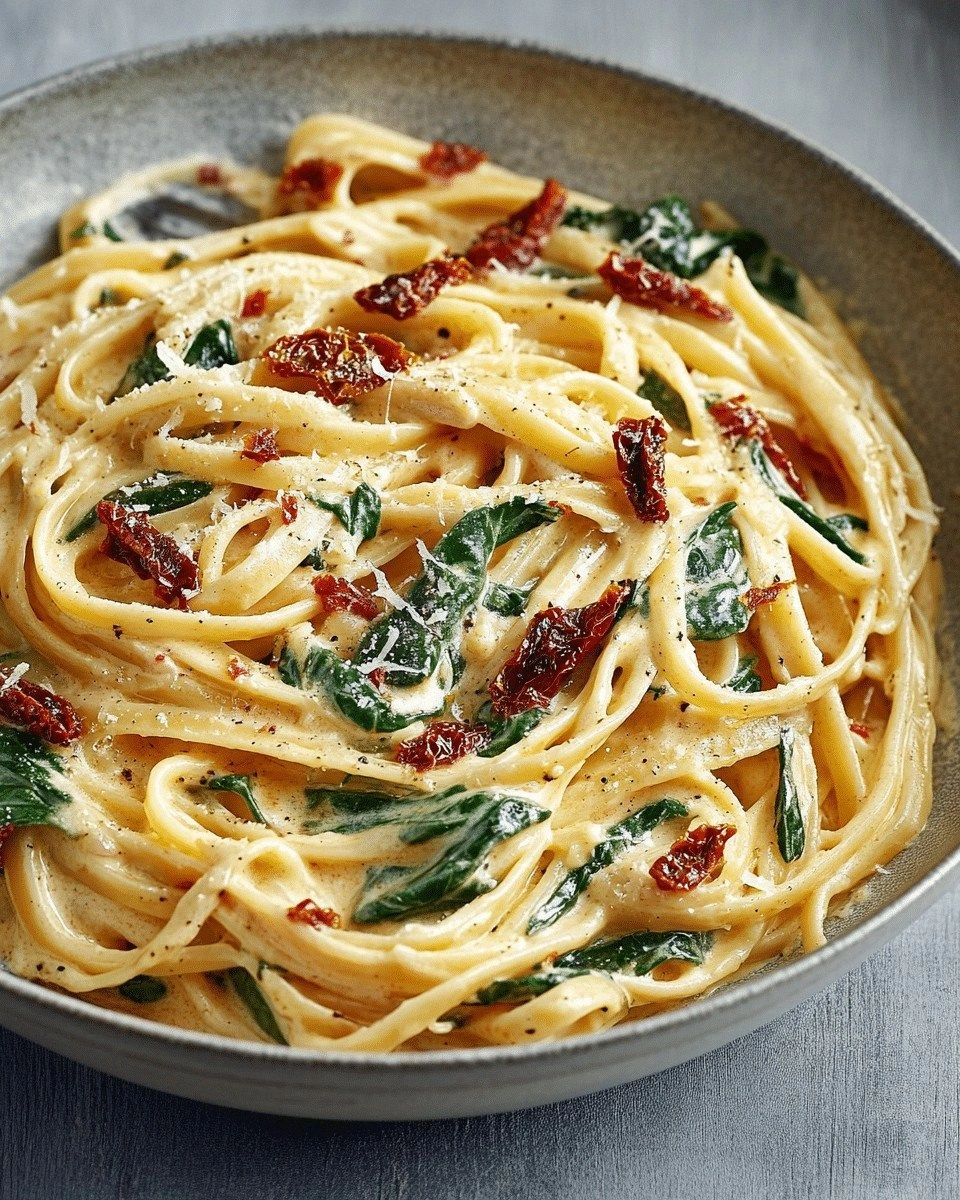
The Method — Step by Step
- Prep the Pasta: Bring a large pot of salted water to a rolling boil. Add the linguine and cook until al dente, about 8–9 minutes. Reserve a cup of pasta water before draining; it will help adjust the sauce’s consistency later. While the pasta cooks, set a timer for 8 minutes so you’re ready to move on when it’s done.
- Saute the Garlic: While the pasta boils, heat 2 tablespoons of olive oil in a large skillet over medium heat. Add the minced garlic and sauté until fragrant, about 30 seconds. Keep the garlic moving to avoid burning—burnt garlic tastes like ash, not flavor. This step builds the aromatic base that will carry the sauce.
- Introduce the Sun‑Dried Tomatoes: Add the chopped sun‑dried tomatoes to the skillet. Cook for 2 minutes, stirring occasionally. The tomatoes will soften and release their oil, creating a fragrant bed for the spinach. If you’re using oil‑packed tomatoes, reserve a tablespoon of that oil for later.
- Cook the Spinach: Add the spinach in a handful at a time, stirring until it wilts. The spinach will reduce by half, so add it gradually until all is incorporated. The steam from the spinach will help soften the tomatoes further and infuse the sauce with a subtle green hue. This step is crucial for texture—overcooked spinach becomes mushy.
- Add the Cream: Pour in 1/2 cup of heavy cream and stir until the mixture is smooth. Let it simmer gently for 3 minutes, allowing the flavors to meld. The cream will thicken slightly, giving the sauce a silky coat. If the sauce becomes too thick, add a splash of reserved pasta water to reach your desired consistency.
- Season the Sauce: Sprinkle in 1 teaspoon of red pepper flakes, 1 tablespoon of lemon zest, and a pinch of salt and pepper. Taste the sauce and adjust as needed. The lemon zest brightens the richness, while the pepper flakes provide a gentle heat. This is the moment of truth—if the sauce feels flat, you’re missing the punch.
- Combine Pasta and Sauce: Add the drained linguine to the skillet, tossing to coat each strand evenly. If the sauce is too thick, add a bit of reserved pasta water to loosen it. The pasta should be glossy and coated in sauce, with spinach and sun‑dried tomatoes evenly distributed.
- Finish with Cheese and Herbs: Stir in 1/4 cup of grated Parmesan until it melts into the sauce, creating a smooth, nutty finish. Add the chopped basil and a final pinch of salt and pepper. Toss everything together, letting the heat melt the cheese into a velvety blanket. This final touch adds depth and a fragrant finish.
- Serve Immediately: Plate the pasta while hot, ensuring each forkful is coated in sauce. Garnish with a sprinkle of extra Parmesan and a few basil leaves if desired. The dish should feel warm, fragrant, and indulgently creamy. Serve with a side of crusty bread to soak up any remaining sauce.
That's it — you did it. But hold on, I've got a few more tricks that'll take this to another level. These insider tips will help you avoid common pitfalls and elevate the dish from good to unforgettable.
Insider Tricks for Flawless Results
The Temperature Rule Nobody Follows
Many cooks instinctively turn the heat up to speed up the cooking process, but this dish thrives on gentle simmering. Keeping the sauce at a low simmer allows the flavors to meld without the risk of curdling the cream. I’ve seen even seasoned chefs overheat their sauces, resulting in a grainy texture. Stick to medium‑low heat, and you’ll achieve that silky finish every time.
Why Your Nose Knows Best
Before adding the final pinch of salt, take a quick sniff of the sauce. A fresh, bright aroma indicates the flavors are balanced. If it smells too heavy or slightly burnt, it’s a sign to reduce the heat or add a splash of pasta water. Trusting your nose can save you from a ruined dish and help you achieve culinary perfection.
The 5-Minute Rest That Changes Everything
After you finish cooking, let the pasta rest for five minutes before serving. This brief pause allows the sauce to thicken slightly and the flavors to settle. It also prevents the pasta from continuing to cook in the residual heat, which can lead to a mushy texture. A quick five‑minute rest is a simple step that dramatically improves the final bite.
Use Fresh Herbs, Not Dried
Fresh basil and parsley provide a bright, aromatic finish that dried herbs simply cannot match. Dried herbs can be used in a pinch, but they lose their punch over time. If you’re in a rush, I’ve found that a handful of fresh basil leaves tossed at the end is the easiest way to elevate the dish.
The Secret to Perfectly Al Dente
Timing is everything when it comes to pasta. Start the pasta at the same time you begin the sauce, and check the pasta’s doneness at the 8‑minute mark. If it’s still a bit firm, give it another minute; if it’s already al dente, you’re ready to combine it with the sauce. A perfectly cooked pasta provides a satisfying bite that holds up against the creamy sauce.
Creative Twists and Variations
This recipe is a playground. Here are some of my favorite ways to switch things up:
Pesto Power
Swap the lemon zest for a handful of fresh basil pesto. The pesto adds a nutty, herbal depth that pairs wonderfully with the sun‑dried tomatoes. Use about 2 tablespoons of pesto for a subtle flavor shift.
Mushroom Medley
Add sliced cremini or shiitake mushrooms in step 4. The earthy umami of mushrooms complements the tomatoes and spinach, creating a richer, more complex sauce. Sauté the mushrooms until golden before adding the spinach.
Protein Boost
Stir in cooked chicken breast, shrimp, or chickpeas for a protein‑rich version. Toss the protein in the sauce for the last 2 minutes to warm it through and absorb the flavors.
Vegan Version
Use a plant‑based cream like coconut milk or cashew cream, and replace Parmesan with nutritional yeast. This keeps the dish creamy and cheesy while making it fully vegan.
Spicy Kick
Increase the red pepper flakes or add a dash of hot sauce to the sauce in step 6. The heat will contrast beautifully with the sweetness of the tomatoes and the richness of the cream.
Nutty Crunch
Toss in toasted pine nuts or walnuts at the end. The crunch adds a textural contrast that keeps each bite interesting.
Storing and Bringing It Back to Life
Fridge Storage
Cool the pasta and sauce completely before transferring to an airtight container. Store in the refrigerator for up to 3 days. When ready to eat, reheat gently on the stovetop with a splash of water or milk to restore the sauce’s creaminess.
Freezer Friendly
Freeze the dish in a freezer‑safe container for up to 2 months. Thaw overnight in the refrigerator, then reheat on the stovetop with a small amount of water. The sauce may separate slightly; a quick whisk will bring it back together.
Best Reheating Method
Reheat the pasta in a saucepan over low heat, stirring frequently. Add a tiny splash of water or milk to loosen the sauce, then continue to warm until hot. Avoid boiling, as it can cause the sauce to split.