I still remember the first time I tried to make sour cream chicken enchiladas. It was a Wednesday night, I was wearing mismatched socks, and I had exactly half a rotisserie chicken, a tub of sour cream that was dangerously close to expiring, and a craving so fierce I could practically taste the tangy sauce through sheer willpower. What followed was a comedy of errors involving a too-hot pan, tortillas that cracked like dry leaves, and a sauce that curdled into something resembling cottage cheese. I ate it anyway, standing over the sink, and declared it “edible.” Fast forward three years and dozens of obsessive iterations later, and I’ve cracked the code on the silkiest, richest, most crowd-wilting version you’ll ever pull from your oven. Picture this: corn tortillas rolled around juicy shards of citrus-kissed chicken, blanketed in a sour-cream sauce that tastes like velvet had a love child with roasted green chiles, all bubbling under a light snowfall of Monterey Jack that stretches into cheese-pull heaven. The scent alone will make your neighbors knock politely, then less politely. I dare you to taste this and not go back for thirds. Stay with me here—this is worth it.
Most recipes get this completely wrong. They dump sour cream into a scorching pan and wonder why it separates into a grainy mess. They use canned cream-of-whatever soup and call it flavor. They bake the dish until the edges petrify into rubber. I’m here to break up with all of that. We’re building layers: first a quick braise that infuses the chicken with garlic, lime, and smoky cumin; then a gentle béchamel base that cradles the sour cream so it stays silky; finally a two-stage bake—low and slow to meld, then a flash under the broiler for those coveted toasted blisters. If you’ve ever struggled with gloppy, bland, or dry enchiladas, you’re not alone—and I’ve got the fix.
Okay, ready for the game-changer? We’re going to whip the sour cream with a splash of reserved braising liquid and a touch of cornstarch slurry before it ever meets heat. That tiny step stabilizes the proteins so the sauce stays glossy, never grainy. You’ll swear there’s a hidden can of condensed soup, but it’s just dairy doing gymnastics. Future pacing: imagine yourself pulling a cobalt baking dish from the oven, the sauce burbling like jacuzzi bubbles, the cheese freckled bronze, the scent of roasted chiles curling through your kitchen like incense. Someone you love walks in, stops mid-sentence, and simply sighs. That’s the reaction we’re after. Let me walk you through every single step—by the end, you’ll wonder how you ever made it any other way.
What Makes This Version Stand Out
- Creamy Without Canned Soup: We build a quick roux, then fold in sour cream off-heat so it stays luxurious, not clumpy. The result is a sauce that coats the back of a spoon like velvet and tastes purely of dairy and roasted peppers—no tinny aftertaste.
- Chicken That Tastes Like More Than Filler: A 12-minute simmer in broth, lime zest, and a whisper of liquid smoke means every shred is seasoned through and through. You’ll never again suffer the “blah” breast meat that plagues most casseroles.
- Tortillas That Bend, Don’t Break: Instead of the usual flash-fry, we brush them with rendered chicken fat and warm them on a cast-iron comal until they puff like tiny balloons. Flexible, toasty, and zero cracks.
- Heat That Builds, Not Burns: Two poblanos for gentle fruitiness, one jalapeño for snap, and a dash of hot sauce in the pot—no single element overwhelms. Kids keep eating; grown-ups reach for the cerveza.
- Make-Ahead Magic: Assemble the night before, refrigerate under plastic pressed right to the surface, then bake straight from cold—just add ten extra minutes. Pot-luck hosts, you’re welcome.
- Cheese Strategy: Half stirred into the filling for stretch, half sprinkled on top for blister. We use Monterey Jack because it melts like a dream and browns without turning into plastic.
- One Dish, Zero Waste: Same skillet for the chicken, the sauce, and the final bake. Less dishes, more Netflix. If you’ve ever cursed a recipe that dirties every pot you own, this is your redemption.
Alright, let’s break down exactly what goes into this masterpiece...
Inside the Ingredient List
The Flavor Base
Let’s start with the chicken—two cups of shredded meat from a home-roasted bird or a store-bought rotisserie works equally well. If you’re roasting your own, season aggressively with kosher salt the night before; the dry brine seasons the meat all the way to the center. The sour cream must be full-fat. I’m not a food dictator, but low-fat will break and weep like a disappointed aunt. Grab a 16-ounce tub; you’ll use most of it in the sauce and a dollop for garnish. Finally, corn tortillas—not flour—because corn brings that nixtamalized earthiness that screams Tex-Mex authenticity.
The Texture Crew
Butter and flour form our quick roux; equal parts, cooked just until it smells like toasted hazelnuts. Whole milk loosens the roux into a proper béchamel. Reserve a quarter cup of the milk cold; we’ll whisk the cornstarch into it to prevent lumps. Monterey Jack is the melter, but sneak in two tablespoons of sharp white cheddar for backbone. The cheddar adds that faint tangy bite that keeps the dish from sliding into bland-white-sauce territory.
The Unexpected Star
Here’s the curveball: a single chipotle pepper in adobo, minced into a smoky paste. It dissolves into the sauce and leaves behind a haunting warmth that blooms minutes after you swallow. Don’t skip it—just trust me. A teaspoon of honey balances the chipotle’s heat and the sour cream’s tang like a culinary seesaw. Lastly, frozen pearl onions (thawed) slip into the filling for sweet pops that contrast the rich sauce.
The Final Flourish
Fresh cilantro stems go into the poaching liquid; the leaves are saved for a last-second shower. A squeeze of fresh lime right before serving wakes up all the dormant flavors. If you want restaurant-level presentation, thin a couple tablespoons of sour cream with milk and zig-zag across the top like Basquiat with a piping bag. Everything’s prepped? Good. Let’s get into the real action...
The Method — Step by Step
- Start by poaching your chicken: in a heavy skillet, combine two cups shredded chicken, one cup low-sodium chicken stock, the juice and zest of half a lime, two smashed garlic cloves, a teaspoon of kosher salt, and half a teaspoon of ground cumin. Bring to a gentle simmer over medium heat, then drop to low, cover, and let it bubble quietly for twelve minutes. Your kitchen will start to smell like a taqueria married a citrus grove—this is the aroma equivalent of a bear hug.
- While the chicken mingles, roast the chiles: place two poblano peppers and one jalapeño directly over a gas flame (or under a screaming-hot broiler) and char until the skins blister and blacken like campfire marshmallows gone rogue. Pop them into a bowl, cover with a plate, and let them steam; the trapped moisture loosens the skins so you can rub them off under cool water. Don’t rinse too long—you want to keep that smoky perfume. Stem, seed, and dice into confetti.
- Now the fun part: make the roux. In the same skillet (don’t you dare wipe it out), melt two tablespoons of unsalted butter over medium. When the foam subsides and the butter smells nutty, sprinkle in two tablespoons of all-purpose flour. Whisk constantly for ninety seconds; you’re aiming for a color like sand at low tide. If it browns too fast, yank the pan off the heat; a scorched roux tastes like burnt popcorn and will haunt your sauce forever.
- Gradually whisk in one cup of whole milk, a splash at a time, letting each addition thicken before adding the next. Think of it as feeding a baby dinosaur—slow and steady keeps it from spitting. Once smooth, whisk in a quarter cup of the reserved chipotle-chicken liquid for depth. The sauce should coat the back of a spoon and hold a clean line when you drag your finger. If it’s too thick, loosen with more milk; too thin, let it burble another minute.
- Off the heat, whisk in one cup of full-fat sour cream. This next part? Pure magic. In a small bowl, whisk two teaspoons of cornstarch into the remaining cold milk until no lumps remain, then drizzle it into the sauce. This slurry prevents the sour cream’s proteins from curdling when we bake later. Season with half a teaspoon of salt, a few cracks of black pepper, and the minced chipotle. Taste it—close your eyes and swear off canned soup for life.
- Stir the diced roasted chiles, the pearl onions, and a handful of shredded cheese into the chicken. The filling should be moist but not swimming; add a spoonful of sauce if it looks dry. Warm eight to ten corn tortillas on a dry comal until they puff like tiny throw pillows—about thirty seconds per side. Brush lightly with the chicken-fat slick from the top of the poaching liquid; this adds flavor and flexibility so they roll without tearing.
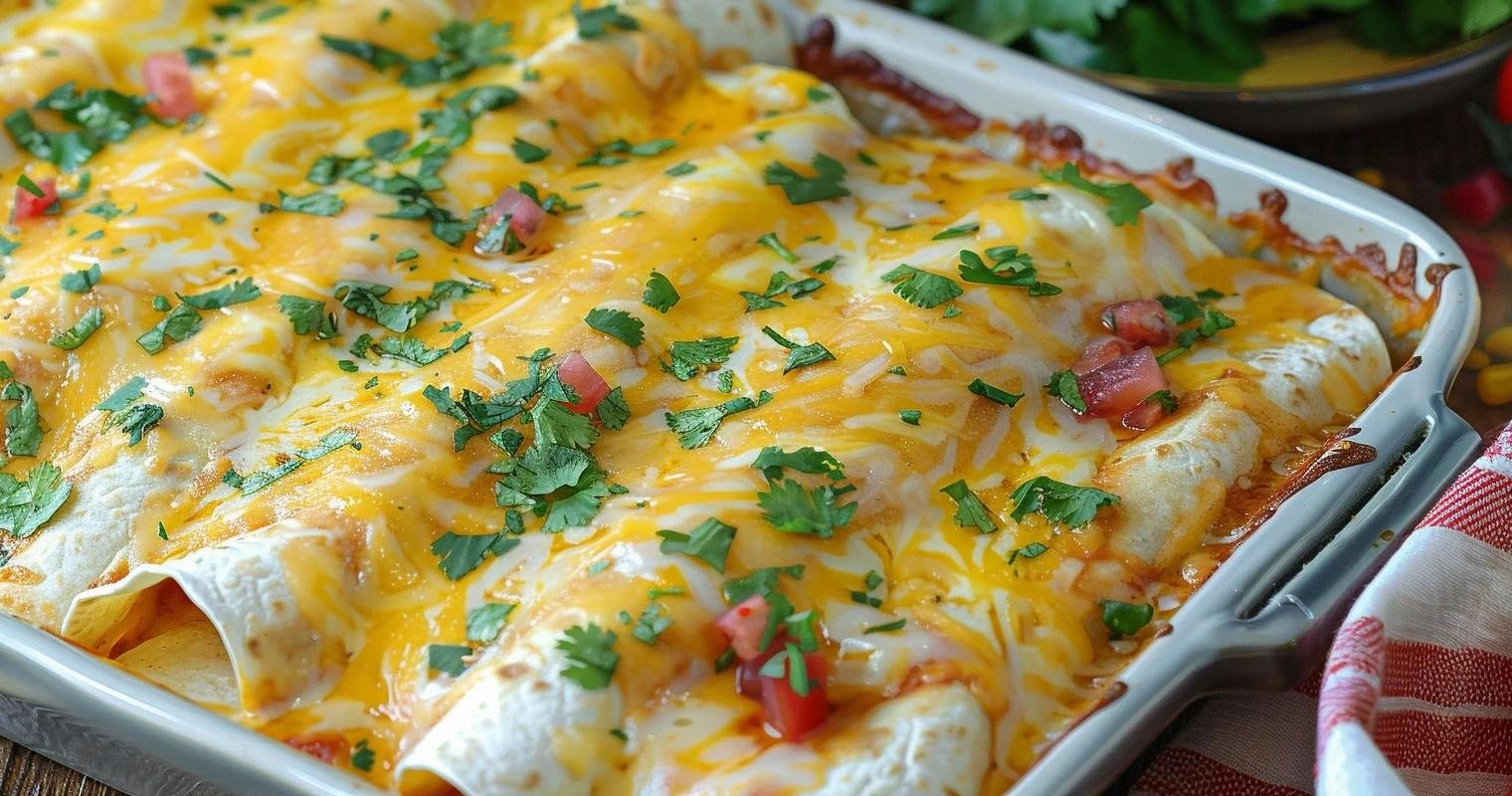
- Assemble: spoon two heaping tablespoons of filling down the center of each tortilla, roll snugly, and place seam-side-down in a buttered 9×13-inch baking dish. Pack them like happy little soldiers; the proximity keeps them from unrolling. Pour the remaining sauce evenly over the enchiladas, nudging it into every crevice with the back of a spoon. Sprinkle the rest of the cheese over the top—be generous, this is not the time for restraint.
- Bake at 375°F for twenty minutes, until the sauce is lava-bubbly and the cheese has melted into a molten blanket. Switch the oven to broil and slide the dish onto the upper rack for two to three minutes, rotating once, until the cheese blisters into bronze freckles. Watch it like a hawk; the line between toasted and tragedy is roughly thirty seconds. When you pull it out, the sauce should hiss softly around the edges—that sizzle when it hits the pan? Absolute perfection.
That’s it—you did it. But hold on, I’ve got a few more tricks that’ll take this to another level...
Insider Tricks for Flawless Results
The Temperature Rule Nobody Follows
Never let the sour cream hit boiling liquid; anything above 180°F will scramble the proteins. Pull the skillet off the burner, count to fifteen, then whisk it in. A friend tried rushing this step once—let’s just say dinner looked like ricotta rafting down a river of disappointment. Patience equals silk.
Why Your Nose Knows Best
When the roux smells like warm hazelnuts and the color of a cardboard box, you’re golden. If it’s still raw-floury, keep whisking. If it smells like burnt toast, start over. Your nose is more reliable than any timer I could give you.
The 5-Minute Rest That Changes Everything
After broiling, tent the dish loosely with foil and let it nap for five minutes. The sauce thickens slightly, the flavors settle, and you won’t scorch your tongue on cheese lava. I’ll be honest—I ate half the batch before anyone else got to try it, and that rest period is the only thing standing between me and total shame.
Creative Twists and Variations
This recipe is a playground. Here are some of my favorite ways to switch things up:
Chipotle Shrimp Remix
Swap the chicken for peeled shrimp sautéed in butter with a dash of Old Bay. Fold in roasted corn kernels for sweetness and top with crumbled queso fresco. The briny shrimp against smoky sauce is a coastal vacation on a plate.
Green Chile Pork Upgrade
Use shredded carnitas tossed with roasted Hatch chiles and a splash of pineapple juice. The fruit’s enzyme tenderizes the pork further and adds a tropical whisper that makes guests ask, “What is that flavor?”
Breakfast Champion
Fill tortillas with scrambled eggs, chorizo, and Oaxaca cheese. Bake as directed, then crown with a fried egg and a drizzle of salsa verde. Brunch tables will bow before you.
Vegetarian Powerhouse
Roast cauliflower florets until caramelized, toss with black beans and cumin, then proceed with the same sauce. Even card-carrying carnivores inhale this version and ask for the recipe.
Extra-Crisp Top
Mix panko with a teaspoon of the rendered chicken fat and sprinkle over the cheese before broiling. You’ll get shatteringly crispy edges that contrast the creamy interior like kettle chips on silk.
Storing and Bringing It Back to Life
Fridge Storage
Cool completely, then cover tightly with foil or transfer to an airtight glass container. The enchiladas keep four days, though the sauce will thicken. To reheat, add a splash of milk, cover with foil, and warm at 325°F for twenty minutes until the center registers 165°F on an instant-read thermometer.
Freezer Friendly
Assemble up to the point of baking, wrap the entire dish in a double layer of foil, then slide into a jumbo zip-top bag. Freeze up to two months. Thaw overnight in the fridge, then bake as directed, adding ten extra minutes. Pro tip: freeze individual portions in ramekins for emergency comfort food.
Best Reheating Method
Microwaves murder the texture—avoid them. Instead, place a single portion in a small skillet with a tablespoon of water, cover, and warm over low heat. The steam revives the tortillas and the sauce regains its glossy swagger. Add a fresh squeeze of lime and no one will know it’s day-three leftovers.