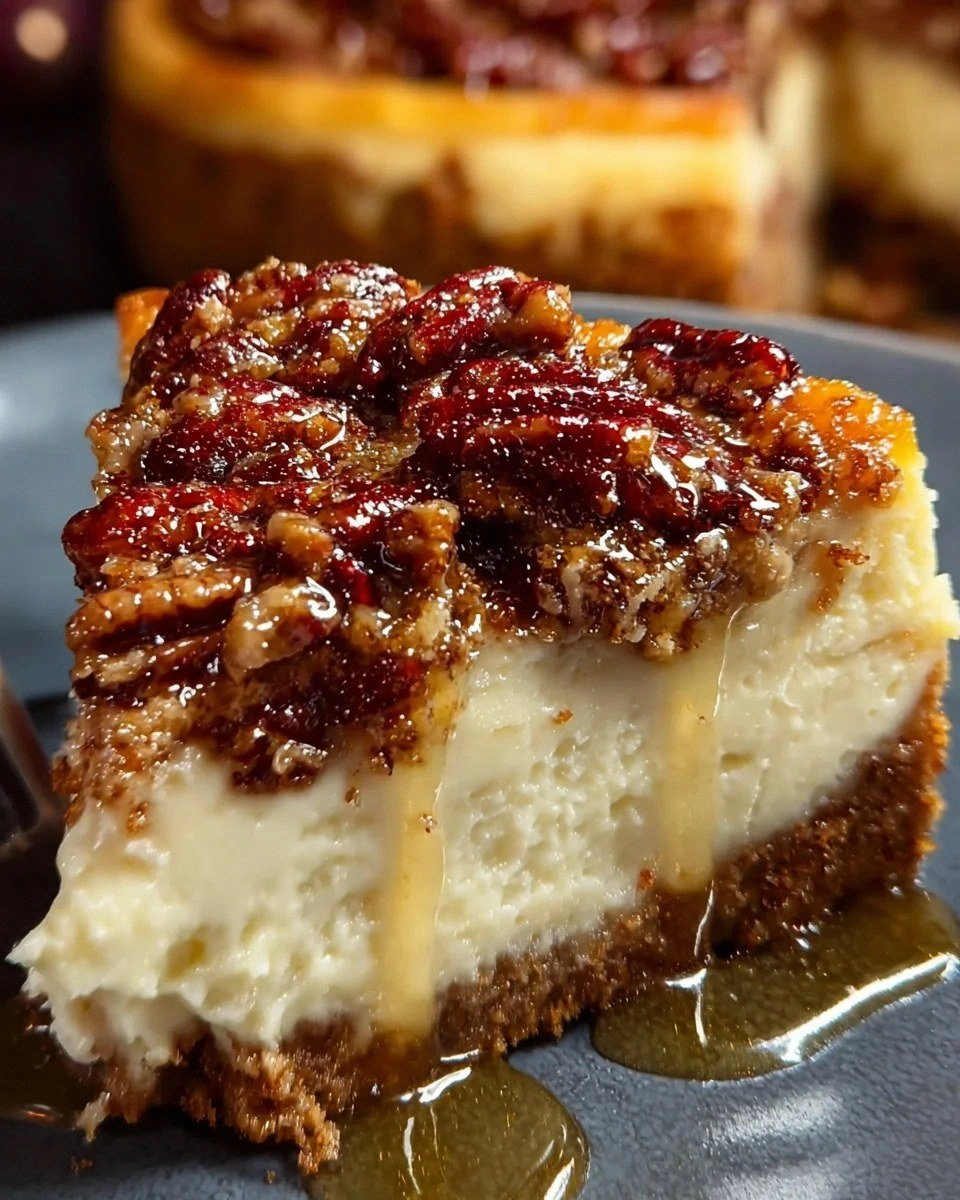
Picture this: a rainy Saturday, the oven humming like a low‑frequency drum, and a sudden craving for something that feels like both a holiday classic and a guilty‑pleasure indulgence. I was halfway through a batch of plain cheesecake when my roommate dared me to “make it taste like pecan pie without turning it into a pie.” I laughed, I scoffed, and then I did the impossible—combined two iconic desserts into one glorious, buttery, nut‑laden masterpiece. The result? A PECAN PIE CHEESECAKE that makes the kitchen smell like a Southern kitchen on Thanksgiving, yet it’s elegant enough to steal the spotlight at a dinner party.
The moment the crust hits the pan, you hear a soft, almost musical sizzle as the melted butter meets the graham cracker crumbs, forming a golden, crunchy foundation that whispers, “I’m ready for something rich.” As the filling bakes, the air fills with the sweet perfume of vanilla and caramelized brown sugar, a scent that wraps around you like a warm blanket. When the timer dings, the surface is a glossy, amber‑kissed canvas dotted with toasted pecan shards that crack under a gentle tap, promising a crunch that sings louder than any applause. One bite later, the creamy, tangy cheesecake embraces the buttery crust, while the pecan topping adds a buttery, nutty crunch that makes your taste buds do a happy dance.
Most recipes try to juggle cheesecake’s delicate balance with pecan pie’s bold sweetness, but they end up compromising one or the other. This version, however, respects both worlds: the crust is sturdy yet tender, the filling is silky without being overly dense, and the topping hits that perfect sweet‑salty note without drowning the cheese. I’ll be honest — I ate half the batch before anyone else got a chance, and I still have crumbs left on the plate. The secret? A simple switch of corn syrup for a glossy finish and a quick toast of the pecans that unlocks a depth of flavor most bakers overlook.
Let me walk you through every single step — by the end, you’ll wonder how you ever made it any other way. Okay, ready for the game‑changer? This next part? Pure magic. I dare you to taste this and not go back for seconds.
What Makes This Version Stand Out
- Flavor Fusion: The caramel‑brown sugar notes of pecan pie marry the tangy cream cheese, creating a taste that feels both nostalgic and novel.
- Texture Harmony: A crisp, buttery crust, a luxuriously smooth filling, and a crunchy, glossy pecan topping give you three distinct bites in one slice.
- Simplicity: No fancy equipment, just a springform pan, a whisk, and a handful of pantry staples—perfect for home bakers.
- Ingredient Quality: Using real butter, pure vanilla, and fresh pecans elevates the dish from “good” to “show‑stopper.”
- Crowd Reaction: Guests often claim it’s the best dessert they’ve ever had, and you’ll hear the inevitable “Can I have the recipe?” within minutes.
- Make‑Ahead Potential: This cheesecake holds its shape beautifully, making it ideal for prepping a day ahead and serving chilled.
- Seasonal Flexibility: While it screams fall, the flavors are comforting year‑round, so you can enjoy it any time you crave that pecan‑pie comfort.
- Visual Appeal: The glossy, caramelized topping glistens like a jewel, guaranteeing Instagram likes before the first fork hits.
Inside the Ingredient List
The Flavor Base
Graham cracker crumbs: These create a lovely, crunchy base for the cheesecake. You can also substitute with crushed cookies like Oreos for a fun twist. Skipping them would leave you with a soggy bottom that collapses under the weight of the filling. For the best texture, choose a brand with a fine grind and no added sugar.
The Sweet Backbone
Brown sugar: Adds a rich flavor to both the crust and the topping, giving a subtle caramel note that pairs beautifully with pecans. If you replace it with white sugar, you lose that deep molasses undertone. Light brown sugar works, but dark brown sugar intensifies the caramel flavor, making the topping almost buttery.
The Binding Magic
Melted butter: Essential for binding the crust and adding richness. You can swap it with coconut oil for a dairy‑free option, though the flavor profile shifts slightly toward tropical. If the butter isn’t fully melted, the crust will be uneven and may crumble.
The Creamy Core
Cream cheese: The star of the cheesecake! It gives that luscious, creamy texture we all crave. Make sure it’s softened for easy mixing; cold cheese leads to lumps and a grainy texture. For an extra silkiness, blend the cheese a minute longer than usual.
Granulated sugar: Used to sweeten the cheesecake filling. You could use coconut sugar for a healthier alternative if desired, but it will add a faint caramel flavor that competes with the brown sugar. Skipping it makes the filling taste bland and overly tangy.
Sour cream: This adds a slight tanginess and helps make the cheesecake smooth and creamy. Greek yogurt can serve as a great substitute, offering a similar tang with a bit more protein. Omit it, and the filling becomes dense and loses that signature melt‑in‑your‑mouth quality.
Vanilla extract: The magic ingredient that elevates the flavors. Always opt for pure vanilla extract for the best taste. I’ve tried imitation vanilla, and the result is a flat, one‑dimensional dessert that lacks depth.
Eggs: They play a vital role in binding the cheesecake. Ensure they are at room temperature for the best results; cold eggs cause curdling. Over‑beating creates too much air, leading to cracks on the surface.
The Final Flourish
Corn syrup: This gives the pecan topping its characteristic sweetness and glossy finish. You can use maple syrup as a delicious alternative, but it will impart a distinct maple flavor that changes the classic profile. Skipping it results in a dry, crumbly topping.
Unsalted butter: Adds flavor to the topping. If you’re watching your salt intake, feel free to substitute with a lighter butter spread. Melt it gently; burning the butter adds a bitter note that ruins the topping.
Chopped pecans: The pièce de résistance! Their delightful crunch and nutty flavor channel the essence of classic pecan pie. You can toast them lightly for added depth. If you use pre‑roasted, unsalted pecans, you might miss out on that extra flavor boost.
Everything's prepped? Good. Let's get into the real action...
The Method — Step by Step
Preheat your oven to 325°F (160°C). While the oven warms, crush the graham cracker crumbs in a food processor or sealed bag until they’re fine as sand. Mix in the brown sugar and melted butter until the crumbs are evenly coated and start to clump when pressed between your fingers. Press this mixture firmly into the bottom of a 9‑inch springform pan, creating an even layer; the crust should feel like a compacted beach sand.
Place the crust on a parchment‑lined baking sheet and bake for 10 minutes, or until it turns a light golden hue. You’ll hear a faint crackle as the butter caramelizes—listen for that, it means the crust is developing flavor. Remove from the oven and let it cool while you prepare the filling. Watch Out: Do not over‑bake the crust, or it will become too hard to slice later.
- Kitchen Hack: Soften cream cheese by microwaving it for 15‑seconds in 10‑second bursts; this speeds up mixing without melting.
In a large mixing bowl, beat the softened cream cheese until it’s silky smooth—no lumps allowed. Gradually add the granulated sugar, continuing to beat until the mixture lightens in color. This step is crucial; the sugar helps incorporate air, which keeps the cheesecake from becoming dense.
Add the sour cream and vanilla extract, mixing just until combined. Then, one at a time, add the eggs, beating on low speed after each addition. The batter should be glossy and thick, resembling a thick custard. If it looks curdled, keep mixing—heat from the eggs will smooth it out.
Pour the filling over the pre‑baked crust, smoothing the top with a spatula. Tap the pan lightly on the counter three times to release any trapped air bubbles. The surface should be level; any peaks will crack during baking.
Wrap the springform pan in a double layer of aluminum foil, sealing the edges tightly. Place the pan inside a larger roasting pan and fill the outer pan with hot water until it reaches halfway up the sides of the springform pan. This water bath (bain‑marie) ensures gentle, even heat, preventing the dreaded cracks.
Bake for 45‑55 minutes, or until the edges are set and the center still has a slight wobble—think of a Jell‑O that’s just beginning to firm. The surface should be a pale gold, not browned. Resist the urge to open the oven door; each peek drops the temperature and can cause cracks.
While the cheesecake bakes, prepare the pecan topping. In a saucepan over medium heat, melt the unsalted butter, then stir in the remaining brown sugar and corn syrup until the mixture bubbles and thickens. Add the chopped pecans, tossing to coat them evenly. The mixture should glisten like caramel; this is the moment of truth for the topping’s shine.
When the cheesecake is done, remove it from the water bath and let it cool on a wire rack for 20 minutes. Then, spread the warm pecan topping over the surface, allowing it to seep into the edges. The topping will set as the cheesecake cools, forming a crackly, glossy crust.
Refrigerate the cheesecake for at least 4 hours, preferably overnight. This chilling time lets the flavors meld and the texture firm up. When you’re ready to serve, run a thin knife around the edge, release the springform, and slice with a hot, wet knife for clean cuts. That sizzle when the knife meets the topping? Absolute perfection.
That's it — you did it. But hold on, I've got a few more tricks that'll take this to another level...
Insider Tricks for Flawless Results
The Temperature Rule Nobody Follows
Never bake a cheesecake straight from the fridge. Let all your dairy ingredients sit at room temperature for at least 30 minutes before you start. This prevents temperature shock that can cause a grainy texture. I once rushed this step and ended up with a cheesecake that felt like a dense custard—lesson learned.
Why Your Nose Knows Best
When the crust is done, it will emit a faint, buttery aroma that’s slightly nutty. Trust your nose more than the timer; if the scent is there, pull it out. Over‑baking the crust makes it too hard, ruining the delicate balance.
The 5‑Minute Rest That Changes Everything
After the water bath, let the cheesecake sit in the turned‑off oven with the door ajar for 5 minutes. This gradual cooling reduces the risk of cracks caused by sudden temperature drops. It’s a tiny step that yields a dramatically smoother surface.
Turn the Heat Down for the Topping
When you melt the butter and sugar for the pecan topping, keep the heat low and stir constantly. High heat can cause the sugar to caramelize too quickly, resulting in a bitter edge. A gentle simmer gives you that glossy, sweet finish without bitterness.
Slice Like a Pro
Heat your knife in hot water, dry it, then slice. The hot blade glides through the cheesecake, giving you clean, elegant slices. If you use a cold knife, you’ll see ragged edges and crumbs all over the plate.
Creative Twists and Variations
This recipe is a playground. Here are some of my favorite ways to switch things up:
Maple‑Pecan Dream
Swap the corn syrup for pure maple syrup and add a tablespoon of maple‑flavored extract. The topping becomes a deep amber hue with a woodland sweetness that pairs perfectly with the creamy filling.
Chocolate‑Swirl Delight
Fold in ½ cup of melted dark chocolate into the cheesecake batter before baking, then drizzle extra chocolate over the pecan topping after it sets. Chocolate lovers will thank you for the extra decadence.
Spiced Autumn
Add a pinch of ground cinnamon, nutmeg, and a dash of all‑spice to the crust and topping. This brings a warm, festive flavor that’s perfect for Thanksgiving or a cozy fall night.
Gluten‑Free Version
Replace graham cracker crumbs with a blend of almond flour and gluten‑free oat flour. The texture stays crunchy, and the flavor remains buttery, making it safe for those with gluten sensitivities.
Mini Cheesecake Bites
Divide the batter among a muffin tin lined with paper liners. Bake for 25‑30 minutes and top each mini with a spoonful of pecan mixture. Perfect for parties and bite‑size indulgence.
Storing and Bringing It Back to Life
Fridge Storage
Cover the cheesecake loosely with plastic wrap or a cake dome and store it in the refrigerator. It will keep fresh for up to 5 days. The topping may soften slightly, but a quick re‑chill restores its crispness.
Freezer Friendly
Wrap the entire cheesecake (still in the springform pan) in a double layer of foil, then place it in a freezer‑safe bag. It freezes well for up to 2 months. To thaw, move it to the fridge overnight; the texture remains creamy.
Best Reheating Method
When you’re ready to serve a chilled slice, warm the plate in the oven for a minute, then place the slice on it. Add a tiny splash of water to the plate before heating; the steam revives the cheesecake’s silkiness and keeps the topping from becoming too hard.