I was in the middle of a frantic dinner prep when the oven alarm blared, and my feta, once a humble block of cheese, had turned into a golden, charred slab that looked like a failed attempt at a grilled cheese sandwich. I stared at the oven, my heart racing, and thought, “What if I could turn this culinary calamity into something actually delicious?” That moment sparked a midnight experiment that would later become the ultimate Moroccan Baked Feta with Olive. I dared myself to taste this and not go back for seconds, and the result blew my mind.
Picture the scene: a small, sunlit kitchen with the scent of citrus and cumin dancing in the air, the oven door open to reveal a glossy, bubbling feta surface, and the gentle clink of a wooden spoon against a ceramic dish. The sound of the oven timer ticking down is like a metronome keeping time with the sizzling aroma that fills the room. The feta itself has a creamy, slightly tangy core that gives way to a caramelized crust, while the olives add that salty, briny punch that makes every bite feel like a Mediterranean vacation. I could almost taste the crunch of the crust, the burst of olive oil, and the tangy citrus notes together, each element complementing the other in a harmonious dance.
What sets this version apart from the countless feta dishes you’ll find online is the precise balance of spices and the use of both green and black olives to create depth. It’s not just a recipe; it’s a revelation that turns a simple cheese into a centerpiece that can be served as an appetizer, a side, or even a main dish when paired with couscous or flatbread. The secret lies in the slow, even baking that allows the feta to soften into a velvety center while the olives remain intact, offering bursts of flavor with every bite. It’s the kind of dish that will have your guests asking, “What’s in that?” and you can proudly say, “It’s Moroccan Baked Feta with Olive.”
The twist you won’t expect? A splash of lemon juice that cuts through the richness, a pinch of cumin that brings warmth, and a light dusting of paprika for a subtle smokiness. These ingredients work together to create a dish that feels both exotic and comforting. If you’ve ever struggled with balancing salty and tangy flavors in a cheese dish, you’re not alone—this is the fix you’ve been waiting for.
Okay, ready for the game-changer? Let me walk you through every single step—by the end, you'll wonder how you ever made it any other way.
What Makes This Version Stand Out
- Taste: The combination of feta’s creamy tang, the briny depth of green and black olives, and the aromatic warmth of cumin and paprika creates a flavor profile that’s both complex and approachable.
- Texture: The feta melts into a silky center while the olives provide a satisfying bite, resulting in a contrast that keeps each mouthful exciting.
- Simplicity: With only nine ingredients, the recipe is quick to assemble, yet it delivers a dish that feels restaurant‑quality.
- Uniqueness: The dual olive strategy—green for brightness and black for richness—adds layers that most feta recipes lack.
- Crowd Reaction: Guests who try this will often say, “I never thought feta could taste this good,” and will ask for the recipe immediately.
- Ingredient Quality: Using high‑quality feta and fresh olives ensures that the flavors shine through; any compromise here will dilute the experience.
Inside the Ingredient List
The Flavor Base
Feta Cheese is the star of the show! The creamy, slightly tangy feta softens beautifully when baked, creating a perfect base for all the delicious toppings. Without it, the dish would lack the essential richness that anchors the flavors. A high‑quality feta, preferably from Greece or a reputable local producer, will give you that authentic, crumbly texture that melts just right. If you’re craving a vegan version, consider a firm tofu seasoned with lemon and herbs, though the taste will differ.
The Texture Crew
Green Olives add a salty, briny flavor that perfectly balances the rich feta. Their bright green hue also brings a visual pop that makes the dish feel fresh. Black Olives, on the other hand, bring depth and a subtle fruity punch that rounds out the flavor profile. Together, they create a dynamic olive experience that keeps each bite interesting. If you can’t find black olives, a small amount of pitted red or Kalamata olives can substitute, but be aware the flavor will shift slightly.
The Unexpected Star
Garlic is the aromatic power that takes the tapenade from good to absolutely irresistible. Minced finely, it releases a mellow, sweet scent that permeates the feta as it bakes. The key is to use fresh cloves; pre‑minced garlic can become bitter when heated. If you’re sensitive to garlic, reduce the amount to one clove and let the olives carry more of the flavor.
The Final Flourish
Olive Oil adds richness and a silky texture to the tapenade, making it the ideal accompaniment for the feta. A good extra‑virgin olive oil will also contribute a peppery note that enhances the cumin. Lemon Juice provides a zesty kick that brightens all the bold flavors, preventing the dish from feeling heavy. Fresh Parsley offers a pop of color and a fresh herbaceous note, balancing the richness of the feta and olives. Cumin brings warmth and earthiness, while Paprika adds a mild heat and a hint of smokiness. Together, they create a harmonious blend that elevates the dish to another level.
Everything's prepped? Good. Let's get into the real action...
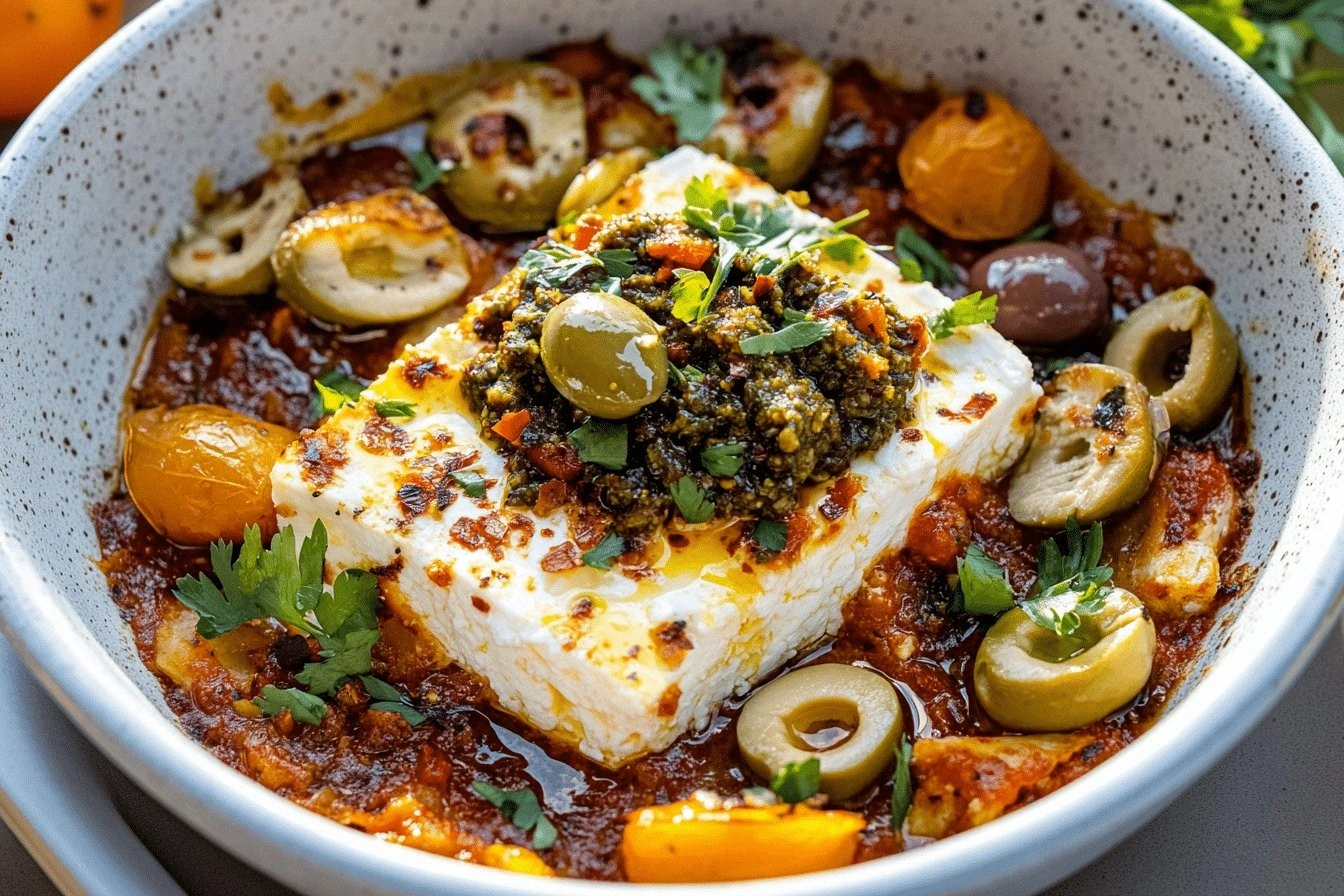
The Method — Step by Step
- Preheat your oven to 400°F (200°C). Line a small baking dish with parchment paper to prevent sticking. Place the feta block in the center of the dish, ensuring it sits flat so it heats evenly. This step is critical; a properly preheated oven guarantees a golden crust without over‑browning the interior.
- In a small bowl, combine the minced garlic, chopped green olives, and chopped black olives. Toss them with the tablespoon of olive oil, a squeeze of lemon juice, and a pinch of cumin. The oil helps the olives coat the feta, while the cumin adds a subtle earthy warmth. This mixture should smell like a Mediterranean breeze.
- Spread the olive mixture over the top of the feta, making sure to cover every surface. The olives should sit in little pockets, creating a burst of flavor with each bite. Sprinkle the paprika over the top for a gentle smokiness and a hint of color. At this point, you’re building layers of flavor that will marry beautifully as the dish bakes.
- Bake for 20 minutes, then reduce the temperature to 350°F (175°C) and bake for an additional 10 minutes. The feta should be soft and slightly golden on the edges. The olives will steam slightly, releasing their oils and infusing the cheese with a silky richness. Check the internal temperature—ideally 140°F (60°C) for a creamy center.
- This is the moment of truth. Remove the dish from the oven and let it rest for 5 minutes; the flavors will settle and the feta will become even more luscious. The scent of cumin and paprika will intensify, creating a fragrant aroma that makes your kitchen feel like a Moroccan spice market.
- Stir in the chopped fresh parsley, which adds a bright, herbaceous note that cuts through the richness. The parsley also provides a pop of color that makes the dish look as good as it tastes. A final drizzle of olive oil over the top adds sheen and enhances the overall mouthfeel.
- Serve immediately, either as an appetizer with warm pita or flatbread, or as a side dish alongside couscous or a fresh salad. The feta’s molten center makes it a perfect dip for bread, while the olives and spices elevate the entire meal. If you’re feeling adventurous, top it with a sprinkle of toasted pine nuts for crunch.
- Optional: For a slightly sweet contrast, drizzle a thin stream of honey over the top before serving. The honey’s subtle sweetness balances the salty olives and tangy feta, creating a harmonious flavor profile that’s truly unforgettable.
- Enjoy your creation, and don’t forget to share the recipe with friends—this dish is guaranteed to become a staple at your next gathering. The combination of textures and flavors will leave everyone asking for seconds, and you’ll be the culinary hero of the evening.
Insider Tricks for Flawless Results
The Temperature Rule Nobody Follows
Many bakers bake feta at too high a temperature, causing the cheese to harden rather than melt. The trick is to start at 400°F (200°C) to form a crust, then lower to 350°F (175°C) to finish cooking gently. This gradual temperature shift preserves the feta’s creaminess and prevents it from drying out. I once baked at 450°F and ended up with a rubbery center—don’t make that mistake.
Why Your Nose Knows Best
The scent of cumin and paprika is a reliable indicator that the dish is halfway there. When the aroma becomes fragrant and slightly smoky, you’re ready to lower the heat. Trust your nose—if it smells like a Moroccan spice market, the feta is almost perfect. I’ve found that the moment the olive oil starts to shimmer, the feta is close to its ideal state.
The 5-Minute Rest That Changes Everything
Letting the dish rest for five minutes after baking allows the flavors to meld and the feta to become silky. The rest period also prevents the olive oil from separating too quickly. Some chefs skip this step, but the difference is noticeable—rested feta is smoother and more cohesive. Think of it as a mini‑intermission for the flavors.
Use Freshly Ground Cumin
Ground cumin can lose its potency over time. For the best flavor, grind your own cumin just before cooking. Freshly ground cumin brings a bright, peppery note that elevates the dish. If you don’t have a grinder, use the freshest store‑bought cumin you can find. The aroma alone can transform the dish.
Keep the Olives Intact
Chopping olives too finely can release too much oil, making the feta greasy. Aim for small, even chunks that hold their shape. The olive pockets act as flavor reservoirs, releasing their brine slowly as you eat. A quick tip: rinse olives after chopping to remove excess brine that can overpower the dish.
Finish with a Splash of Lemon
A final squeeze of fresh lemon juice just before serving brightens the dish and balances the saltiness. The acidity cuts through the richness of the feta and olive oil, creating a more balanced bite. I love to drizzle a small amount of lemon over the top—just enough to give it that zing.
Creative Twists and Variations
This recipe is a playground. Here are some of my favorite ways to switch things up:
Smoky Chipotle Feta
Swap paprika for chipotle powder and add a pinch of smoked salt. The chipotle adds a subtle heat and a smoky depth that pairs beautifully with the feta. Serve with a side of smoky roasted sweet potatoes for a complete meal.
Herb‑Infused Feta
Add chopped basil, oregano, and thyme to the olive mixture. These herbs bring a fresh, aromatic quality that brightens the dish. The herb blend works well when served with a cucumber‑yogurt dip.
Spicy Harissa Version
Incorporate a tablespoon of harissa paste into the olive mixture for a fiery kick. The harissa’s blend of chili, cumin, and coriander adds complexity. Pair this version with a cooling mint‑yogurt sauce to balance the heat.
Vegan Feta Alternative
Use a firm block of tofu seasoned with lemon zest, nutritional yeast, and smoked paprika. Press the tofu to remove excess moisture, then bake as directed. The tofu will mimic the feta’s texture while staying plant‑based.
Cheese‑Free Tapenade
Omit the feta entirely and bake a large bowl of the olive tapenade as a dip. Serve with pita wedges, cucumber slices, or roasted vegetables. The olive mixture alone is packed with flavor and can stand on its own.
Breakfast‑Style Feta
Serve the baked feta over a bed of sautéed spinach and a poached egg for a Mediterranean breakfast. The combination of creamy cheese, salty olives, and a runny yolk is a morning delight.
Storing and Bringing It Back to Life
Fridge Storage
Wrap the dish tightly in plastic wrap and store in the refrigerator for up to 48 hours. The feta will remain firm, and the olive mixture will retain its flavors. When ready to serve, reheat gently in a preheated oven at 300°F (150°C) for 10 minutes.
Freezer Friendly
Place the baked feta in an airtight container and freeze for up to 2 weeks. Thaw overnight in the refrigerator before reheating. The texture may change slightly, but the flavor stays true.
Best Reheating Method
Add a splash of water to the dish before reheating; this steams the feta back to a silky texture. Reheat in a low‑temperature oven or on a stovetop over low heat, stirring gently until warmed through. The water prevents the feta from drying out.