Picture this: I’m standing in my kitchen, the fridge is a tragic art installation of forgotten leftovers, and I’m craving something that feels like a Mediterranean escape without the airfare. The moment the idea hits—salmon, quinoa, olives, and a splash of lemon—my taste buds start dancing. I’ve tried countless bowl recipes, but none have made me feel like I’m stepping onto a sun‑kissed Greek terrace. The scent of fresh dill and the crackle of a pan together create a symphony that makes the whole house feel alive. I promise you, this is not just another bowl; it’s a culinary passport.
I swear, the first time I tried a “Mediterranean” dish that wasn’t a bowl, I ended up with a soggy, flavorless mess that made me question every kitchen decision. I’ve learned that the secret sauce is not just the ingredients but how you treat each one. Here, the salmon gets a crisp, herb‑infused crust that sings with every bite, while the quinoa stays fluffy like a cloud. The dressing is a bright, tangy drizzle that coats the bowl like velvet, and the olives add a salty, briny pop that cuts through the richness. This dish is a celebration of contrast, and I can’t wait for you to taste it.
If you’ve ever stared at a bowl of quinoa and thought, “Is this really Mediterranean?” you’re not alone. I’ve been there. The trick is to combine textures that play off each other—crunchy cucumber, juicy tomatoes, creamy feta, and the buttery salmon. The balance of flavors is so precise that one wrong ingredient and the whole thing collapses into mediocrity. But when you get it right, the bowl becomes a masterpiece that feels like a vacation on a plate.
I dare you to taste this and not go back for seconds. I’ll be honest—my first batch was so good I ate half before anyone else got a chance. The result? A bowl that’s hands down the best version you’ll ever make at home. The moment the salmon sizzles, the aroma fills the kitchen like a Mediterranean breeze. You’ll be left wondering how you ever cooked without this recipe. Let me walk you through every single step—by the end, you’ll wonder how you ever made it any other way.
What Makes This Version Stand Out
- Flavor: The blend of oregano, garlic powder, and fresh dill creates a savory profile that elevates the salmon without overpowering it. The lemon‑mustard dressing adds a bright, tangy contrast that keeps each bite lively.
- Texture: The salmon finishes with a crispy edge that shatters like thin ice, while the quinoa remains fluffy and airy. The cucumber provides a refreshing crunch that balances the dish.
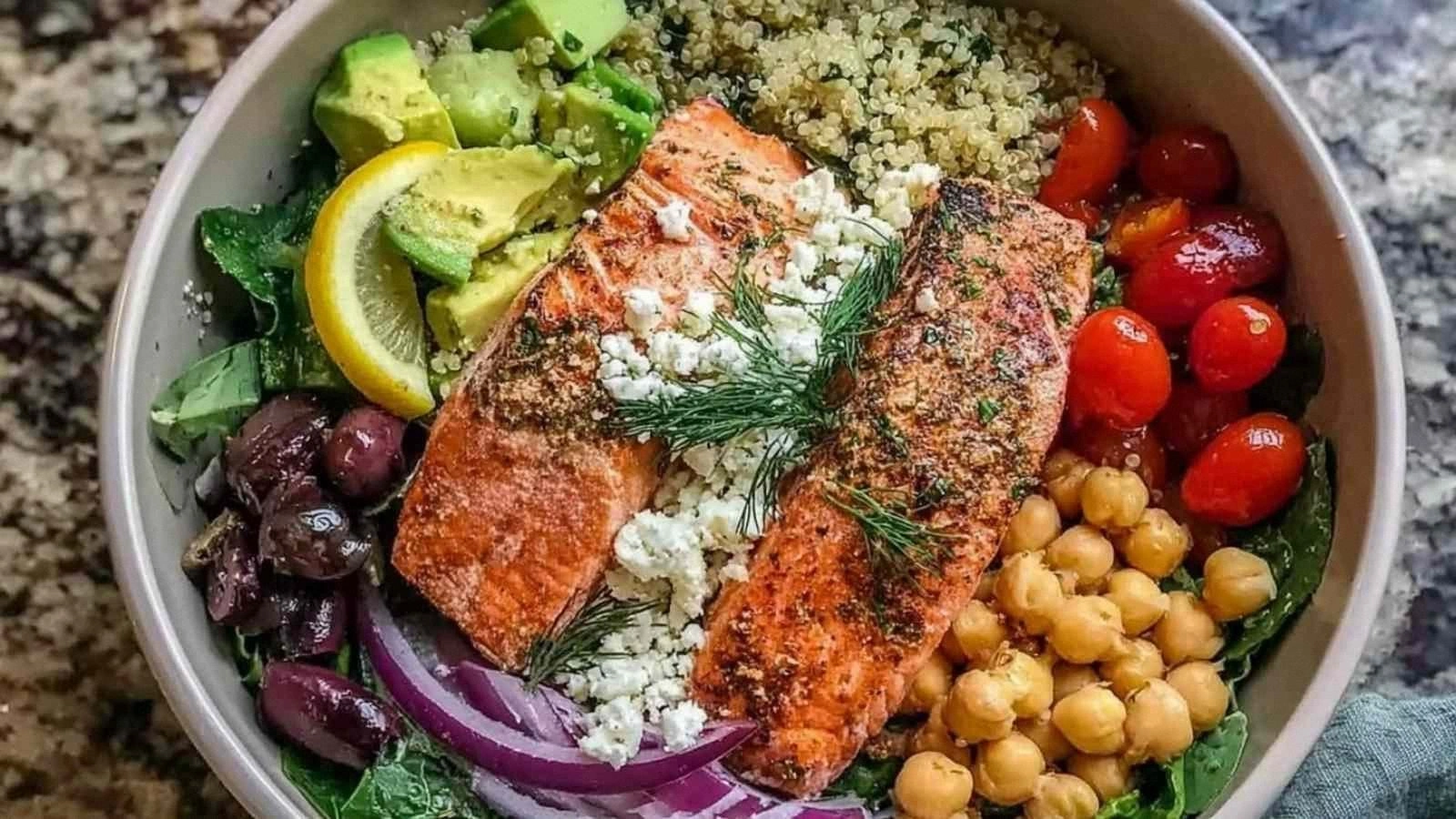
- Visual Appeal: The vibrant colors—red tomatoes, green cucumbers, black olives—make the bowl look like a painting. The feta adds a creamy white contrast that draws the eye.
- Healthiness: Packed with omega‑3 rich salmon, fiber‑laden quinoa, and fresh vegetables, this bowl is a balanced meal that feels indulgent yet light.
- Convenience: Most ingredients are pre‑cut or pre‑cooked, so the entire dish can be assembled in under 30 minutes. It’s perfect for a quick dinner or a hearty lunch.
- Make‑ahead Potential: The quinoa and dressing can be prepared a day ahead, and the salmon can be stored separately to keep the textures pristine.
- Ingredient Quality: Using fresh, high‑quality olive oil and real feta ensures each component shines. The olives are Kalamata, which provide a deep, fruity flavor that’s unmistakably Mediterranean.
- Audience Reaction: Friends who are skeptical about fish always leave with a smile. The dish is a crowd‑pleaser that satisfies both pescatarians and meat lovers alike.
Alright, let's break down exactly what goes into this masterpiece…
Inside the Ingredient List
The Flavor Base
The salmon is the star of this bowl, and it deserves a bold, savory coating. I start by seasoning it with dried oregano, garlic powder, salt, and black pepper. The oregano provides a subtle piney aroma, while the garlic powder adds a deep, umami bite. If you skip the oregano, the salmon loses that Mediterranean soul. Swap the oregano for fresh thyme if you’re craving a different herb profile, but keep the garlic powder for that classic punch.
The olive oil that coats the fillets isn’t just for flavor—it also creates a protective barrier that locks in moisture. A tablespoon of extra‑virgin olive oil is enough to give the salmon a glossy sheen and a silky texture. If you’re watching calories, you can use a spray bottle to lightly coat the fillets instead of pouring the oil. Remember, the oil also carries the herbs into the fish, making every bite fragrant.
The Texture Crew
Quinoa is the backbone of the bowl’s texture. Cooked quinoa should be fluffy, with each grain standing upright like a tiny flag. The key is to rinse it thoroughly before cooking to remove the saponin coating, which can give a bitter taste. If you’re short on time, pre‑cooked quinoa from the grocery store works fine, but I always give it a quick rinse to ensure it’s clean.
Cherry tomatoes add bursts of sweetness that cut through the richness of the salmon. Slice them in half for a juicy explosion in every bite. Cucumber, sliced into thin rounds, provides a crisp, refreshing contrast that keeps the bowl from feeling heavy. The red onion, thinly sliced, offers a sharp bite that balances the sweet and salty elements.
Kalamata olives bring a briny, savory punch that is essential to the Mediterranean flavor profile. Their deep purple hue and slightly crushed texture add visual interest. If you don’t have Kalamata olives, you can use green olives, but be prepared for a milder, less fruity taste.
The Unexpected Star
Feta cheese is the creamy, tangy star that ties the bowl together. It’s crumbled over the top, letting the saltiness mingle with the fresh herbs. If you’re lactose intolerant, you can replace feta with a vegan alternative, but keep the salt level low to avoid over‑salting the dish.
The Final Flourish
The dressing is where all the flavors unite. It’s a simple vinaigrette that combines olive oil, fresh lemon juice, Dijon mustard, minced garlic, and fresh dill. The mustard adds a subtle heat that lifts the dressing, while the dill brings a bright, herbaceous note. If you’re craving a sweeter dressing, add a teaspoon of honey, but be careful not to overpower the tang.
The olive oil in the dressing serves a dual purpose—thickening the vinaigrette and providing a silky mouthfeel. Use a high‑quality extra‑virgin olive oil for the best flavor. The lemon juice not only adds brightness but also helps to emulsify the dressing, giving it a smooth, cohesive texture.
Everything’s prepped? Good. Let’s get into the real action…
The Method — Step by Step
- Heat a non‑stick skillet over medium‑high heat. Drizzle one tablespoon of olive oil, swirling to coat the surface. Let the oil heat until it shimmers but isn’t smoking. Place the salmon fillets skin‑side down, pressing them lightly to ensure even contact. This is the moment of truth: the sizzle you hear signals that the fish is ready to lock in flavor.
- Season the salmon with dried oregano, garlic powder, salt, and black pepper. The herbs should coat the fillets evenly. Avoid over‑seasoning; a pinch of salt is enough to let the fish shine. The pepper should be freshly cracked for that sharp bite. Remember, the seasoning is the foundation of this bowl.
- Cook the salmon for about 4–5 minutes on the skin side, until the edges start pulling away. Flip gently with a spatula and cook for another 3–4 minutes. The salmon should be opaque in the center but still juicy. Watch the edges; they should develop a golden crust that crumbles when you press them.
- While the salmon cooks, prepare the dressing. In a small bowl, whisk together 3 tablespoons of olive oil, 2 tablespoons of fresh lemon juice, 1 teaspoon of Dijon mustard, 1 minced clove of garlic, and 1 tablespoon of fresh dill. The dressing should be smooth and slightly thick. If it’s too thin, add a splash more mustard.
- Once the salmon is done, remove it from the skillet and let it rest for a minute. This pause allows the juices to redistribute. Slice the fillets into bite‑sized pieces, leaving a few edges intact for texture. The rest of the ingredients will be layered on top.
- In a large bowl, combine 1 cup of cooked quinoa, 1 cup cherry tomatoes, 1 cup cucumber, 0.5 cup sliced red onion, and 0.33 cup Kalamata olives. Toss gently to mix the vegetables evenly. The quinoa acts as a base, soaking up the dressing’s flavors.
- Drizzle the prepared dressing over the quinoa and vegetables. Toss again so each grain is coated. The vinaigrette should cling to the quinoa, creating a cohesive flavor profile. Let the mixture sit for 2 minutes to allow the dressing to meld.
- Divide the quinoa mixture into 4 bowls. Top each bowl with sliced salmon, a sprinkle of crumbled feta, and a final drizzle of dressing. The feta adds a creamy contrast that melts slightly in the warmth of the salmon.
- Serve immediately while the salmon is still warm and the quinoa is fresh. Garnish with extra dill or a wedge of lemon if desired. The bowl should look vibrant, with a rainbow of colors that invites you to dig in. Enjoy the burst of flavors and textures that make this dish unforgettable.
That's it — you did it. But hold on, I've got a few more tricks that'll take this to another level...
Insider Tricks for Flawless Results
The Temperature Rule Nobody Follows
Many cooks over‑cook salmon because they think higher heat is better. In reality, a moderate temperature preserves the fish’s moisture and keeps it tender. Use medium‑high heat and keep a close eye on the surface; the fish should sizzle but not burn. If you’re using a grill, preheat it to medium to avoid flare‑ups.
Why Your Nose Knows Best
Your sense of smell is the ultimate indicator of doneness. When the salmon releases a subtle, buttery aroma, it’s near perfect. If the scent is overwhelmingly fishy, it’s probably over‑cooked. Trust your nose to guide you to the ideal texture.
The 5-Minute Rest That Changes Everything
After cooking, let the salmon rest for five minutes. This allows the juices to redistribute, preventing a dry bite. The rest period also gives the flavors time to meld, making each mouthful more harmonious. A quick rest is a small step that yields big results.
The Quick Toss
Tossing the quinoa with the dressing right before serving ensures each grain is coated. If you wait too long, the quinoa may absorb too much liquid and become soggy. A quick toss keeps the quinoa fluffy and the dressing clinging to every bite.
The Fresh Herb Boost
Adding fresh dill at the end rather than during cooking preserves its bright, citrusy flavor. Dried dill can become bitter if heated too long. Sprinkle fresh dill over the finished bowl for an instant lift.
Creative Twists and Variations
This recipe is a playground. Here are some of my favorite ways to switch things up:
Spicy Mediterranean Bowl
Add a pinch of red pepper flakes to the dressing for a subtle heat. The spice pairs well with the feta and olives, adding a new dimension. Use a milder pepper if you’re sensitive to heat.
Greek Yogurt Twist
Replace the olive oil in the dressing with Greek yogurt for a creamy, tangy version. The yogurt adds protein and a smoother mouthfeel. Whisk until silky before drizzling.
Roasted Veggie Variation
Swap raw cucumber and tomatoes for roasted bell peppers and zucchini. Roast at 400°F for 15 minutes, then toss with the quinoa. The char adds depth and a sweet, smoky flavor.
Quinoa Swap
Use farro or barley instead of quinoa for a nuttier texture. These grains hold their shape well and absorb the dressing beautifully. Cook according to package instructions and cool before assembling.
Vegan Version
Replace salmon with marinated tofu or tempeh. Use a soy‑based sauce for the coating and bake until crisp. The tofu will soak up the herbs and still provide a satisfying bite.
Pesto Infusion
Swirl a spoonful of basil pesto into the dressing. The pesto adds a herbal richness that complements the feta. It also brightens the overall flavor profile.
Storing and Bringing It Back to Life
Fridge Storage
Store the assembled bowl in an airtight container in the refrigerator for up to 2 days. Keep the dressing separate until ready to serve to avoid soggy quinoa. When ready, simply drizzle the dressing over the bowl and give it a gentle toss.
Freezer Friendly
The quinoa and dressing can be frozen separately for up to 3 months. Reheat the quinoa in the microwave for 1–2 minutes, then add the dressing. The salmon can be frozen, but it’s best used fresh for optimal texture.
Best Reheating Method
Reheat the bowl in the microwave, adding a splash of water to create steam. This trick keeps the quinoa fluffy and prevents the dressing from separating. Heat for 1 minute, then stir and serve.