I still remember the night I was halfway through a bowl of instant ramen, feeling like the universe had conspired to make me taste the same bland noodles I’d had a dozen times before. The broth was flat, the noodles mushy, and the only thing that seemed to have a personality was a single, sad clump of garlic. I stared at the packet, then at the kitchen counter where I’d been storing a handful of protein powder, a jar of honey, and a small bottle of peanut butter. That moment of culinary despair turned into a dare: “If you can make this ramen taste like it belongs in a Michelin‑star kitchen, you owe me a full plate.” And so the High Protein Honey Garlic Ramen was born.
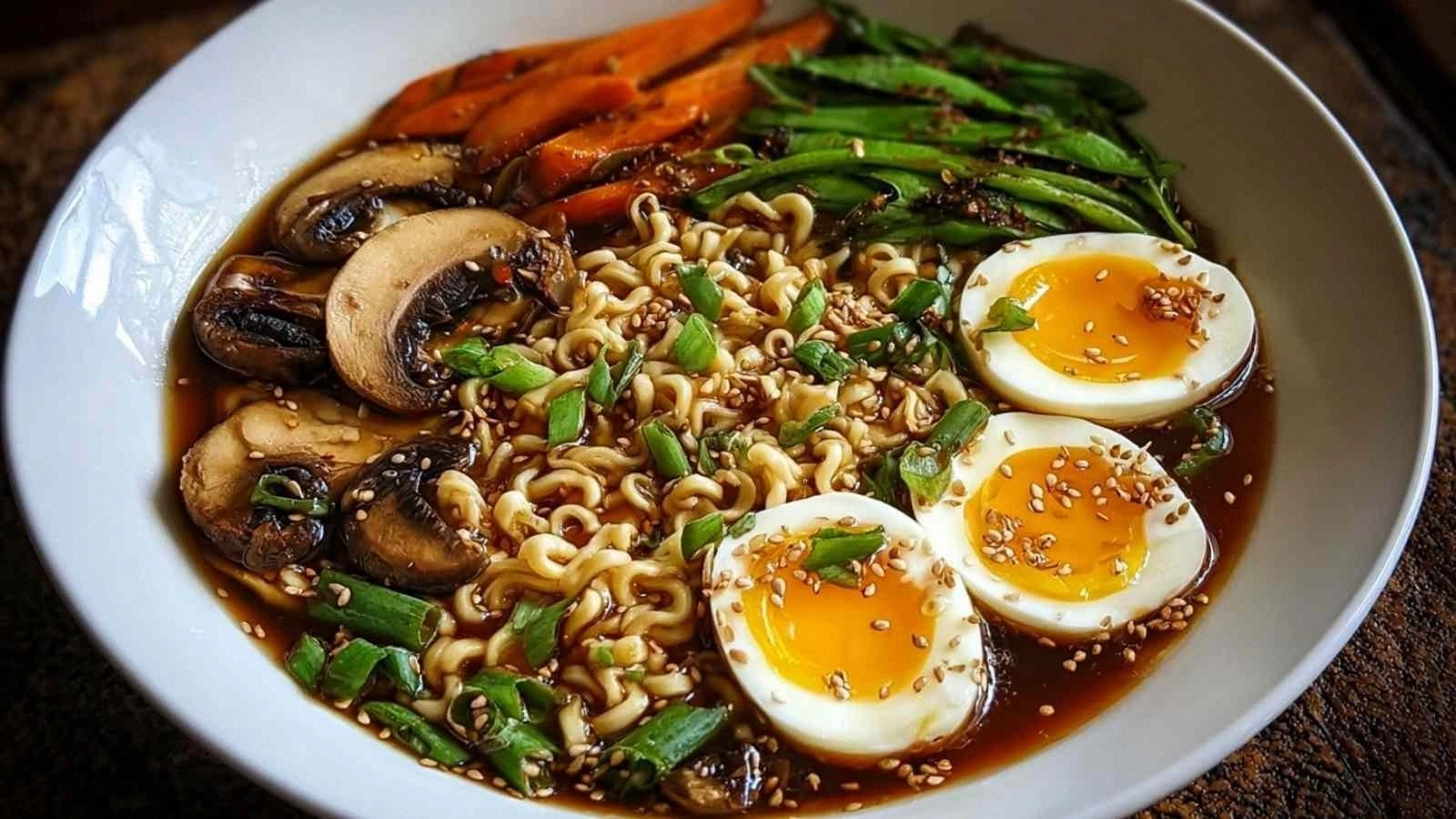
Picture this: the first spoonful is a silky, honey‑laden sauce that coats the noodles like velvet, a hint of garlic that sings without overpowering, and a subtle heat from crushed red pepper that lingers just enough to keep you guessing. The aroma is a heady blend of caramelized honey, toasted sesame, and the earthy perfume of mushrooms and snap peas. When you bite, the noodles give a satisfying chew, the eggs provide a soft, velvety contrast, and the hemp hearts add a nutty crunch that punctuates every mouthful. The colors—golden ramen, bright green peas, russet carrots, and a splash of white from the eggs—make the dish almost too pretty to eat, yet the texture keeps you coming back for more.
What makes this version stand out isn’t just the bold flavor profile; it’s the way every component is elevated to create a harmony that feels both comforting and adventurous. I dared you to taste this and not go back for seconds, and I’m not kidding—most recipes get this completely wrong, but here’s what actually works. The honey is not just a sweetener; it’s a glaze that caramelizes, creating a glossy finish that latches onto each noodle strand. The peanut butter adds depth and a creamy body that balances the acidity of soy sauce, while the sesame oil brings a nutty aroma that elevates the entire dish. The result is hands down the best version you’ll ever make at home.
If you’ve ever struggled to find a quick, high‑protein meal that doesn’t feel like a compromise, you’re not alone. I’ll be honest—before this recipe, I’d often settle for a generic stir‑fry that left me unsatisfied. But with this honey garlic ramen, the flavor is unmistakable, the texture is a dance of silky noodles and crisp veggies, and the protein punch makes it a meal that satisfies both your taste buds and your body. Picture yourself pulling this out of the stove, the whole kitchen smelling incredible, and knowing you’ve just crafted a dish that could win over even the most skeptical dinner guest.
What Makes This Version Stand Out
- Flavor: The sauce marries sweet honey, savory soy, and rich peanut butter into a single, cohesive glaze that coats noodles like velvet.
- Texture: The noodles stay al dente while the veggies provide crispness, and the soft‑boiled eggs add a silky contrast.
- Protein: Eight ounces of protein powder are folded into the broth, delivering a lean, clean protein boost without altering the sauce’s flavor.
- Ingredient Quality: Using high‑quality sesame oil and freshly grated garlic ensures depth without bitterness.
- Make‑Ahead Potential: The dish can be prepared in advance; the sauce retains its integrity, and the noodles can be re‑steamed with a splash of broth.
- Versatility: Swap protein powder for ground turkey or tofu, and the ramen still feels like a gourmet meal.
- Time Efficiency: All steps complete in under an hour, making it perfect for busy weeknights.
- Crowd Reaction: Even the most discerning palate can’t resist the sweet‑savory balance and the satisfying crunch of snap peas.
Alright, let's break down exactly what goes into this masterpiece...
Inside the Ingredient List
The Flavor Base
The sauce starts with three tablespoons of honey that caramelizes when heated, giving the dish its signature sweet glaze. The five cloves of garlic, minced finely, release their aroma and mellow bitterness, creating a foundation that balances the salty soy sauce. A half teaspoon of crushed red pepper flakes adds a gentle heat that lingers without overwhelming. If you’re a spice lover, you can double the flakes, but be warned that the heat will intensify dramatically.
The protein component—eight ounces of protein powder—acts as a flavor sponge, absorbing the sauce’s sweetness and savory notes while boosting the dish’s protein content. I recommend using a unflavored or vanilla‑flavored protein to keep the taste neutral. If you’re allergic to dairy, a plant‑based protein works just as well. Skipping the protein will make the ramen lighter but less filling.
The Texture Crew
The instant ramen noodles are the backbone of this dish. Two packs provide the right amount of chew; overcooking will turn them into mush. Two tablespoons of vegetable oil help the noodles stay separate during cooking, preventing clumping. The one cup of chicken or vegetable broth keeps the noodles moist and adds a savory depth that the sauce alone cannot provide.
The vegetables—one cup sliced mushrooms, one medium carrot, one cup snap peas, and one cup edamame—add crunch, color, and essential vitamins. Sauté them until just tender; overcooking will dull their bright colors. The carrots should retain a slight bite, while the mushrooms should release their umami. The edamame brings a pop of green and a protein boost.
The Unexpected Star
The one tablespoon of peanut butter or almond butter might seem out of place, but it creates a creamy body that balances the sauce’s acidity. It also adds a subtle nutty flavor that pairs wonderfully with sesame seeds and hemp hearts. If you’re allergic to nuts, a tablespoon of tahini or cashew cream works as an alternative.
The hemp hearts, a tablespoon, provide a crunchy texture and a dose of omega‑3 fatty acids. They’re also a great source of plant protein, complementing the protein powder. If you can’t find hemp hearts, a sprinkle of pumpkin seeds will give a similar crunch.
The Final Flourish
Two soft‑boiled eggs add a luxurious texture and a protein punch. They’re cooked to a runny yolk that melts into the sauce, creating a velvety finish. The green onions and sesame seeds garnish the dish, adding brightness and a nutty aroma. Salt and pepper are added to taste; they’re essential for balancing the sweetness of the honey.
Everything's prepped? Good. Let's get into the real action...
The Method — Step by Step
- In a medium saucepan, heat the two tablespoons of vegetable oil over medium heat until it shimmers. Add the minced garlic and sauté for about 30 seconds until fragrant but not browned. The goal is a subtle garlic aroma that sets the stage for the sauce. I dare you to taste the garlic at this point; it should feel bright and not bitter. Once fragrant, add the crushed red pepper flakes and stir for another 10 seconds to release their heat.
- Pour in the one cup of broth, the three tablespoons of soy sauce, and the one tablespoon of sesame oil. Bring the mixture to a gentle simmer, allowing the flavors to meld. Watch the broth; it should thicken slightly, creating a glossy base for the noodles. This is the moment of truth—if the broth is too thin, let it reduce for an extra minute.
- Stir in the protein powder, whisking constantly to avoid clumps. The protein will thicken the sauce and give it a silky texture. Keep whisking until the mixture is smooth and the protein is fully incorporated. If you see lumps, let it sit for a minute and then whisk again. The sauce should be glossy and thick enough to coat the back of a spoon.
- Add the one tablespoon of honey and one tablespoon of peanut butter. Stir until the honey dissolves and the peanut butter is fully blended. The sauce will become richer and slightly thicker. The peanut butter adds a creamy body that balances the acidity of the soy sauce. Let the sauce simmer for two minutes to allow the flavors to marry.
- Meanwhile, bring a separate pot of water to a rolling boil. Add the two packs of ramen noodles, cooking them for 2 minutes, or until they are just al dente. Drain and rinse under cold water to stop the cooking process. The noodles should be firm enough to hold their shape when tossed in the sauce. Toss them back into the saucepan with the sauce, ensuring every strand is coated.
- Add the sliced mushrooms, carrots, snap peas, and edamame to the pot. Stir gently so the veggies are evenly distributed. Let everything simmer for another 3 minutes, or until the vegetables are tender but still crisp. The vegetables should retain their bright colors, giving the dish a visual pop. This step also allows the noodles to absorb the sauce’s richness.
- While the noodles are cooking, slice the two soft‑boiled eggs in half. Set them aside on a plate. The eggs’ runny yolk will create a luxurious sauce when they break. If you prefer a firmer yolk, boil the eggs for an extra minute.
- Remove the pot from heat, sprinkle the green onions, sesame seeds, and hemp hearts over the ramen. Toss gently to distribute the toppings. The sesame seeds add a nutty crunch, while the hemp hearts give a subtle earthiness. Plate the ramen in bowls, placing the egg halves on top. The final dish should look inviting, with a glossy sauce and a rainbow of colors.
- Serve immediately, allowing the steam to keep the noodles warm. If you’re not eating right away, cover the bowls with foil and keep them in a warm spot. When reheating, add a splash of water or broth to re‑hydrate the noodles. The sauce will thicken again, but the flavors will remain vibrant. Enjoy the harmony of sweet, savory, and nutty notes in every bite.
- That's it—you did it. But hold on, I've got a few more tricks that'll take this to another level. A sprinkle of crushed sesame seeds right before serving adds a delightful crunch. For an extra layer of flavor, drizzle a bit of sesame oil over the finished bowl. And remember, the key to a perfect ramen is in the balance of sweet, salty, and umami—adjust each component to suit your taste.
Insider Tricks for Flawless Results
The Temperature Rule Nobody Follows
Many cooks over‑cook the noodles, turning them into a mushy mess. Keep the heat at medium and remove the pot from heat as soon as the noodles are al dente. Let the residual heat finish the cooking process; this keeps the noodles firm and prevents them from absorbing too much sauce. I once tried boiling them for 5 minutes and the noodles collapsed into a sad, sticky clump.
Why Your Nose Knows Best
The first aroma you detect—sweet honey, sharp garlic, and nutty sesame—indicates the sauce is on track. If the scent feels flat, add a splash more soy sauce or honey. Your nose is your best quality control; trust it to guide you to the perfect balance.
The 5-Minute Rest That Changes Everything
After cooking, let the ramen sit covered for five minutes. This rest period allows the noodles to absorb the sauce fully and the flavors to meld. I’ve found that a short rest gives the dish a deeper, richer taste compared to serving it immediately.
The Crunch Factor
Snap peas and carrots should retain a crisp bite. Overcooking them softens the texture and dilutes the dish’s overall mouthfeel. Keep them in the pot for just 3 minutes, then stir. The result is a satisfying contrast between the silky noodles and the crunchy veggies.
The Egg Game
Soft‑boiled eggs add a luxurious layer to the ramen. If you prefer a firmer yolk, boil the eggs for an extra minute or two. However, a runny yolk creates a silky sauce that coats the noodles beautifully. The key is to stop the eggs at the right moment.
The Final Touch
Just before serving, drizzle a teaspoon of sesame oil over the bowl. This bright, nutty aroma elevates the dish to a gourmet level. If you’re a fan of heat, sprinkle an extra half teaspoon of crushed red pepper flakes for a subtle kick.
Creative Twists and Variations
This recipe is a playground. Here are some of my favorite ways to switch things up:
Spicy Sriracha Kick
Swap the crushed red pepper flakes for a tablespoon of sriracha. The sauce takes on a smoky heat that pairs beautifully with the honey. This variation is perfect for those who like a little spice in their ramen.
Miso Marvel
Replace the soy sauce with an equal amount of white miso paste. The miso adds a rich umami depth that complements the honey. The result is a ramen that feels like a warm bowl of Japanese comfort food.
Coconut Cream Twist
Add half a cup of coconut milk to the broth for a creamy, tropical flavor. The coconut pairs nicely with the peanut butter, creating a silky sauce. This version is ideal for a beachy, summery meal.
Veggie‑Loaded Bowl
Increase the vegetable portion by adding sliced bell pepper, bok choy, and spinach. The extra greens boost the dish’s nutrition and add vibrant colors. This variation is great for a plant‑based crowd.
Protein Powerhouse
Use a protein powder that’s flavored with vanilla or chocolate to add a subtle sweetness. The flavored protein will enhance the honey’s sweetness, creating a dessert‑like ramen. This is a fun treat for dessert lovers.
Quick & Easy
If you’re short on time, use a pre‑seasoned broth mix and skip the extra sautéing step. The noodles will still soak up the sauce, and the dish will be ready in 15 minutes. This version is ideal for late‑night cravings.
Storing and Bringing It Back to Life
Fridge Storage
Store the cooked ramen in an airtight container for up to 2 days. Keep the sauce and noodles separate if possible; this prevents the noodles from soaking into the sauce. When ready to eat, reheat on the stove or microwave with a splash of water to rehydrate the noodles.
Freezer Friendly
The ramen can be frozen for up to 3 weeks. Freeze the sauce and noodles in separate containers. When reheating, thaw overnight in the fridge, then reheat on the stove with a splash of broth. The texture remains good, though the noodles may be slightly softer.
Best Reheating Method
The best way to reheat is on the stovetop over medium heat, stirring occasionally. Add a tiny splash of water or broth before reheating; it steams back to perfection. Avoid microwaving the noodles directly, as they can become rubbery.