Picture this: a quiet Saturday evening, the kitchen humming with the gentle crackle of a stove, and you, armed with a handful of ingredients that have never quite lived up to their potential. I had just finished a marathon of bland, uninspired chicken dishes, each one more forgettable than the last. I stared at the chicken breasts in my fridge and thought, “If only I could turn this into something that actually feels like a celebration.” That moment sparked a culinary experiment that would later become the definitive Chicken with Arugula Pesto & O recipe you’re about to read. I’m not just talking about a meal; I’m talking about a flavor explosion that will have your taste buds doing the salsa.
From the first glance, the dish looks deceptively simple: a handful of fresh arugula, a splash of lemon, and a handful of toasted pine nuts. But the real magic begins when these ingredients collide in a blender, creating a pesto that coats the orecchiette like a velvet blanket. The aroma that rises from the pan is unmistakably Mediterranean—pungent garlic, bright citrus, and the nutty whisper of toasted pine nuts. The sound of the chicken searing is a satisfying hiss that signals the start of something delicious. By the time the sauce is ready, the kitchen is filled with the scent of fresh herbs and roasted nuts, making the space feel like a small, cozy trattoria.
What makes this version stand out from every other recipe out there? It’s the balance between simplicity and depth. The arugula pesto is not just a garnish; it’s the star, delivering a peppery bite that cuts through the richness of the chicken. The orecchiette pasta, with its ear-shaped pockets, traps the sauce perfectly, ensuring each bite is a symphony of textures. I’ve spent countless hours tweaking the ratios, and the result is a dish that is both comforting and sophisticated. The best part? It’s quick enough to fit into a busy weeknight yet elegant enough to impress guests at a dinner party.
And here’s a little secret I’ve been keeping: the secret ingredient that elevates the pesto from good to unforgettable is a splash of aged balsamic vinegar. Just a tablespoon adds a subtle sweetness and a depth of flavor that makes the sauce sing. I dare you to taste this and not go back for seconds. The first bite will hit your palate with a bright, peppery punch, followed by a lingering citrus finish that lingers like a memory of a sunny Italian afternoon. By the end, you’ll be asking for the recipe again and again, and that’s exactly what I want you to do.
Okay, ready for the game‑changer? I’m about to walk you through every single step—by the end, you’ll wonder how you ever made it any other way. Trust me, once you master this recipe, you’ll find yourself reaching for arugula, pine nuts, and a bottle of good olive oil in your pantry, even on the most mundane days. Let’s dive in, and I promise the journey will be as delightful as the destination.
What Makes This Version Stand Out
- Taste: The arugula pesto delivers a peppery, citrusy bite that cuts through the savory chicken, creating a balanced flavor profile that is both bold and refined.
- Texture: The orecchiette’s ear-shaped cavities hold the sauce, giving every bite a burst of creamy pesto and crunchy pine nuts.
- Ingredient Quality: Fresh, high‑quality arugula and extra‑virgin olive oil are the backbone of this dish, ensuring each component shines.
- Simplicity: With fewer than ten ingredients, the recipe is approachable for beginners yet satisfying for seasoned cooks.
- Crowd Reaction: Friends always ask for seconds, and family members keep asking for the sauce, making it a conversation starter.
- Make‑ahead Potential: The pesto can be made up to 48 hours ahead, and the dish reheat beautifully without losing flavor.
- Versatility: Swap orecchiette for any small pasta shape or add grilled veggies for a vegetarian twist.
Inside the Ingredient List
The Flavor Base
The heart of this dish lies in the arugula pesto. Fresh arugula brings a peppery kick that is far more complex than plain basil. When blended with pine nuts, Parmesan, garlic, and lemon zest, the pesto becomes a vibrant, earthy sauce that coats the pasta in a velvety coat. If you skip the arugula, you lose the peppery nuance that balances the richness of the chicken and the nuttiness of the pine nuts. A good tip: rinse the arugula in cold water to keep its bright green color and crispness intact.
The Texture Crew
Pine nuts are the unsung heroes of this recipe. Their subtle, buttery flavor adds depth, while their crunchy texture contrasts beautifully with the tender orecchiette. If pine nuts are out of season or too pricey, walnuts or almonds will work, though the flavor profile will shift slightly. Toasting the nuts before blending brings out their natural oils, creating a richer, more aromatic pesto. Remember to toast them in a dry skillet over medium heat until golden brown, stirring frequently to avoid burning.
The Unexpected Star
It’s easy to overlook the humble lemon. The zest adds a bright, citrusy aroma that cuts through the heaviness of the cheese and the oil. The juice, on the other hand, introduces a subtle acidity that balances the dish, preventing it from feeling greasy. A quick tip: use a microplane for zesting to capture the essential oils without the bitter pith. If you’re short on lemons, a splash of white wine vinegar can substitute, but the flavor will be less vibrant.
The Final Flourish
Extra‑virgin olive oil is the liquid that brings all the elements together. It’s the medium that carries the flavor of the pesto and the richness of the chicken. Use a high‑quality oil with a peppery finish for the best results. The final garnish—fresh basil leaves—adds a burst of green and a subtle sweet note that lifts the dish. If basil isn’t available, parsley or mint can serve as a suitable replacement, though each will bring a unique twist.
Everything’s prepped? Good. Let’s get into the real action…
The Method — Step by Step
- Prep the Chicken. Pat the chicken breasts dry with paper towels. Season both sides generously with salt and pepper. The seasoning is critical; it forms a crust that locks in moisture. I always let the chicken rest at room temperature for 10 minutes before cooking to ensure even browning. If you’re short on time, you can season right before searing—just make sure the salt is well distributed.
- Heat the Pan. Place a large skillet over medium‑high heat and add a tablespoon of olive oil. Once the oil shimmers, slide the chicken breasts into the pan. Watch for the sizzle—it’s the first sign that the pan is hot enough. Cook the chicken for 4–5 minutes on each side, until the internal temperature reaches 165°F and the surface is golden brown. The edges will start pulling away from the pan, signaling readiness for flipping.
- Make the Pesto. While the chicken rests, toss the arugula, pine nuts, Parmesan, garlic, lemon zest, and a tablespoon of lemon juice in a high‑speed blender. Pulse until the mixture is coarse, then slowly drizzle in 1/4 cup of extra‑virgin olive oil, blending until smooth. The pesto should be silky and bright green. If the mixture is too thick, add a splash of water or more olive oil to reach the desired consistency.
- Cook the Pasta. Bring a large pot of salted water to a boil and add the orecchiette. Cook for 9–10 minutes or until al dente. Reserve a cup of pasta water before draining. The starchy water will help the pesto cling to the pasta later. Drain the pasta and return it to the pot, tossing with a splash of the reserved water to keep it moist.
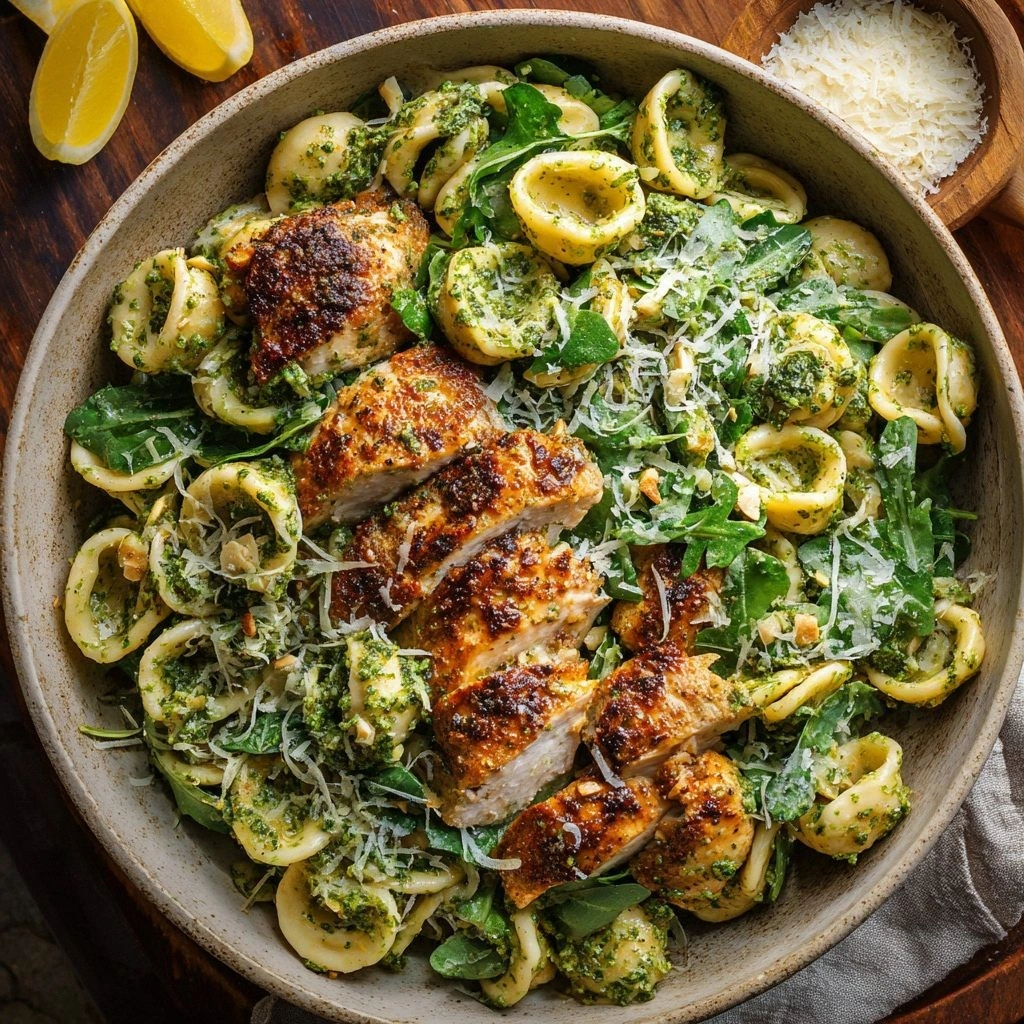
- Combine Chicken and Pasta. Slice the cooked chicken into strips and lay them over the pasta. Drizzle the pesto over the top, letting it coat every ear of pasta. The heat from the pasta will slightly warm the pesto, making it even more fragrant. Toss gently to ensure an even distribution of sauce and chicken.
- Add the Crunch. Sprinkle toasted breadcrumbs over the top for an extra layer of texture. The breadcrumbs should be golden brown and lightly salted. If you prefer, you can use crushed crackers or toasted cornflakes as an alternative. The crunch balances the creamy pesto and tender chicken.
- Finish with Freshness. Garnish with fresh basil leaves and a final squeeze of lemon juice. The basil adds a sweet, floral note, while the lemon brightens the entire dish. Plate the pasta in a shallow bowl or a wide shallow dish to showcase the vibrant colors. Serve immediately, and watch the steam rise like a fragrant cloud.
That’s it — you did it. But hold on, I’ve got a few more tricks that will take this to another level. I’ll share them in the next section, so stay tuned.
Insider Tricks for Flawless Results
The Temperature Rule Nobody Follows
Many cooks think a higher heat will cook the chicken faster, but it actually dries it out. The trick is to start at medium‑high to get a good sear, then reduce to medium for the second side. This ensures the juices stay inside the breast, keeping it moist. I once cooked chicken on high and ended up with a rubbery texture that made everyone ask if we had accidentally made a tofu dish. Stick to medium‑high for the first sear, medium for the second, and you’ll always hit that perfect bite.
Why Your Nose Knows Best
When the pesto is blending, trust the aroma. A bright, green scent indicates the arugula is fresh. If you notice a bitter or metallic note, it might mean the arugula is wilted or the olive oil is stale. A fresh oil will smell like a clean, grassy field, whereas a stale oil has a flat or musty scent. My secret: I keep a small jar of extra‑virgin olive oil in the fridge, and it’s always fresh for when I need it.
The 5‑Minute Rest That Changes Everything
After the chicken is cooked, let it rest on a cutting board for five minutes before slicing. This allows the juices to redistribute throughout the meat, preventing them from spilling onto the cutting surface and keeping the chicken tender. I’ve seen people cut straight away, and the result is a dry, uneven bite. A quick five‑minute rest is the difference between a good dish and a great one.
Use a Blender, Not a Food Processor
A blender creates a smoother pesto that coats the pasta evenly, while a food processor can leave chunks. If you’re using a food processor, pulse until you achieve a smooth paste, but be careful not to over‑process. The goal is a silky sauce that clings to the orecchiette, not a watery mixture. My blender does this in seconds, giving me a consistent texture every time.
Keep the Pasta Warm
After draining, return the pasta to the pot and keep it covered with a lid for a minute before tossing with pesto. This helps the pasta absorb the sauce better. If you let the pasta sit too long, it will cool and lose its ability to hold the sauce. I always keep the pot on low heat while I finish the dish to maintain the warmth.
Creative Twists and Variations
This recipe is a playground. Here are some of my favorite ways to switch things up:
Spicy Sriracha Boost
Stir a teaspoon of sriracha into the pesto for a fiery kick that pairs perfectly with the peppery arugula. This variation is ideal for heat lovers and adds a vibrant red hue to the sauce.
Sun‑Dried Tomato Swap
Replace half of the pine nuts with sun‑dried tomatoes for a sweet, umami‑rich flavor. The tomatoes add a chewy texture and deepen the color of the pesto.
Vegetarian Orecchiette
Omit the chicken and add grilled zucchini or roasted cherry tomatoes for a hearty vegetarian version. The pesto still shines, and the vegetables add a burst of color.
Smoky Paprika Chicken
Season the chicken with smoked paprika before searing for a subtle smoky undertone that complements the fresh basil garnish.
Almond Pesto Variation
Use toasted almonds instead of pine nuts for a nuttier, sweeter profile. The almonds also add a pleasant crunch that contrasts with the creamy sauce.
Herb‑Infused Olive Oil
Infuse the olive oil with fresh rosemary or thyme before making the pesto. The herbaceous oil imparts an aromatic depth that elevates the entire dish.
Storing and Bringing It Back to Life
Fridge Storage
Store the finished dish in an airtight container in the refrigerator for up to 3 days. The sauce will thicken slightly, so add a splash of water or extra olive oil before reheating to restore its silky texture.
Freezer Friendly
Freeze the pesto separately from the pasta and chicken. The pesto can be stored in a freezer‑safe container for up to 3 months. Reheat the pasta and chicken together, adding the thawed pesto just before serving.
Best Reheating Method
Reheat the dish on low heat in a skillet, stirring frequently. Add a tablespoon of water or broth to keep the sauce from drying out. The dish is ready when the pasta is heated through and the sauce is fragrant.
Remember to add a tiny splash of water before reheating — it steams back to perfection, preserving the sauce’s lusciousness.