
Beef And Vegetable Kabobs
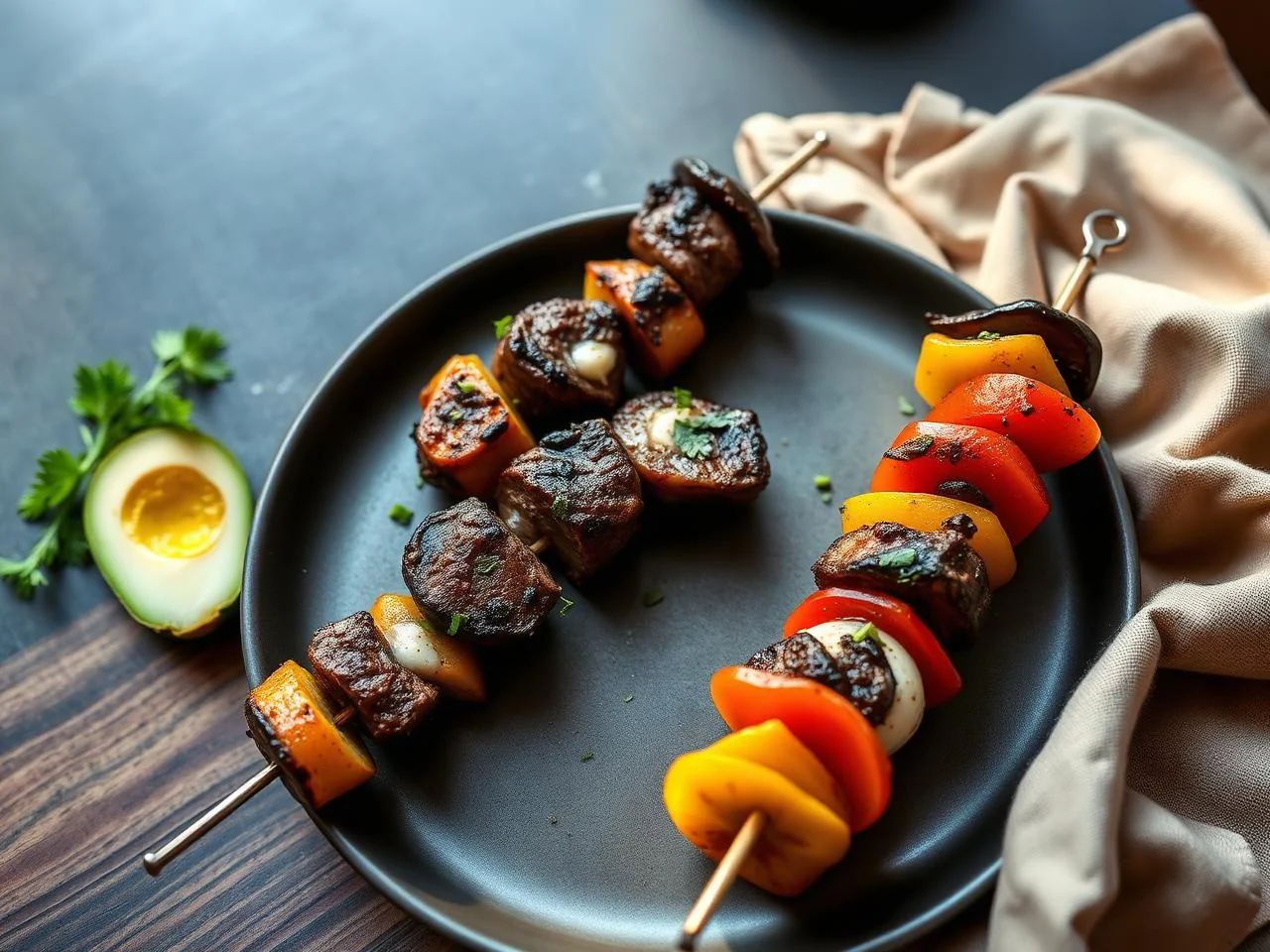
I still remember the first time I made beef and vegetable kabobs for my family. It was a warm summer evening, and we were all looking forward to a delicious and easy dinner. I had just started exploring the world of low-carb keto cooking, and I was excited to try out a new recipe that would fit our dietary needs.
As I began to prepare the ingredients, I realized that making kabobs was not just about threading meat and vegetables onto skewers. It was about creating a harmonious balance of flavors and textures that would come together to create a truly satisfying meal. I started by selecting the freshest vegetables I could find, including colorful bell peppers, onions, and mushrooms.
Next, I chose a cut of beef that would be tender and flavorful, and cut it into bite-sized pieces. I marinated the beef in a mixture of olive oil, garlic, and herbs, which added a depth of flavor that complemented the natural sweetness of the vegetables.
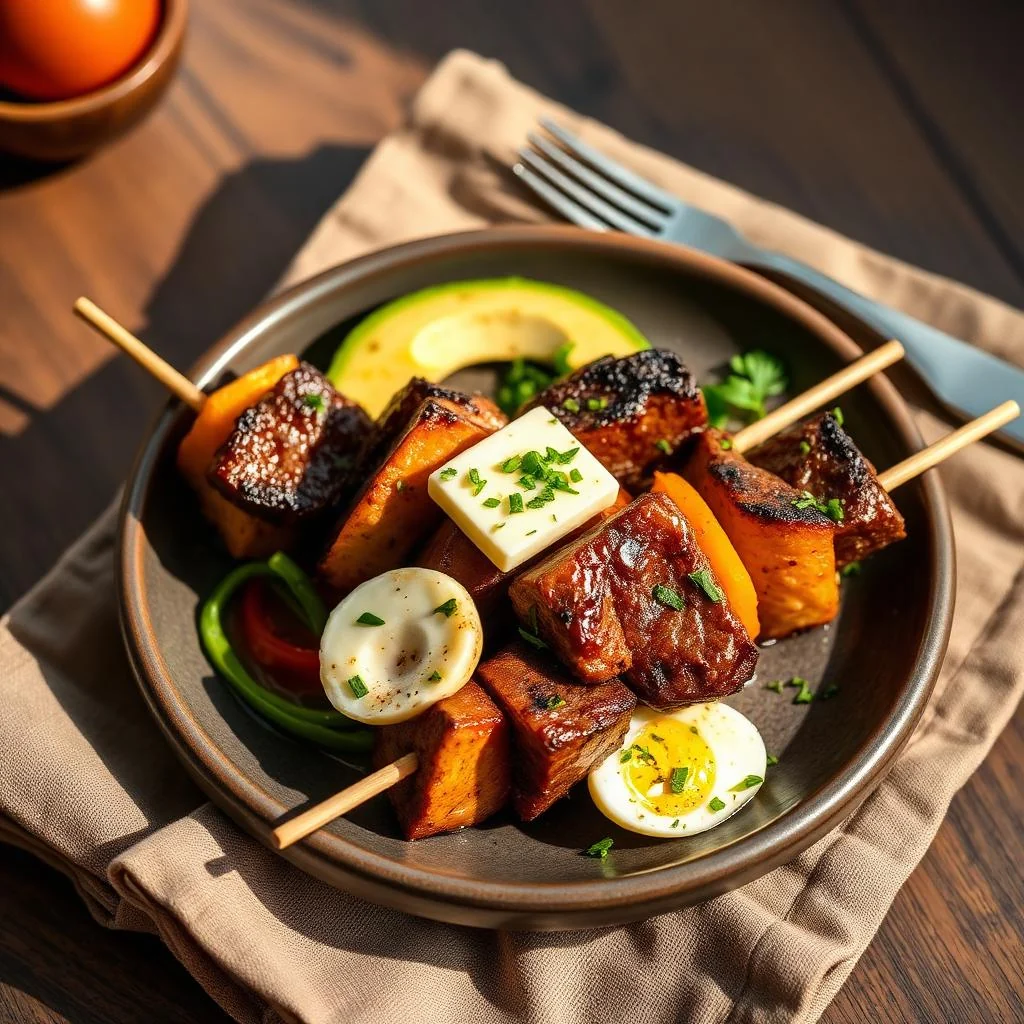
As the kabobs cooked on the grill, the aroma of sizzling meat and vegetables filled the air, and we couldn't wait to take our first bites. The result was a dish that was not only delicious but also visually appealing, with the vibrant colors of the vegetables and the rich brown color of the beef.
Since then, beef and vegetable kabobs have become a staple in our household, and we love to serve them at summer BBQs and weeknight dinners alike. They're easy to make, customizable to our tastes, and always a hit with our guests.
Why You’ll Love This Recipe
- Beef and vegetable kabobs are an easy and convenient meal option for weeknight dinners or summer BBQs.
- They're customizable to our tastes, allowing us to choose our favorite vegetables and seasonings.
- The dish is perfect for a low-carb keto diet, with a focus on fresh vegetables and lean protein.
- Kabobs are a great way to get our daily dose of vegetables, with a variety of colorful options to choose from.
- The recipe is easy to scale up or down, making it perfect for large gatherings or intimate dinners.
- Beef and vegetable kabobs are a fun and interactive meal option, allowing everyone to create their own skewers.
Why This Recipe Works
The key to making great beef and vegetable kabobs is to understand the importance of balance and harmony in the dish. By selecting a variety of colorful vegetables and a tender cut of beef, we create a visually appealing and flavorful meal that is sure to satisfy our appetites.
Another important factor is the marinade, which adds a depth of flavor to the beef and helps to tenderize it. By using a mixture of olive oil, garlic, and herbs, we create a rich and savory flavor profile that complements the natural sweetness of the vegetables.
Finally, the cooking technique is crucial in bringing all the elements together. By grilling the kabobs over medium-high heat, we achieve a nice char on the outside while keeping the inside tender and juicy.
Overall, the combination of fresh ingredients, a flavorful marinade, and proper cooking technique makes beef and vegetable kabobs a dish that is both delicious and satisfying.
Ingredients You’ll Need
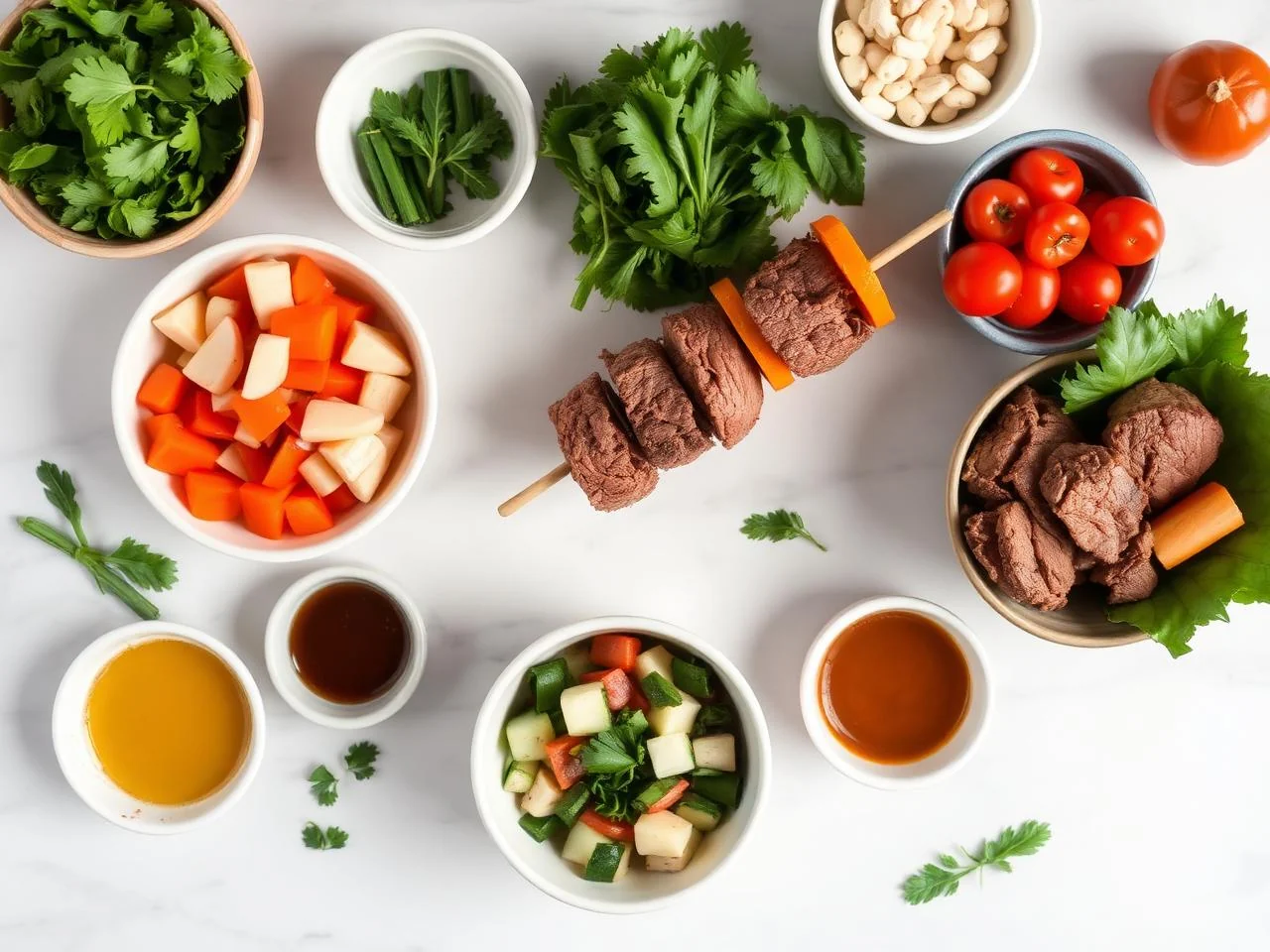
When it comes to making beef and vegetable kabobs, the ingredients are just as important as the cooking technique. We'll be using a variety of fresh vegetables, including bell peppers, onions, and mushrooms, as well as a tender cut of beef. We'll also be making a flavorful marinade using olive oil, garlic, and herbs.
Be sure to choose the freshest ingredients you can find, and don't be afraid to get creative with your vegetable selection. You can also customize the recipe to your tastes by using different seasonings or adding your favorite ingredients.
- 1 lb (450g) beef sirloin, cut into 1-inch (2.5 cm) piecesChoose a tender cut of beef, such as sirloin or ribeye, and cut it into bite-sized pieces. You can also use other cuts of beef, such as flank steak or skirt steak, but be sure to adjust the cooking time accordingly.
- 2 large bell peppers, cut into 1-inch (2.5 cm) piecesUse any color bell pepper you like, or a combination of colors for a visually appealing dish. Be sure to remove the seeds and membranes before cutting the peppers into pieces.
- 1 large onion, cut into 1-inch (2.5 cm) piecesUse a sweet onion, such as Vidalia or Maui, for the best flavor. You can also use other types of onions, such as red or yellow onions, but be sure to adjust the cooking time accordingly.
- 2 large mushrooms, cut into 1-inch (2.5 cm) piecesUse any type of mushroom you like, such as button, cremini, or portobello. Be sure to remove the stems and gills before cutting the mushrooms into pieces.
- 2 cloves garlic, mincedUse fresh garlic for the best flavor, and be sure to mince it finely so it distributes evenly throughout the dish.
- 1/4 cup (60ml) olive oilUse a high-quality olive oil that is rich in flavor and has a smooth texture. You can also use other types of oil, such as avocado oil or grapeseed oil, but be sure to adjust the flavor accordingly.
- 2 tbsp (30g) chopped fresh parsleyUse fresh parsley for the best flavor, and be sure to chop it finely so it distributes evenly throughout the dish. You can also use other herbs, such as basil or thyme, but be sure to adjust the flavor accordingly.
- 1 tsp (5g) dried oreganoUse dried oregano for a more subtle flavor, or fresh oregano for a more vibrant flavor. Be sure to adjust the amount according to your taste preferences.
- 1/2 tsp (2g) saltUse kosher salt or sea salt for the best flavor, and be sure to adjust the amount according to your taste preferences. You can also use other types of salt, such as Himalayan pink salt or smoked salt, but be sure to adjust the flavor accordingly.
- 1/4 tsp (1g) black pepperUse freshly ground black pepper for the best flavor, and be sure to adjust the amount according to your taste preferences. You can also use other types of pepper, such as white pepper or green pepper, but be sure to adjust the flavor accordingly.
- 1/4 cup (30g) crumbled feta cheese, optionalUse crumbled feta cheese for a tangy and creamy flavor, or omit it for a dairy-free option. Be sure to adjust the amount according to your taste preferences.
Equipment You’ll Need
How to Make Beef And Vegetable Kabobs
- 1In a large bowl, whisk together olive oil, garlic, parsley, oregano, salt, and pepper to make the marinade.
- 2Add the beef to the marinade and toss to coat, making sure each piece is fully covered. Cover the bowl with plastic wrap and refrigerate for at least 30 minutes or up to 2 hours.
- 3Preheat the grill to medium-high heat, or heat a grill pan over medium-high heat on the stovetop.
- 4Thread the marinated beef and vegetables onto skewers, leaving a small space between each piece.
- 5Brush the grill or grill pan with olive oil to prevent sticking, and cook the kabobs for 10-12 minutes, turning occasionally, or until the beef reaches an internal temperature of 130-135°F (54-57°C) for medium-rare.
- 6Transfer the kabobs to a plate and let them rest for 5 minutes before serving.
- 7Garnish with additional parsley and feta cheese, if desired.
- 8Serve hot, with your favorite sides or salads.
- 9To check for doneness, use an instant-read thermometer to check the internal temperature of the beef. You can also check for doneness by cutting into one of the pieces; it should be cooked to your desired level of doneness.
- 10If using feta cheese, sprinkle it over the kabobs and serve immediately.
- 11Leftover kabobs can be stored in an airtight container in the refrigerator for up to 3 days, or frozen for up to 2 months. Reheat gently before serving.
Expert Tips
- Make sure to soak the skewers in water for at least 30 minutes before using them to prevent them from catching fire on the grill.
- If using wooden skewers, be sure to oil them before cooking to prevent them from burning.
- To prevent the vegetables from burning, cook the kabobs over medium-high heat for a shorter amount of time, or use a lower heat and cook for a longer amount of time.
- To add extra flavor, brush the kabobs with olive oil or melted butter during the last few minutes of cooking.
- To make the dish more substantial, serve the kabobs with a side of quinoa, rice, or roasted vegetables.
- To make the dish more low-carb, serve the kabobs with a side of cauliflower rice or a green salad.
- To add extra protein, serve the kabobs with a side of grilled chicken or salmon.
- To make the dish more keto-friendly, use a higher ratio of fat to protein and vegetables, and be sure to choose low-carb vegetables such as bell peppers and mushrooms.
Common Mistakes to Avoid
- Not marinating the beef for long enough, resulting in a lack of flavor.
- Not cooking the kabobs over high enough heat, resulting in a lack of browning and caramelization.
- Not letting the kabobs rest for long enough, resulting in a loss of juices and tenderness.
- Not using enough oil or butter to prevent the kabobs from sticking to the grill or grill pan.
- Not checking the internal temperature of the beef, resulting in overcooking or undercooking.
- Not using fresh and high-quality ingredients, resulting in a lack of flavor and texture.
Variations and Substitutions
- Use different types of protein, such as chicken, pork, or lamb, for a variety of flavors and textures.
- Add different types of vegetables, such as cherry tomatoes, zucchini, or eggplant, for a variety of flavors and textures.
- Use different types of cheese, such as parmesan or goat cheese, for a variety of flavors and textures.
- Add different types of herbs and spices, such as thyme or cumin, for a variety of flavors and textures.
- Use different types of oil or butter, such as avocado oil or ghee, for a variety of flavors and textures.
- Serve the kabobs with a side of sauce or marinade, such as tzatziki or chimichurri, for a variety of flavors and textures.
- Use different types of skewers, such as metal or bamboo, for a variety of textures and presentations.
What to Serve With Beef And Vegetable Kabobs
Beef and vegetable kabobs are a versatile dish that can be served in a variety of ways. They're perfect as a main course, served with a side of quinoa, rice, or roasted vegetables. They're also great as an appetizer or snack, served with a side of dips or sauces.
Some other ideas for serving beef and vegetable kabobs include:
Serving them with a side of grilled or roasted vegetables, such as asparagus or Brussels sprouts.
Serving them with a side of salad, such as a Greek salad or a caprese salad.
Serving them with a side of soup, such as a creamy tomato soup or a hearty beef stew.
Serving them with a side of bread or crackers, such as pita bread or crostini.
Make-Ahead, Storage, Freezing and Reheating
Beef and vegetable kabobs can be stored in an airtight container in the refrigerator for up to 3 days, or frozen for up to 2 months. To store, let the kabobs cool to room temperature, then place them in an airtight container or zip-top bag.
To reheat, simply grill or pan-fry the kabobs until they're hot and tender. You can also reheat them in the oven or microwave, but be sure to check the internal temperature to ensure food safety.
Some tips for storing and reheating beef and vegetable kabobs include:
Letting the kabobs cool to room temperature before storing to prevent moisture from building up and causing the kabobs to become soggy.
Using airtight containers or zip-top bags to prevent air from reaching the kabobs and causing them to become dry or tough.
Labeling and dating the containers or bags so you can easily keep track of how long they've been stored.
Reheating the kabobs to an internal temperature of at least 165°F (74°C) to ensure food safety.
Frequently Asked Questions
What type of beef is best for kabobs?
The best type of beef for kabobs is a tender cut, such as sirloin or ribeye. You can also use other cuts, such as flank steak or skirt steak, but be sure to adjust the cooking time accordingly.
How long do I need to marinate the beef?
You should marinate the beef for at least 30 minutes, but you can marinate it for up to 2 hours for more flavor. Be sure to adjust the marinating time according to the type of beef you're using and your personal preference for flavor.
What type of vegetables are best for kabobs?
The best type of vegetables for kabobs are colorful and flavorful, such as bell peppers, onions, and mushrooms. You can also use other types of vegetables, such as cherry tomatoes, zucchini, or eggplant, but be sure to adjust the cooking time accordingly.
How do I prevent the kabobs from sticking to the grill or grill pan?
To prevent the kabobs from sticking to the grill or grill pan, be sure to brush the grill or grill pan with oil before cooking. You can also use a small amount of oil or butter to brush the kabobs during cooking.
What is the internal temperature for cooked beef?
The internal temperature for cooked beef is at least 130-135°F (54-57°C) for medium-rare, 140-145°F (60-63°C) for medium, and 150-155°F (66-68°C) for medium-well or well-done. Be sure to use an instant-read thermometer to check the internal temperature and ensure food safety.
Can I make kabobs ahead of time?
Yes, you can make kabobs ahead of time. Simply marinate the beef and prepare the vegetables, then store them in an airtight container in the refrigerator for up to 24 hours. Assemble the kabobs just before cooking and cook as directed.
Can I freeze kabobs?
Yes, you can freeze kabobs. Simply assemble the kabobs, then place them in an airtight container or zip-top bag and freeze for up to 2 months. To reheat, simply grill or pan-fry the kabobs until they're hot and tender.
What are some variations for kabobs?
Some variations for kabobs include using different types of protein, such as chicken or pork, or adding different types of vegetables, such as cherry tomatoes or zucchini. You can also use different types of cheese, such as parmesan or goat cheese, or add different types of herbs and spices, such as thyme or cumin.
Can I make kabobs in the oven?
Yes, you can make kabobs in the oven. Simply preheat the oven to 400°F (200°C), then place the kabobs on a baking sheet lined with parchment paper. Cook for 15-20 minutes, or until the beef is cooked to your desired level of doneness and the vegetables are tender.
Ingredients
- 1 lb (450g) beef sirloin, cut into 1-inch (2.5 cm) pieces
- 2 large bell peppers, cut into 1-inch (2.5 cm) pieces
- 1 large onion, cut into 1-inch (2.5 cm) pieces
- 2 large mushrooms, cut into 1-inch (2.5 cm) pieces
- 2 cloves garlic, minced
- 1/4 cup (60ml) olive oil
- 2 tbsp (30g) chopped fresh parsley
- 1 tsp (5g) dried oregano
- 1/2 tsp (2g) salt
- 1/4 tsp (1g) black pepper
- 1/4 cup (30g) crumbled feta cheese, optional
Instructions
- In a large bowl, whisk together olive oil, garlic, parsley, oregano, salt, and pepper to make the marinade.
- Add the beef to the marinade and toss to coat, making sure each piece is fully covered. Cover the bowl with plastic wrap and refrigerate for at least 30 minutes or up to 2 hours.
- Preheat the grill to medium-high heat, or heat a grill pan over medium-high heat on the stovetop.
- Thread the marinated beef and vegetables onto skewers, leaving a small space between each piece.
- Brush the grill or grill pan with olive oil to prevent sticking, and cook the kabobs for 10-12 minutes, turning occasionally, or until the beef reaches an internal temperature of 130-135°F (54-57°C) for medium-rare.
- Transfer the kabobs to a plate and let them rest for 5 minutes before serving.
- Garnish with additional parsley and feta cheese, if desired.
- Serve hot, with your favorite sides or salads.
- To check for doneness, use an instant-read thermometer to check the internal temperature of the beef. You can also check for doneness by cutting into one of the pieces; it should be cooked to your desired level of doneness.
- If using feta cheese, sprinkle it over the kabobs and serve immediately.
- Leftover kabobs can be stored in an airtight container in the refrigerator for up to 3 days, or frozen for up to 2 months. Reheat gently before serving.