Picture this: a scorching July afternoon, the air thick with the smell of fresh-cut grass, and me, hunched over a battered mixing bowl, trying desperately to salvage a half‑baked chocolate cake that had turned into a dense, soggy mess. I swear I heard the kitchen walls sigh in disappointment as the batter clumped like a reluctant swamp. I was on the brink of giving up, but then a sudden dare from my roommate—“Make something that could melt a snowman in August” — sparked a reckless experiment that would change my dessert game forever. That moment of culinary desperation birthed what I now proudly call the Summer Decadent Triple Chocolate Mousse Cake.
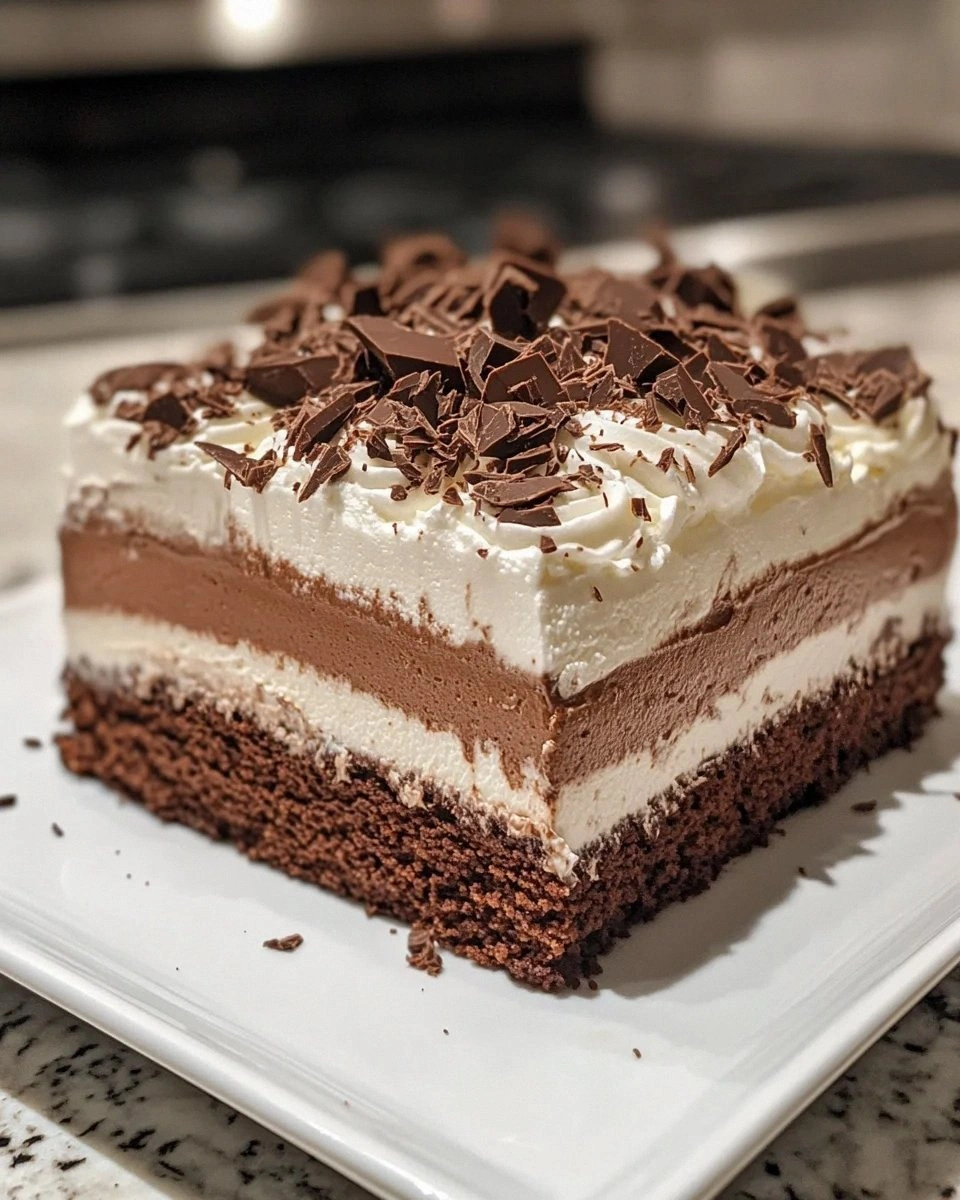
The first bite is a sensory fireworks display: the glossy, dark chocolate base crackles under your fork like a thin sheet of caramelized sugar, while the airy mousse layers float above it like clouds of cocoa‑kissed silk. You’ll hear a faint sigh as the spoon glides through the silky middle, and the aroma of roasted cacao mingles with a whisper of vanilla, coaxing your nostrils into a state of blissful surrender. The texture dance—crisp edges that shatter like thin ice, a buttery crumb that melts on the tongue, and mousse that holds its shape yet yields like a dream—creates a harmony that most chocolate desserts simply can’t achieve. I dare you to taste this and not go back for seconds.
What makes this version truly stand out is a secret weapon I stumbled upon while rummaging through a vintage cookbook: a triple‑layered mousse that uses dark, milk, and white chocolate in separate, meticulously aerated stages. Most recipes get this completely wrong, either drowning the cake in a single, overly sweet mousse or neglecting the balance between cocoa intensity and creamy lightness. By separating the chocolates, each layer sings its own note—bitter, sweet, and buttery—while the cake base provides the perfect, understated foundation. This is hands down the best version you’ll ever make at home, and I’m about to prove why.
But that’s not all. I’ve added a surprise ingredient—espresso powder—just a pinch, to awaken the chocolate’s depth without turning the cake into a coffee‑overload. And the finishing touch? A dusting of sea‑salt crystals that pop like tiny fireworks against the sweet backdrop. Okay, ready for the game‑changer? Let me walk you through every single step — by the end, you’ll wonder how you ever made it any other way.
What Makes This Version Stand Out
- Taste: The trio of chocolates creates a symphony of flavors—dark chocolate’s bold bitterness, milk chocolate’s caramel‑soft sweetness, and white chocolate’s buttery vanilla undertones—all balanced by a whisper of espresso.
- Texture: Each mousse layer is whipped to airy perfection, sitting atop a moist, tender crumb that stays moist without becoming soggy, delivering a contrast that’s both light and indulgent.
- Simplicity: Despite the impressive presentation, the technique relies on basic kitchen tools—just a whisk, a hand mixer, and a couple of ramekins—making it accessible to home bakers of any skill level.
- Uniqueness: Few desserts separate the chocolates into distinct layers; this method preserves each chocolate’s character, giving you a layered tasting experience that’s rarely found in store‑bought cakes.
- Crowd Reaction: Guests often claim they’ve never tasted anything like it; the visual of three distinct mousse bands invites awe, and the flavor keeps them coming back for more.
- Ingredient Quality: Using high‑quality couverture chocolate elevates the entire cake, turning ordinary cocoa into a luxurious melt‑in‑your‑mouth experience.
- Cooking Method: The gentle bake of the cake base prevents over‑drying, while the mousse is set in the fridge, allowing you to prep ahead and reduce stress on the big day.
- Make‑Ahead Potential: The cake can be baked a day early, and each mousse can be prepared and stored separately, making assembly a breeze when you’re ready to impress.
Inside the Ingredient List
The Flavor Base
All‑purpose flour (2 cups): This is the structural backbone of the cake, providing the gentle crumb that holds the mousse layers without crumbling. If you swap it for cake flour, you’ll get a finer texture but risk a drier result. For the best balance, sift it with the cocoa powder to avoid lumps.
Granulated sugar (1 cup): Sugar sweetens and also tenderizes the batter by inhibiting gluten formation. Using a fine sugar ensures it dissolves completely, preventing a grainy mouthfeel. If you’re watching carbs, a 1:1 coconut sugar substitute works, though the flavor will shift slightly.
Unsweetened cocoa powder (½ cup): Gives the cake its deep chocolate hue and a subtle bitterness that contrasts the sweet mousse. Choose a Dutch‑process cocoa for a smoother, less acidic taste. Skipping it would make the base too vanilla‑forward, losing that essential chocolate backbone.
The Texture Crew
Heavy cream (1½ cups): The star of the mousse, heavy cream traps air when whipped, creating that cloud‑like texture. Use a cream with at least 35% fat; lower‑fat varieties won’t hold peaks and will collapse into a soupy mess. Chill the cream and the bowl for best results.
Eggs (2 large): Eggs bind the cake batter and add richness. The yolks contribute to a tender crumb, while the whites add a subtle lift. If you’re allergic, a flax‑egg substitute (1 tbsp ground flaxseed + 3 tbsp water per egg) can work, though the texture will be slightly denser.
Vegetable oil (½ cup): Oil keeps the cake moist and gives it a tender crumb without the heaviness of butter. It also helps the cake stay soft when refrigerated, a crucial factor for layering with mousse.
The Unexpected Star
Espresso powder (1 tbsp, optional): A tiny pinch amplifies the chocolate flavor, making the dark chocolate mousse taste richer without adding coffee flavor. It’s the secret that professional pastry chefs use to deepen cocoa notes. If you’re caffeine‑sensitive, you can omit it without compromising texture.
Sea‑salt crystals (pinch for topping): These tiny bursts of salt create a contrast that makes the sweet chocolate pop, similar to the way a splash of lemon brightens a dessert. Sprinkle them just before serving for that satisfying crunch.
The Final Flourish
Dark chocolate (200 g, 70% cacao, chopped): The backbone of the first mousse, this chocolate provides a bold, slightly bitter flavor that anchors the cake. Use a high‑quality couverture for a glossy finish and a melt‑in‑your‑mouth feel. If you substitute with a lower cacao bar, the mousse may turn grainy.
Milk chocolate (150 g, chopped): Adds a creamy, caramel‑like sweetness that balances the dark layer. It also contributes to a smoother mouthfeel. Opt for a chocolate with at least 30% cocoa solids for structure.
White chocolate (150 g, chopped): Brings a buttery vanilla note that lightens the palate and creates visual contrast. White chocolate can be temperamental; melt it gently over a bain‑marie to avoid scorching.
Powdered sugar (¼ cup): Sweetens the whipped cream without adding gritty texture, ensuring the mousse stays silky. Sift it to avoid lumps that could ruin the airy consistency.
Everything's prepped? Good. Let's get into the real action…
The Method — Step by Step
Preheat your oven to 350°F (175°C) and grease a 9‑inch springform pan, lining the bottom with parchment. As the oven warms, whisk together flour, cocoa powder, baking powder, baking soda, and salt in a large bowl; you’ll notice a faint, earthy aroma that signals the chocolate foundation is ready. This dry mix will ensure an even rise and prevent pockets of flour. Pro tip: Sift the dry ingredients twice for a feather‑light batter.
In a separate bowl, combine sugar, oil, eggs, milk, and vanilla extract. Beat on medium speed until the mixture is smooth and slightly glossy—about 2 minutes. You’ll hear a gentle whir that tells you the emulsification is spot‑on. This wet mixture is the glue that will hold the cake together, so don’t rush it.
Gradually fold the dry ingredients into the wet, using a rubber spatula and a gentle hand. The batter should be thick but pourable, with a deep chocolate hue that looks like liquid midnight. Scrape the sides of the bowl to ensure no flour pockets remain; those would bake into dry spots.
Pour the batter into the prepared pan, smoothing the top with an offset spatula. Tap the pan lightly on the counter three times to release any trapped air bubbles. The batter should spread evenly, forming a perfect dome. Slide the pan onto the middle rack of the oven.
Bake for 25‑30 minutes, or until a toothpick inserted into the center comes out with a few moist crumbs but no wet batter. The edges will start pulling away from the pan, a visual cue that the cake is done. Watch Out: Overbaking will dry the crumb, making it difficult for the mousse to adhere later.
While the cake cools on a wire rack, start the dark chocolate mousse. Melt the dark chocolate over a simmering pot of water, stirring until silky. Remove from heat, then let it cool for a minute before whisking in ½ cup of heavy cream and half of the powdered sugar. Beat until soft peaks form, then fold in a pinch of espresso powder. The mousse should be glossy and thick enough to hold its shape when piped.
Repeat the process for the milk chocolate mousse, this time using the milk chocolate and the remaining ½ cup of heavy cream. Add a splash of vanilla extract to enhance its buttery notes. Whip until stiff peaks develop; you’ll notice the mousse becomes lighter and creamier, almost like a cloud waiting to settle.
Finally, melt the white chocolate gently, then fold it into the last ½ cup of whipped cream, adding the remaining powdered sugar. This white chocolate mousse will be the sweetest, most delicate layer, offering a visual contrast that looks like snow atop a chocolate mountain.
Once the cake is completely cool, slice it horizontally into three even layers using a long serrated knife. Place the bottom layer back into the springform pan, spreading the dark chocolate mousse evenly across the surface, using a spatula to smooth it out. The mousse should spread like velvet, leaving a glossy sheen.
Place the second cake layer atop the dark mousse, then spread the milk chocolate mousse, ensuring no gaps at the edges. The mousse should flow into the crevices, creating a seamless bond. Top with the final cake layer and gently press down to level the stack.
Finish by spreading the white chocolate mousse over the top layer, smoothing it into a flawless dome. Sprinkle a generous pinch of sea‑salt crystals and, if desired, a dusting of cocoa powder for contrast. Chill the assembled cake in the refrigerator for at least 4 hours, preferably overnight, to allow the mousse to set firmly.
When you’re ready to serve, run a thin knife around the edge of the springform pan to release the cake, then lift the base gently. Transfer the cake to a serving platter, slice with a warm knife (dip in hot water and wipe dry) for clean cuts, and watch the layers reveal themselves like a chocolate rainbow. And now the fun part: garnish with fresh berries or a drizzle of raspberry coulis for a pop of acidity that cuts through the richness.
That's it — you did it. But hold on, I've got a few more tricks that'll take this to another level…
Insider Tricks for Flawless Results
The Temperature Rule Nobody Follows
Never start whipping cream straight from the fridge unless your bowl and whisk are also chilled. The colder the environment, the faster the fat solidifies, creating stable peaks. I once tried at room temperature and ended up with a soupy mess that never set. Keep everything icy, and you’ll get a mousse that holds its shape for days.
Why Your Nose Knows Best
When melting chocolate, trust the scent more than the timer. A subtle, nutty aroma means the chocolate has reached the perfect melting point. If it starts to smell burnt, you’ve gone too far and the mousse will develop a bitter aftertaste. I once over‑melted dark chocolate and the whole cake tasted like a charred campfire.
The 5‑Minute Rest That Changes Everything
After folding each mousse, let it rest for five minutes before spreading. This pause allows any remaining air bubbles to rise and burst, giving you a smoother surface. Skipping this step often results in tiny pockets that become visible once the cake is sliced.
Layer Alignment Secret
Use a thin strip of parchment paper between each cake layer to prevent them from sticking together during refrigeration. This tiny barrier makes it easier to lift the cake without tearing, especially when the mousse is ultra‑soft. My first attempt without parchment resulted in a shattered bottom layer.
Final Shine Finish
For a glossy top, lightly brush the final white chocolate mousse with a glaze made from 1 tbsp melted white chocolate mixed with 1 tsp cream. The glaze sets quickly, giving the cake a professional sheen that catches the light beautifully.
Creative Twists and Variations
This recipe is a playground. Here are some of my favorite ways to switch things up:
Berry Burst
Fold a handful of fresh raspberries into the white chocolate mousse for a tart pop that cuts through the sweetness. The berries also add a burst of color that makes the cake look even more inviting.
Spiced Autumn
Replace the espresso powder with a pinch of ground cinnamon and nutmeg, and swap the dark chocolate for a 60% cacao bar infused with orange zest. The result is a warm, cozy cake perfect for cooler evenings.
Nutty Crunch
Stir toasted hazelnut pieces into the milk chocolate mousse and sprinkle crushed pistachios on top of the white chocolate layer. The nuts add texture and a buttery flavor that complements the chocolate beautifully.
Vegan Delight
Swap dairy milk for oat milk, use coconut cream in place of heavy cream, and choose dairy‑free dark, milk, and white chocolate alternatives. The mousse will be just as airy, and the cake will still hold its structure.
Alcohol‑Infused
Add a tablespoon of dark rum to the dark chocolate mousse and a splash of amaretto to the white chocolate mousse. The subtle boozy notes deepen the flavor profile, making it a perfect after‑dinner indulgence.
Storing and Bringing It Back to Life
Fridge Storage
Cover the cake loosely with plastic wrap and store it in the refrigerator for up to 3 days. The mousse will stay firm, and the flavors will meld, becoming even richer. Before serving, let it sit at room temperature for 15 minutes to soften slightly.
Freezer Friendly
Wrap the cake tightly in a double layer of cling film, then place it in an airtight container before freezing. It will keep for up to 1 month. To thaw, move it to the fridge overnight, then let it sit at room temperature for 20 minutes.
Best Reheating Method
When you need to warm a slice, place it on a microwave‑safe plate and microwave on low power (30% strength) for 10‑15 seconds. Add a tiny splash of water to the plate before heating; the steam revives the mousse’s silkiness without melting it.