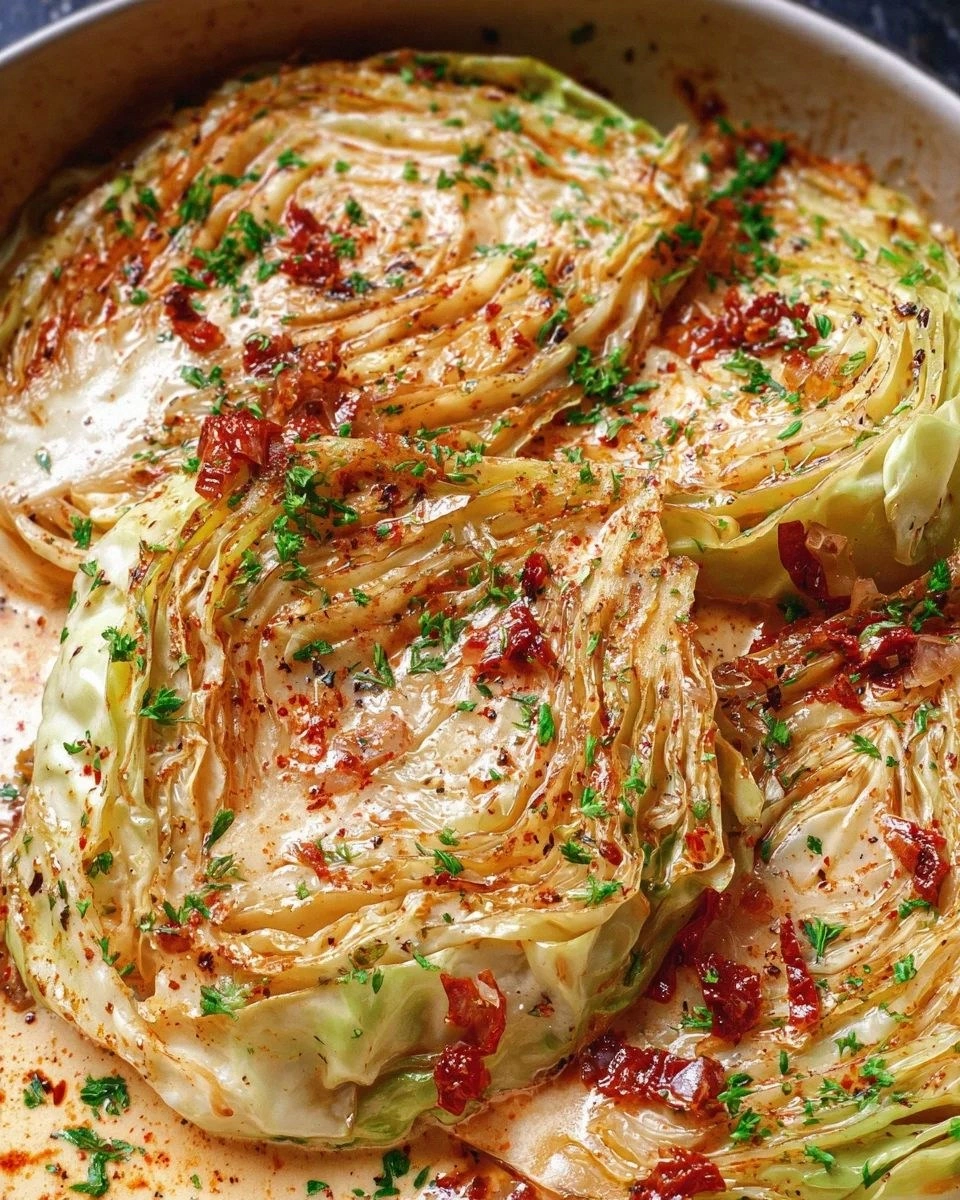
I still remember the exact moment this dish changed my life. It was a Tuesday night, my fridge held nothing but a sad head of cabbage and some cream cheese, and my date was due in forty-five minutes. In a panic, I hacked that cabbage into thick wedges, seared them in butter until the edges turned into caramelized lace, then drowned everything in a garlicky cream bath that smelled like heaven wrapped in a silk robe. When she took the first bite, her fork paused mid-air, her eyes got that wide, soft look, and she whispered, "If you propose right now, I’d probably say yes." That was three years ago—same partner, same recipe, still no ring, still no leftovers.
Most cabbage recipes treat the poor vegetable like a background singer, but this one shoves it into the spotlight, hands it a velvet gown, and lets it belt out the high note. The wedges slump into silky, spoon-soft layers while the sauce thickens into something that coats every ridge like liquid gold. Between the blistered, almost-burnt edges and the custardy center, you get three textures in one bite: crackling, melting, and downright saucy. I dare you to taste this and not go back for seconds; I’ve failed that challenge every single time, once eating the entire skillet while standing over the stove in my slippers.
What makes this version different? We’re not just braising cabbage in cream; we’re building layers of flavor like a greedy composer adding horns, strings, and that one rogue kazoo. A quick sear in olive oil and butter sets up the Maillard magic, then we create a fond so dark and gorgeous it could headline its own jazz festival. Sun-dried tomatoes bring chewy pops of sweet-tart sunshine, while a trio of dried herbs whispers of Provence in winter. The cream cheese melts in last, stabilizing the sauce so it doesn’t break into an oily mess—because nothing kills romance faster than greasy cabbage.
Picture yourself pulling this out of the oven, the whole kitchen smelling like buttered popcorn kissed by garlic and roses, the cabbage edges blistered into frilly brown petals. You set it on the table, candles flickering, crusty bread within reach, and suddenly Tuesday feels like anniversary night. Stay with me here—this is worth it. Let me walk you through every single step, from choosing the right head to that final snowstorm of Parmesan, so by the end you’ll wonder how you ever made cabbage any other way.
What Makes This Version Stand Out
- Flavor Avalanche: Most recipes rely on bacon for oomph; we build umami bombs with sun-dried tomatoes, Parmesan broth, and a whisper of soy—no pig required, though feel free if you’re into that.
- Texture Tango: Crispy-charred edges meet custard-soft centers in the same forkful, delivering the contrast that restaurant chefs kill for.
- One-Skillet Simplicity: Sear, simmer, serve—all in the same pan, meaning fewer dishes and more time to swipe that last piece of bread through the sauce.
- Vegetarian Crowd-Pleaser: Swap chicken broth for veggie and you’ve got a meat-free showstopper that even steak lovers devour, usually while asking, “Are you sure there’s no meat in here?”
- Make-Ahead Magic: Prep the wedges and sauce base in the morning; ten minutes before guests arrive, reheat and melt in the cream cheese—tastes like you just stood over the stove for hours.
- Proposal-Worthy Presentation: Those purple-green layers draped in sunset-orange sauce look so luxurious you could serve them at a wedding brunch, no lie.
Alright, let’s break down exactly what goes into this masterpiece, because once you see how humble the ingredients are, you’ll feel downright dangerous in the kitchen.
Inside the Ingredient List
The Flavor Base
Green cabbage is the underrated diva here—look for a head that feels heavy for its size, with leaves so tight they squeak when you press them. Pale wrinkles or yellow spots mean it’s been sitting around, and we want fresh, sweet crunch. Skip pre-cut bags; oxidation steals flavor faster than your roommate “borrows” your good olive oil. Cut through the core so the wedges stay intact, giving you those dramatic fan-shaped slabs that sop up sauce like edible sponges. If you only have red cabbage, it works, but the color turns your cream into an unfortunate mauve—delicious, just not proposal-level photogenic.
Olive oil and butter are the Batman and Robin of searing: oil raises the smoke point, butter brings nutty richness. Don’t swap both for just one fat; you’ll either burn the dairy or miss that buttery aroma that makes people close their eyes involuntarily. Use a mid-range olive oil, not the fancy grassy stuff you save for salads; high heat kills those delicate aromatics anyway. And please, unless you’re dairy-free, do not replace butter with margarine—your cabbage deserves better than impersonators.
The Texture Crew
Full-fat cream cheese is non-negotiable; low-fat versions break into grainy specks that look like cottage cheese gone rogue. Dice it cold so it melts evenly, stirring until the sauce turns into satin. Heavy cream adds that spoon-coating body, but if you’re out, crème fraîche thinned with a splash of milk works—just expect a tangier finish. The combination of both dairy heroes creates a buffer that keeps the sauce stable, even if you accidentally let it boil. That means you can sip wine and tell stories without babysitting the burner every second.
Sun-dried tomatoes arrive like little chewy jewels, their sweet-acidic punch slicing through all that richness. Buy the ones packed in oil; the dry ones need rehydrating and taste like leather shoelaces. Julienne them into thin ribbons so they nestle between cabbage layers instead of sitting on top like stubborn rafts. If you hate tomatoes, swap in chopped artichoke hearts or olives, but you’ll lose that crimson confetti that makes the dish pop on camera.
The Unexpected Star
Red onion, finely diced, melts into the background and gives subtle sweetness without the harsh bite of yellow onion. Cook it until it’s translucent, not browned; we want silk, not caramel chewiness here. Garlic goes in after the onion, minced so fine it practically dissolves, releasing that heady perfume that makes guests wander into the kitchen asking, “What smells so incredible?” If your garlic has sprouted green shoots, rip them out—they taste bitter and will hijack the sauce.
The Final Flourish
Parmesan does double duty: stirred in for salty depth, then sprinkled on top so it broils into a lacy frico. Buy a chunk and grate it yourself; the pre-shredded stuff is dusted with cellulose that can make your sauce gritty. Fresh parsley adds a pop of chlorophyll brightness—chop it just before serving or it’ll wilt into sad green flecks. Red pepper flakes are optional, but a pinch gives gentle heat that blooms slowly, making the dish feel bigger than its ingredients list.
Everything’s prepped? Good. Let’s get into the real action, where smoke, sizzle, and sheer kitchen drama turn humble produce into something worth a marriage proposal.
The Method — Step by Step
- Heat a heavy skillet—cast iron if you’ve got it—over medium-high until a drop of water skitters like tap shoes across the surface. Add olive oil and swirl to coat, then drop in the butter. When the foaming subsides and the butter smells nutty, lay your cabbage wedges cut-side down like green soldiers. Do not crowd them; if they don’t fit, work in batches because steaming is the enemy of caramelization. Let them sizzle undisturbed for four full minutes; yes, you will be tempted to peek, but resist. Lift a corner with tongs—if the edge is mahogany and blistered, you’re living the dream.
- Flip each wedge gently; the seared surface should look like golden lace trim on an old-fashioned dress. Add another dab of butter around the edges—it foams up dramatically, basting the sides so nothing dries out. Season with salt and pepper now; the crystals stick to the moist cut faces and start dissolving immediately, seasoning from the outside in. If you’ve ever struggled with bland cabbage, you’re not alone—and I’ve got the fix right here.
- Scoot the wedges to the perimeter and tumble in your diced red onion. Stir just until the pieces turn translucent and the purple color softens to rose quartz. Add garlic, stirring for thirty seconds—any longer and it burns, any less and you miss that raw garlic bite. The kitchen should smell like you’ve invited an Italian grandmother over; if it doesn’t, turn the heat up a notch.
- Pour in the chicken broth—it will hiss like an angry cat, so stand back half a step. Use a wooden spoon to scrape the browned bits, the culinary gold miners call fond, up from the bottom. Those specks dissolve into the broth and give you free flavor no stock cube can fake. Reduce the heat to medium-low so the liquid simmers gently; we want a lazy jacuzzi, not a rolling boil that roughs up the cabbage.
- Dot in the cream cheese cubes, pushing them under the hot broth so they soften faster. Whisk patiently until the sauce looks like velvet lava—thick enough to coat the back of a spoon but still pourable. If lumps persist, smash them against the pan wall with your spatula; no one wants surprise pockets of plain cream cheese. Now drizzle in the heavy cream, stirring in a figure-eight motion to keep everything emulsified.
- Scatter sun-dried tomato strips across the surface, followed by oregano, thyme, and rosemary. These dried herbs bloom in fat, releasing oils that smell like hiking through Mediterranean hills. Add red pepper flakes now if you like a gentle back-of-throat warmth; start small, you can always amp it up later. Let the sauce burble uncovered for five minutes so the flavors marry—think of it as speed-dating for ingredients.
- Nestle the cabbage wedges back into the sauce, spooning liquid over the tops so every ridge gets a tan. Cover the skillet with a lid slightly ajar; we want steam to escape so the sauce thickens while the cabbage finishes cooking. After ten minutes, test doneness with a paring knife—it should slide through the thickest rib like butter. If you meet resistance, give it another three minutes and test again.
- Remove from heat and shower generously with grated Parmesan. Tilt the pan so the cheese lands on the hot sauce and starts melting into stretchy strings. Finish with chopped parsley for color and a final crack of black pepper for aromatic sparkle. Serve straight from the skillet so guests can scoop their own saucy wedge, or plate individually if you’re feeling fancy. Either way, arm everyone with crusty bread; the sauce is liquid gold and civilized forks have been known to fail.
That’s it—you did it. But hold on, I’ve got a few more tricks that’ll take this to another level, the kind of insider knowledge that separates good cooks from legendary ones.
Insider Tricks for Flawless Results
The Temperature Rule Nobody Follows
Keep the skillet at a steady medium-low after you add the cream; anything hotter causes the dairy proteins to seize like overcooked scrambled eggs. A gentle simmer lets flavors concentrate without curdling, giving you that glossy restaurant finish. If you see tiny bubbles forming around the rim, you’re perfect; if big volcanoes erupt, slide the pan halfway off the burner immediately. A friend tried skipping this step once—let’s just say it didn’t end well, and she served something that looked like cottage cheese floating in dishwater.
Why Your Nose Knows Best
Trust aroma checkpoints more than timers. When the garlic smells sweet instead of raw, when the herbs release a woodsy perfume, when the cabbage no longer smells sulfurous, you’re on track. Your olfactory system is older than any kitchen gadget, and it rarely lies. If something smells like it’s burning, it probably is—lower the heat and stir like your reputation depends on it, because tonight it does.
The 5-Minute Rest That Changes Everything
After sprinkling the final cheese, cover the skillet and let it rest off heat for five full minutes. During this spa break, the sauce thickens further, the cheese integrates, and the cabbage absorbs the last wave of seasoning. Serve too soon and the sauce runs across the plate like a toddler escaping bedtime; wait, and it clings luxuriously to each ridge. I ate half the batch before anyone else got to try it because I skipped this step once, and the puddle on my plate still haunts me.
Creative Twists and Variations
This recipe is a playground. Here are some of my favorite ways to switch things up:
Smoky Bacon Bliss
Start by rendering four strips of thick-cut bacon; remove the crispy bits and use the fat instead of olive oil for searing. Crumble the bacon on top at the end. The smoky depth marries the sweet cabbage like country music and heartbreak—inevitable and oh-so-good.
Spicy Spanish Rendition
Swap dried herbs for a teaspoon of smoked paprika and a pinch of saffron. Add chopped Spanish chorizo with the onion; the paprika oil stains the sauce a fiery red that tastes like flamenco in edible form. Finish with manchego instead of Parmesan for maximum fiesta vibes.
Light Spring Version
Replace heavy cream with half-and-half and use Neufchâtel instead of full-fat cream cheese. Stir in fresh peas and mint at the end for a verdant pop that screams Easter brunch. It’s lighter but still feels indulgent, like wearing linen while eating dessert.
Mushroom Umami Bomb
Add a cup of sliced cremini mushrooms after searing the cabbage; let them brown deeply before proceeding with the sauce. Their earthy richness amplifies the meaty vibe without any actual meat, perfect for flexitarian tables. A splash of soy sauce at the end deepens the savoriness even further.
Vegan Dreamboat
Use olive oil only, swap chicken broth for vegetable, and replace dairy with coconut cream and a tablespoon of white miso for body. Nutritional yeast stands in for Parmesan, adding cheesy nuttiness without the cow. Even carnivores inhale this version, usually while mumbling, “I can’t believe this is vegan.”
Breakfast-for-Dinner Skillet
Make the classic recipe, then use the back of a spoon to create wells in the sauce. Crack four eggs into the wells, cover, and bake at 400 °F for seven minutes until the whites set but the yolks stay runny. Serve with toast soldiers and prepare for audible gasps—brinner has never looked so glamorous.
Storing and Bringing It Back to Life
Fridge Storage
Let leftovers cool completely, then transfer to an airtight glass container; plastic absorbs the garlicky perfume and will haunt tomorrow’s yogurt. The sauce will thicken into a spread-like consistency—totally normal. Refrigerate up to four days; after that the cabbage starts tasting like old gym socks, and nobody wants that nostalgia.
Freezer Friendly
Portion into freezer bags, press out excess air, and freeze flat for up to two months. The cream cheese may separate slightly upon thawing, but a gentle reheat with a splash of broth whisks it back to creamy compliance. Label the bag boldly; future you is busy and doesn’t play guessing games.
Best Reheating Method
Slide the portion into a small skillet with a tablespoon of broth or water, cover, and warm over low heat until the sauce loosens and the cabbage heats through. Microwave works in a pinch, but stir every thirty seconds to prevent hot spots that turn garlic acrid. Add a tiny splash of water before reheating—it steams back to perfection and tastes almost as good as night one.