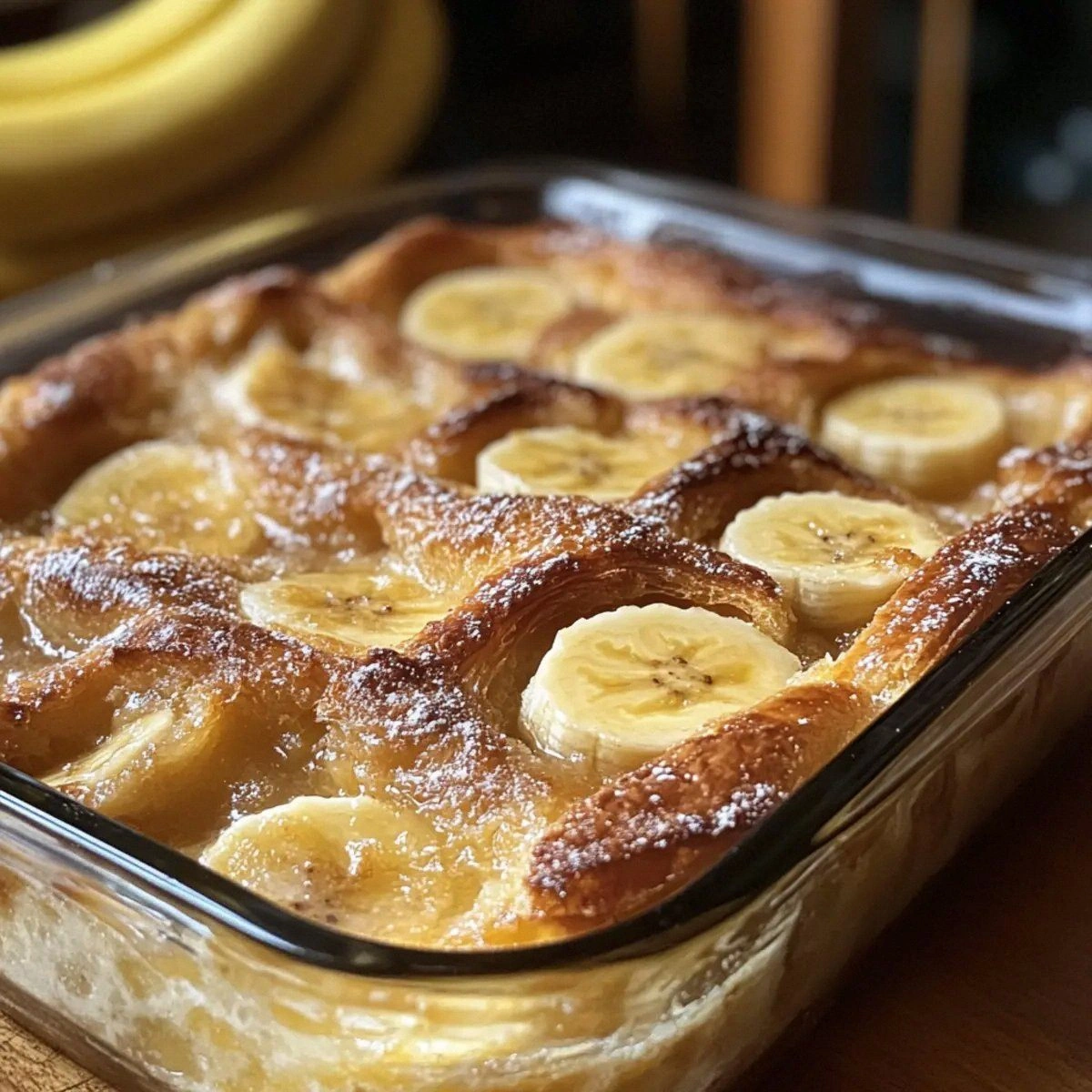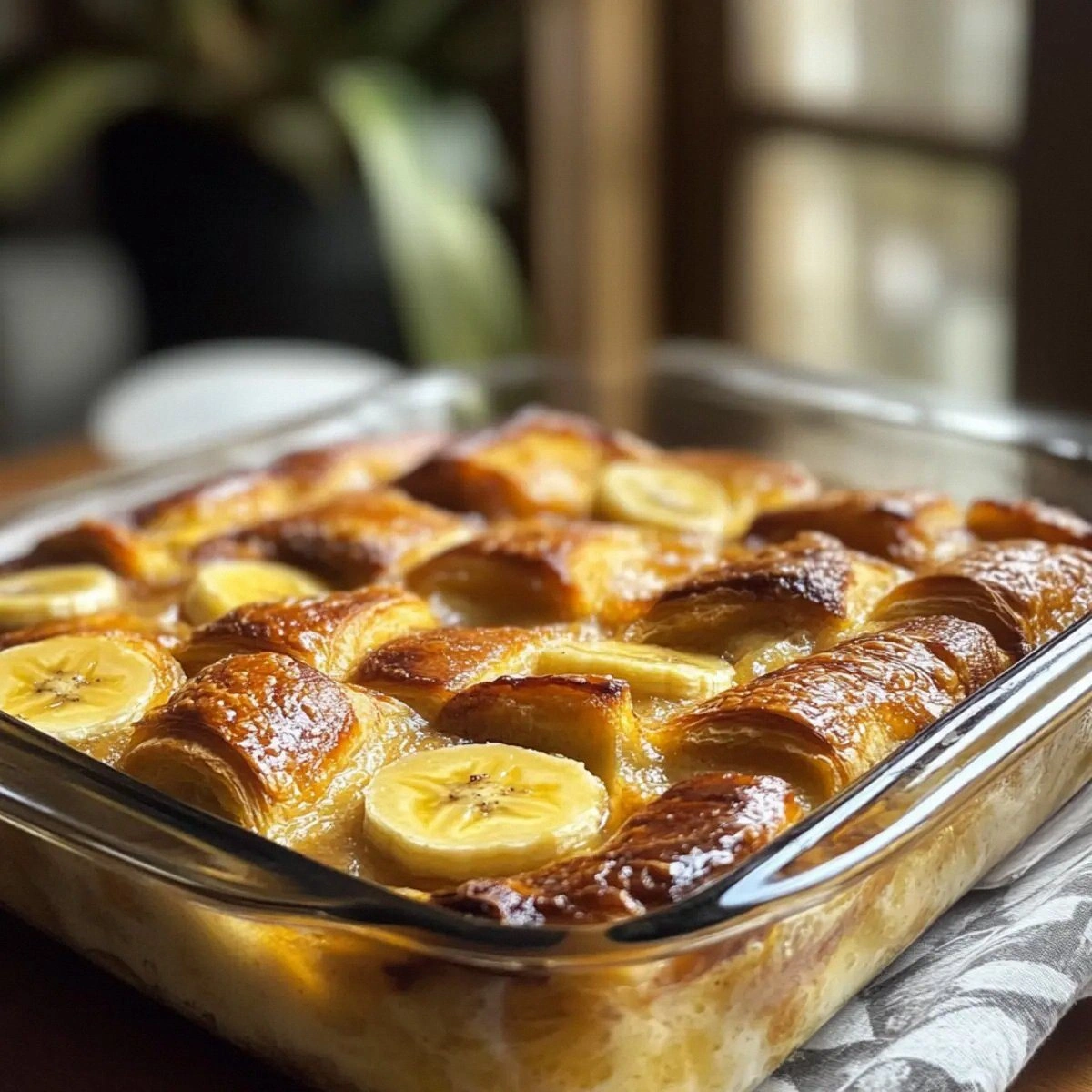
I’ll be honest — I ate half the batch before anyone else got to try it, and that was after a kitchen disaster that could have ended my brunch dreams forever. I was attempting a simple French toast, but the bread turned soggy, the bananas turned mushy, and the whole thing resembled a sad pancake puddle. Then a friend dared me to combine the flaky decadence of croissants with the comfort of banana French toast, and I thought, “Why not turn this mess into a masterpiece?” The moment I tossed those buttery croissant pieces into a custard bath, the kitchen filled with a perfume that felt like a Parisian bakery colliding with a tropical sunrise. That scent made my heart race, my stomach growl, and I knew I had stumbled upon something truly irresistible.
Picture yourself pulling this out of the oven, the whole kitchen smelling incredible, the golden top cracking open like a caramelized crust while steam rises like a gentle cloud. The first bite delivers a buttery crunch that shatters like thin ice, followed by a custardy interior that coats your palate like velvet. The banana slices melt into sweet ribbons, and the maple syrup drizzle adds a glossy finish that makes the dish glisten like sunrise on a lake. I dare you to taste this and not go back for seconds; the flavor combo is so bold it practically does a little dance on your tongue.
Most recipes get this completely wrong. They either soak the croissants too long, turning them mush, or they forget the banana extract, leaving the flavor flat as a pancake. Here’s what actually works: a precise balance of whole milk and heavy cream for that silky custard, a splash of banana extract to amplify the fruit without overpowering it, and a quick bake that gives you that perfect crust while keeping the interior luxuriously soft. The secret? A quick flash of high heat at the end to create those crispy edges that make every bite a textural adventure.
Let me walk you through every single step — by the end, you’ll wonder how you ever made it any other way. Okay, ready for the game-changer? This next part? Pure magic. Stay with me here — this is worth it.
What Makes This Version Stand Out
- Flavor Explosion: The banana extract and fresh sliced banana create a dual‑layered banana punch that’s brighter than a summer smoothie.
- Texture Symphony: Day‑old croissants provide a buttery crunch on the top while staying pillowy inside, a contrast most casseroles lack.
- Simplicity Meets Elegance: Only nine ingredients, but each one is used to its fullest potential, making the recipe feel gourmet without the fuss.
- Make‑Ahead Magic: Assemble the night before, refrigerate, and bake in the morning for a stress‑free brunch that still tastes fresh‑out‑of‑the‑oven.
- Crowd‑Pleaser Factor: Even the pickiest eaters fall in love with the sweet‑savory balance, especially when you drizzle maple syrup right before serving.
- Ingredient Quality: Using real vanilla and banana extracts elevates the dish from “just good” to “hands down the best version you’ll ever make at home.”
- Cooking Method: A two‑stage bake (low‑and‑slow then high‑heat finish) guarantees a custard that’s set without being dry.
- Future‑Proof Flexibility: Swap croissants for brioche, or add a hint of cinnamon for a seasonal twist without breaking the core concept.
Inside the Ingredient List
The Flavor Base
Whole milk and heavy cream form the backbone of the custard, delivering that luxurious mouthfeel you expect from a French toast casserole. The milk adds a subtle dairy sweetness, while the cream contributes richness that keeps the interior from drying out. If you skimmed the cream, you’d end up with a custard that feels more like a soggy pancake than a decadent treat. For a dairy‑free version, swap the milk for oat milk and the cream for coconut cream, but expect a faint coconut note.
The Sweet Symphony
Granulated sugar is the obvious sweetener, but the real star is the combination of vanilla extract and banana extract. Vanilla rounds out the flavor, adding depth that makes the banana taste less one‑dimensional. The banana extract intensifies the fruit without making the dish mushy, a trick most home cooks overlook. If you can’t find banana extract, a tablespoon of mashed ripe banana works, but you’ll need to reduce the fresh banana slice count to avoid excess moisture.
The Texture Crew
Day‑old croissants are the secret weapon; their buttery layers have already begun to dry, so they soak up just enough custard without falling apart. Cutting them into 1‑2 inch pieces ensures each bite has a perfect bite‑size crunch. If you can’t find croissants, brioche or even thick sliced challah works, though the flavor profile will shift slightly. A pinch of salt (1/4 teaspoon) amplifies all the sweet notes, making the overall taste less cloying.
The Final Flourish
Fresh banana slices add natural sweetness and a soft, melt‑in‑your‑mouth texture that contrasts beautifully with the crisp croissant edges. Choose a banana that’s ripe but still firm; overripe bananas become mushy and can turn the custard gummy. Maple syrup isn’t just a topping; it adds a caramel‑like depth that ties the whole dish together, especially when you drizzle it while the casserole is still hot.
Everything's prepped? Good. Let’s get into the real action…

The Method — Step by Step
Preheat your oven to 325°F (165°C). While the oven warms, gather your day‑old croissants and tear them into bite‑size chunks. This low‑heat start ensures the custard will soak evenly without the croissant turning mushy. The kitchen will already start smelling buttery, a promising omen.
In a large mixing bowl, whisk together the whole milk, heavy cream, and granulated sugar until the sugar dissolves completely. Add the eggs one at a time, whisking vigorously after each addition to create a smooth emulsion. Then stir in the vanilla extract, banana extract, and the 1/4 teaspoon of salt. That sizzle when it hits the pan? Absolute perfection—well, not yet, but you’ll hear it soon.
Fold the sliced bananas and croissant pieces into the custard, ensuring each piece is generously coated. Let the mixture sit for five minutes; this short rest lets the croissant absorb the liquid, creating a soft interior that will later crisp up beautifully.
Grease a 9‑inch square baking dish with butter or non‑stick spray. Pour the custard‑croissant mixture into the dish, spreading it evenly with a spatula. The surface should be level, but don’t press down too hard; you want air pockets for that airy crumb.
Cover the dish tightly with aluminum foil and place it in the preheated oven. Bake for 25‑30 minutes, or until the custard is just set around the edges but still slightly jiggles in the center. This low‑and‑slow stage is crucial – it cooks the interior without drying it out.
After the initial bake, increase the oven temperature to 425°F (220°C) and remove the foil. Let the casserole bake for an additional 10‑12 minutes, or until the top turns a deep golden‑brown and the edges start pulling away from the pan. That caramelized crust is the hallmark of a perfect French toast casserole.
While the casserole finishes, warm a small amount of maple syrup in a saucepan just until it’s pourable. This step ensures the syrup spreads evenly without pooling.
Remove the dish from the oven and let it rest for five minutes; this short rest allows the custard to firm up, making slicing easier. Then drizzle the warm maple syrup over the top, let it cascade down the sides, and serve immediately. The contrast between the hot, buttery interior and the cool, sweet syrup is pure bliss.
Insider Tricks for Flawless Results
The Temperature Rule Nobody Follows
Never bake a custard casserole at a scorching temperature from the start. Starting low (325°F) allows the liquid to set gradually, preventing a rubbery texture. When you crank up the heat at the end, you get that coveted crispy crust without sacrificing the silky interior. I once tried a single‑step 400°F bake and ended up with a burnt top and a soggy middle—lesson learned.
Why Your Nose Knows Best
Your sense of smell is the ultimate timer. When the edges begin to pull away and you catch a faint nutty, caramel aroma, you’re right on cue for the final high‑heat blast. If you rely solely on the clock, you might miss that perfect moment and end up with a dull, pale top. Trust that nose; it’s more reliable than any timer.
The 5‑Minute Rest That Changes Everything
After the bake, let the casserole sit uncovered for five minutes. This rest allows the custard to finish setting, making each slice hold together without crumbling. Skipping this step is a common mistake that leads to a sloppy plate. I once served it straight from the oven and the slices fell apart like a sad pancake stack.
Butter Brush Brilliance
A quick brush of melted butter mixed with a dash of maple syrup right before the final high‑heat stage gives the top an extra layer of glossy, buttery goodness. It’s a tiny step that adds a luxurious sheen and a subtle flavor boost that makes people ask, “What’s the secret?” The secret is simple: butter + syrup = love.
The Banana Slice Strategy
Lay the banana slices in a single layer on the bottom of the dish before adding the custard. This prevents the bananas from sinking to the bottom and turning mushy, while also allowing their juices to infuse the custard from below. If you toss them in randomly, you’ll get pockets of soggy banana that ruin the texture.
Creative Twists and Variations
This recipe is a playground. Here are some of my favorite ways to switch things up:
Chocolate‑Banana Dream
Add ¼ cup of cocoa powder to the custard and fold in mini chocolate chips with the bananas. The result is a decadent, mocha‑kissed casserole that’s perfect for chocolate lovers.
Cinnamon Apple Crunch
Swap the banana for thinly sliced apples, sprinkle cinnamon and nutmeg into the custard, and finish with a crumble of oat‑flour and brown sugar on top. This version feels like a cozy fall breakfast.
Tropical Twist
Replace the banana with diced mango and add a splash of coconut milk in place of half the heavy cream. Top with toasted coconut flakes for an island‑inspired brunch.
Savory Sunrise
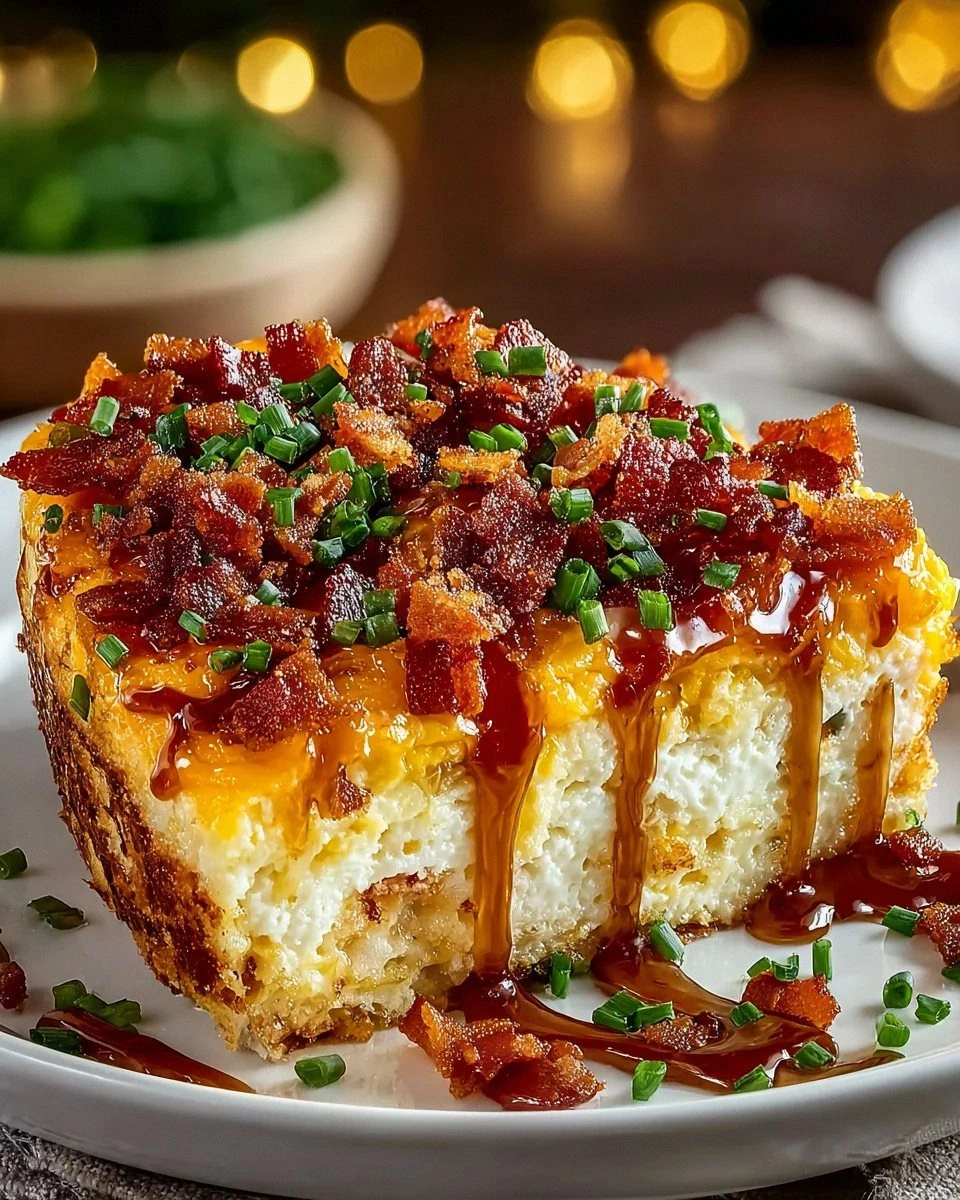
Omit the sugar and banana, add a pinch of smoked paprika, shredded cheddar, and chopped cooked bacon. You get a sweet‑and‑savory casserole that works as a hearty brunch or even a light dinner.
Nutty Berry Burst
Stir in a handful of fresh berries (blueberries or raspberries) and a tablespoon of chopped toasted walnuts. The berries add a pop of acidity that balances the richness.
Storing and Bringing It Back to Life
Fridge Storage
Allow the casserole to cool completely, then cover tightly with plastic wrap or foil and refrigerate. It will keep for up to three days. When reheating, slice the portion you need, sprinkle a tiny splash of milk or water over the top, and bake at 350°F for 15‑20 minutes until heated through.
Freezer Friendly
Wrap the entire cooled casserole in a double layer of foil and place it in a freezer‑safe bag. It freezes beautifully for up to two months. To reheat, thaw overnight in the fridge, then bake at 375°F for 20‑25 minutes, adding a drizzle of maple syrup before serving.
Best Reheating Method
For the crispiest revival, use a hot skillet. Add a thin pat of butter, place a slice in the pan, cover, and heat for 2‑3 minutes per side. The steam created keeps the interior moist while the bottom regains that golden crunch.